Georgia’s new nuclear plants are finally up and running, more seem unlikely to follow
Up and atom
For many Georgia residents, the opening of a new nuclear reactor this week was better late than never, though many others were left wishing they could have plumped for the "never" option.
On Monday, Plant Vogtle’s Unit 4 officially started commercial operation — 7 years behind schedule and, along with the Unit 3 reactor that opened last summer, racking up a total bill of $30-35B: more than double the initial budget.
The reactors are the first to be built from scratch in the US for more than 30 years, making the larger Vogtle site, along with two other decades-old reactors, the nation’s largest generator of carbon-free electricity. Indeed, Georgia Power reports that it can produce more than 30 million MWh of electricity annually… which may offer little solace to some of its residential customers, who have paid $1,000 on average towards the construction.
Next generation
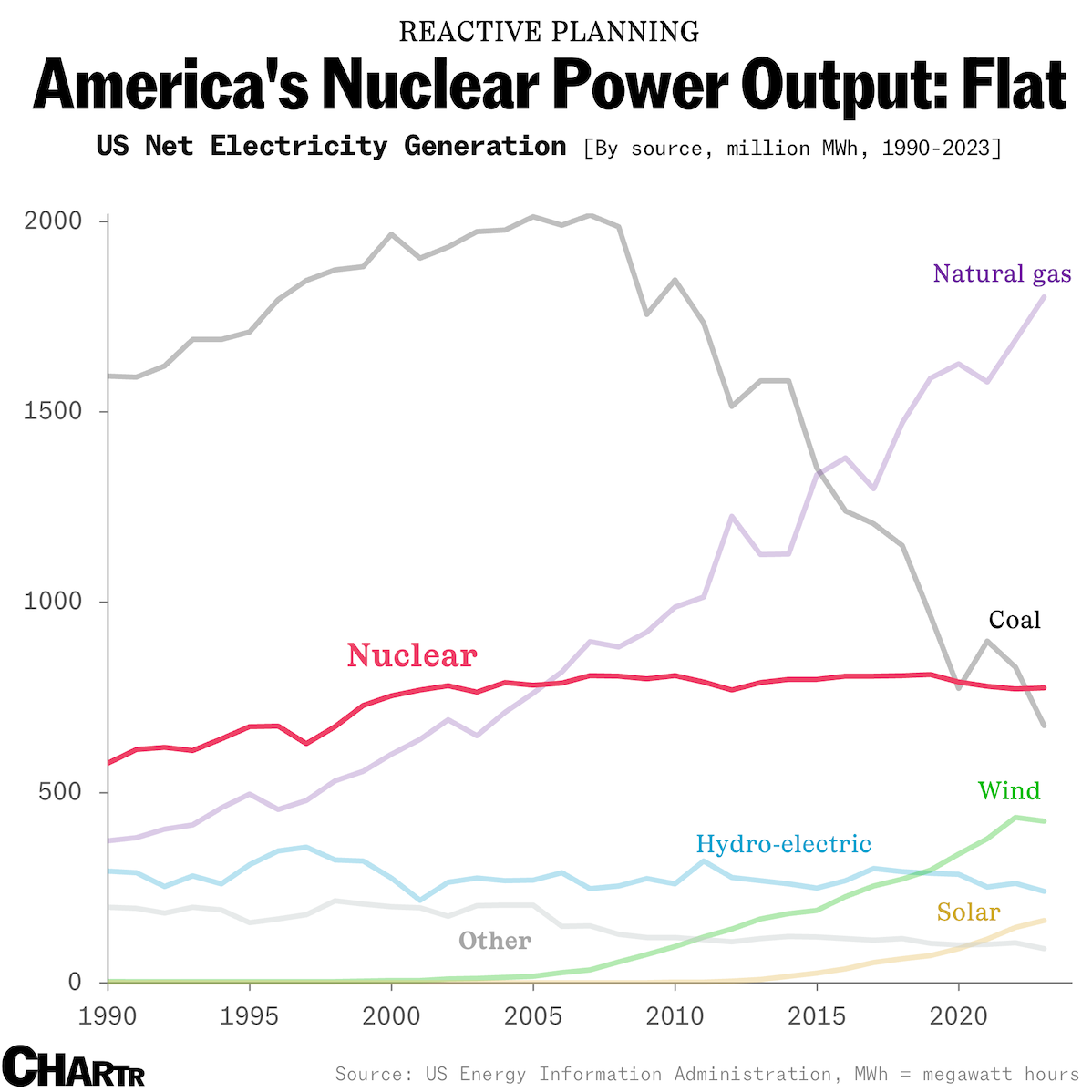
A global leader in splitting atoms for energy, America’s nuclear power capacity grew two-fold in the 1980s. However, the nation's fission efforts have since slowed, with electricity generated from nuclear plateauing to a total of 775M MWh last year, according to data from the EIA, overshadowed by the 1.8B MWh produced by natural gas plants.
Recently though, nuclear energy has been in the spotlight for its key advantages over (increasingly available) fossil fuels: it’s practically carbon-free and reliable for continuous power, preventing outages. Indeed, Goldman Sachs Research recently outlined nuclear as a possible solution to the mounting problem of energy-guzzling AI/data centers.
Besides waste- and fallout-related fears, major drawbacks of nuclear are the vast time and budget it requires — in fact, with Vogtle as a cautionary tale, the industry has been shelving new reactor proposals in favor of revamping so-far-unproven smaller-scale designs. The question is now: does the potential long-term cost of climate change outweigh real-time, individual costs for infrastructure that could help to solve it?