


The number of people using Meta apps just fell for the first time in seven years
The company shed 20 million “daily active people” across its app family in the first quarter.
There was a lot for Meta investors to dig into from the company’s first quarterly report of the 2026 fiscal year on Wednesday, as earnings, revenue, and (less pleasingly) projected capex spending all came in ahead of Wall Street expectations.
With all the talk around ballooning data center outlay and Meta’s artificial intelligence ambitions — there were 49 references to “AI” on its earnings call yesterday — it can be easy to lose sight of what’s still at the heart of the Meta business: messaging, watching, liking, and doomscrolling across its core apps. Though for this quarter, at least, a little less focus on those might be no bad thing, with the number of total daily users across Meta apps falling for the first time since it started breaking out the metric seven years ago.
What’s appening?
According to Zuckerberg on Wednesday’s earnings call, the number of “total family dailies,” basically anyone who’s registered and logged in across Facebook, Instagram, WhatsApp, Messenger, and I guess Threads, slipped from the end of last year. Meta’s CEO laid the blame with internet outages in Iran and blocks in Russia, insisting that, otherwise, “trends across our apps are strong.”
Geopolitical complications as may be, the drop still marked the social media giant’s first quarterly decline since it started breaking out the top-line metric in 2019, wiping 20 million daily users from its still staggering 3.5 billion+ tally.
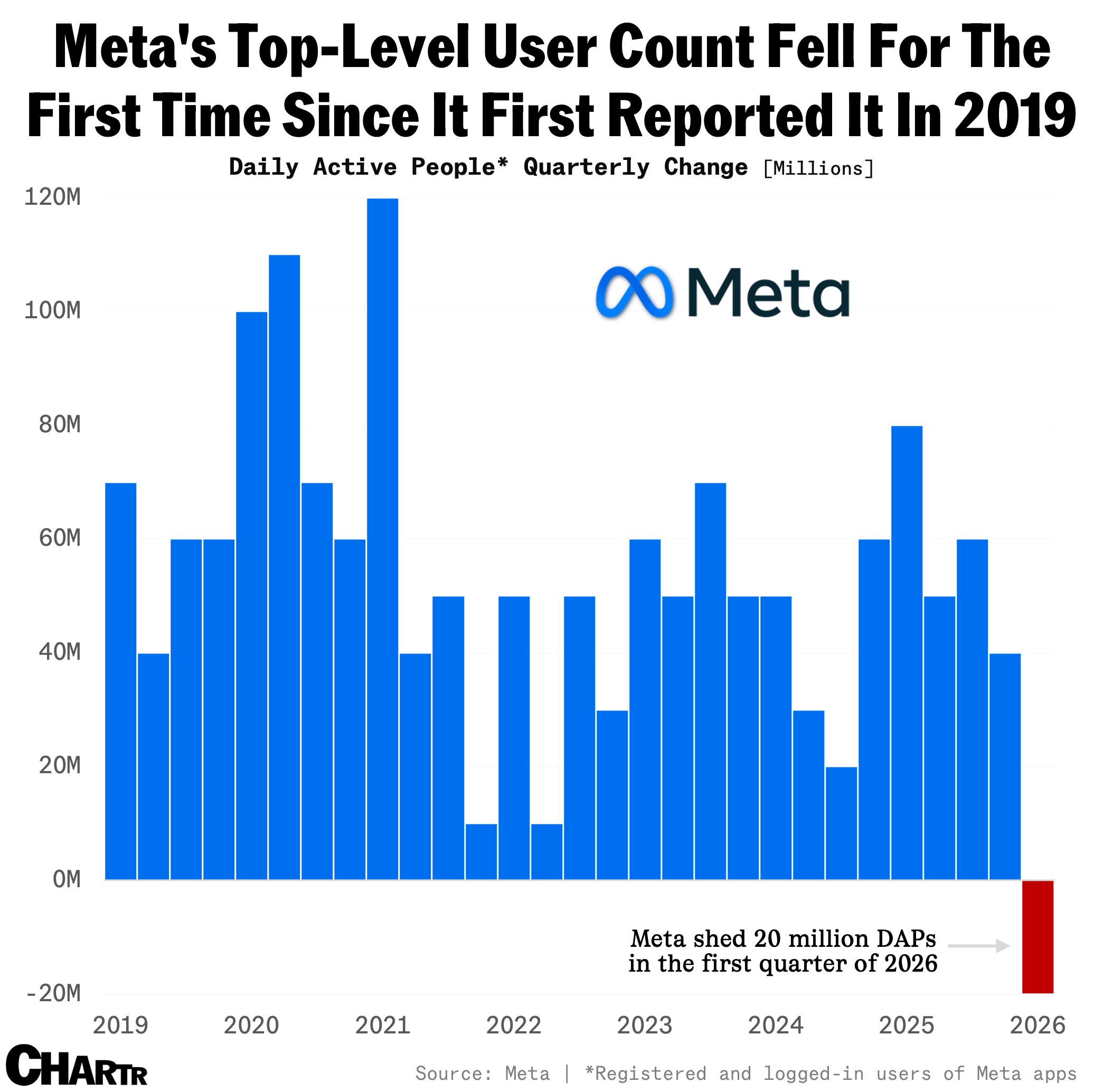
While some mild skepticism around Meta’s reasoning for the slipping figure has cropped up and more persists around its reasoning for bundling its app user metrics together more broadly, the decline is a drop in the ocean for its family of mega apps, having grown its daily active people base from 2.1 billion at the start of 2019 to 3.56 billion at the end of Q1.
It also didn't stop the company from managing to monetize those eyeballs to an insane level, raking in a staggering $55 billion in advertising revenue across the first quarter, up 33% from a year earlier.




