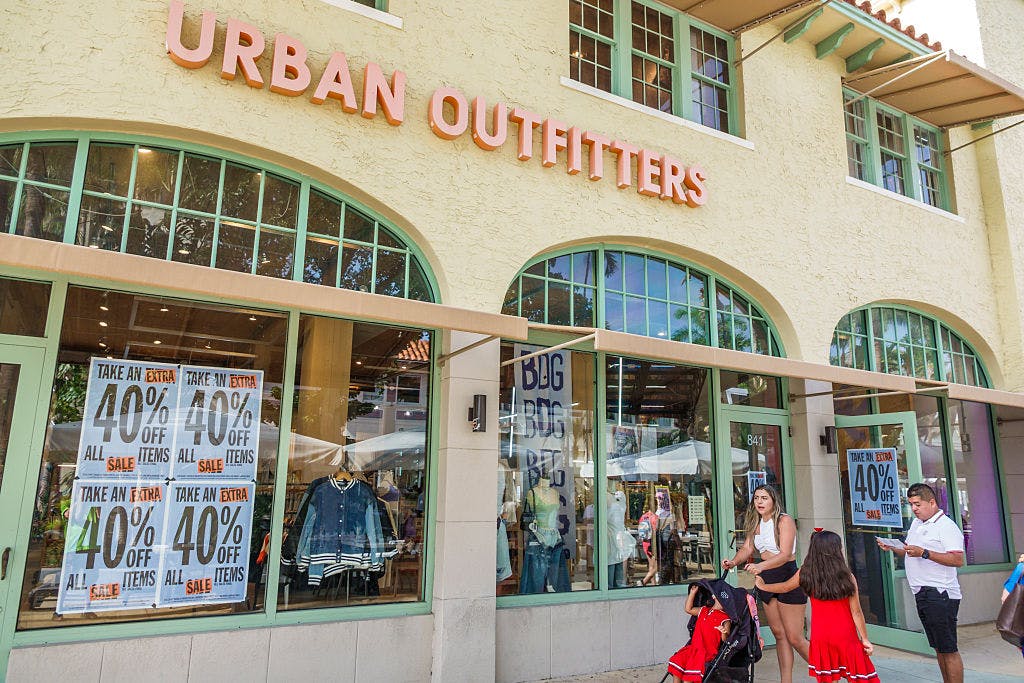
Urban Outfitters might have worked out how to sell clothes to young people again
The brand notched four consecutive quarters of sales growth for the first time since 2021.
In recent years, Urban Outfitters hasn’t found much joy in its efforts to get younger generations buying its namesake brand’s clothes, accessories, and homeware, having, by its CFO’s own admission in 2024, missed “rapid and seismic shifts” between Gen Z and millennials during the pandemic.
How do you do, fellow kids?
A little under two years on from that statement, however, something seems to have shifted, and the brand has now notched four consecutive quarters of sales growth for the first time since 2021, helping the overall Urban Outfitters group — which also houses Anthropologie, Free People, and the fashion rental subscription service Nuuly — achieve record quarterly ($1.8 billion) and full-year ($6.17 billion) sales in its report earlier this week.
Clearly, the UO brand’s youth-focused clothes are fitting into 2026 wardrobes a little better than they have for a while.

Until the first quarter of 2025, the Urban Outfitters brand saw sales drop for a staggering 11 quarters in a row, even as some of the fashion group’s other businesses only grew bigger, with Anthropologie — which accounted for 42% of the company’s total sales last year — praised for straddling the Gen Z/millennial vibe divide more comfortably than the Urban Outfitters brand itself.
So, what changed for UO?
Well, frankly, it’s simply been trying a lot harder to woo America’s youngest shoppers: the company’s been redesigning stores with a “highly localized approach,” hosting events and immersive experiences with Zoomer creators and celebrities, and launching national campaigns, all with “the brand’s community of highly engaged Gen Z shoppers” in mind.
While there are of course other factors in the Urban Outfitters revival, like its decision to turn away from its “traditionally alternative sensibility,” maybe, just maybe, the millennial mainstay might have finally got a little bit of its cool back.