BILLIONS IN BILLING
Just hit “subscribe”
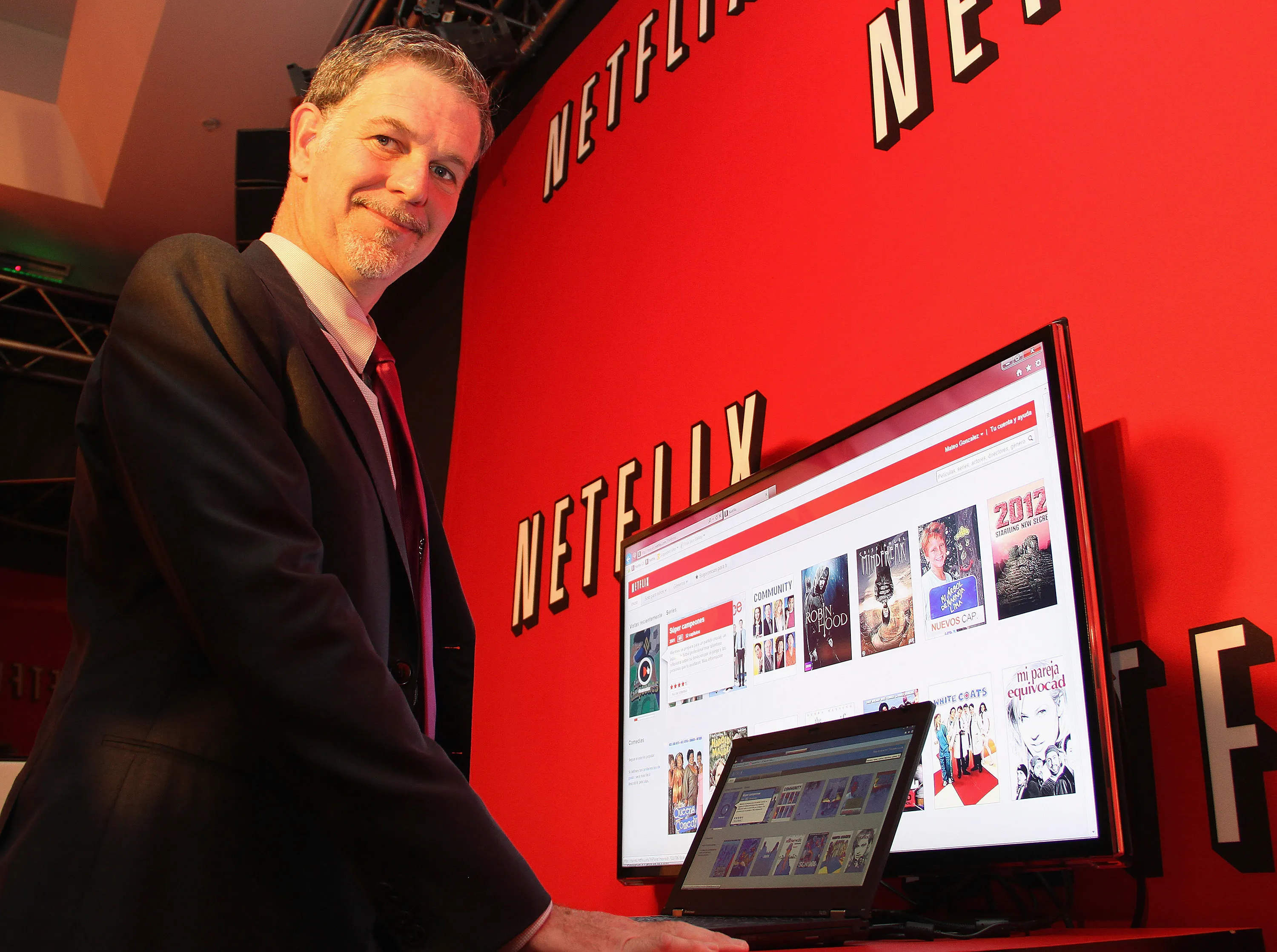
Netflix’s Reed Hastings is pretty much the reason everything is a subscription business today
Hastings created a subscription model that made Netflix “revered as one of the most innovative companies in Silicon Valley” and sparked a wave of companies that want you to open your wallet monthly.
As Reed Hastings used to tell it, his lightbulb moment for Netflix came in the late ’90s, when he racked up a $40 Blockbuster late fee from a forgotten VHS copy of “Apollo 13.”
A few years later, Hastings would say, that embarrassment would lead to Netflix’s first subscription model: a fixed monthly fee of $15.95 for up to four DVDs at a time. By the time Netflix launched its streaming service in 2007, it had 7 million subscribers and almost a decade of customer behavior data.
It’s worth noting that Hastings’ “Apollo 13” Netflix origin story — which he apparently told all the time — was referred to as a “lot of crap” by cofounder Marc Randolph in the 2012 book “Netflixed” by Gina Keating. Blockbuster, which became Netflix’s chief rival and eventual casualty, reportedly went digging for the charge, never found it, and demanded Hastings stop repeating the anecdote. (Netflix didn’t respond to a request for comment.)
“Apollo 13” or not, we have Hastings to thank for the current state of Corporate America, where pretty much every company tries to hook you on a subscription model, from design software to razors to dog food to music to 42-pound boxes of meat.
Last week, Netflix said Hastings would step down in June as chairman of the company he co-founded, a few years after he ceded the CEO title. His pioneering of subscriptions turned Netflix into a stock market behemoth in the 2010s: from the last day of 2009 through the last day of 2020, Netflix rose a collective 6,744% compared to the S&P 500’s measly climb of 237%.
With gains like those, CEOs’ ears perked up and business schools started paying attention. A Stanford case study says that in the mid-2010s, Netflix was “revered as one of the most innovative companies in Silicon Valley.”
A few years after Netflix showed it could hook consumers on the idea of paying a lower monthly fee, but continue to pay it potentially forever, tech companies like Microsoft and Adobe started their subscription models.
Fast-forward to 2025, and the broader subscription economy totaled $722 billion, per Juniper Research. It’s expected to touch $1.2 trillion by 2030. The average American spends more than $1,000 a year on streaming subscriptions, which Hastings also pioneered, and internet video streaming brought in $157 billion of global revenue last year.
A sea of copycats
Before Netflix, tech largely scoffed at subscriptions. In 2003, Steve Jobs called the music subscription model “bankrupt,” saying, “I think you could make available the Second Coming in a subscription model, and it might not be successful.”
But as Netflix grew and posted year after year of blistering stock market gains, so did the number of businesses copying its subscription blueprint. Hulu launched shortly after Netflix started streaming in 2007, followed by Warner Bros.’ service, which was then titled HBO Go. Spotify debuted to the public in 2008 and was repeatedly labeled “the Netflix of music sites.”
Amazon’s Kindle Unlimited, launched in 2014, was frequently called “Netflix for books.”
Today, you can get a subscription for pretty much anything, and companies often focus on annual recurring revenue as a key metric by which to measure their business.
Digging in on higher prices
Netflix eventually became synonymous with price hikes, but in the early 2000s, it did what tech startups often do to clear the field of competition: it dropped its prices — which Hastings called a “hard choice” in 2004 — to compete with, and eventually kill, its chief competitor, Blockbuster, which filed for bankruptcy in 2010.
Then the race was on.
Netflix’s first major price hike came in July 2011, when the company raised prices by 60%. A few months later, Netflix announced plans to split its DVD and online businesses in order to focus on digital streaming.
Consumer and analyst backlash was intense: Netflix lost 800,000 US subscribers that Q3 and the stock plunged more than 75% by late November of the same year.
Looking back, Hastings was comically correct to bet on streaming as opposed to physical DVDs, but he was too early to the idea. The whole ordeal led to this odd apology video featuring Hastings:
Notably, Netflix didn’t reverse course on its price hike, but it did say in a blog post at the time that it was done with price increases. Its standard streaming plan, at the time, cost $8 a month. Fifteen years later, Netflix’s standard ad-free plan costs $19.99. When the company most recently hiked prices last month, the stock went up.
And analysts don’t seem to doubt that the stock will keep going up, even without Hastings inside its four walls. Despite a drop in the stock last week after the announcement of Hastings’ impending exit, lower-than-expected Q2 guidance, and an unchanged annual outlook, analysts are still largely bullish.
In a letter to shareholders last week announcing his June exit, Hastings said his contribution to Netflix “wasn’t a single decision” but rather “a focus on member joy, building a culture that others could inherit and improve, and building a company that could be both beloved by members and wildly successful for generations to come.”
Ultimately, though, the whole subscription thing was probably a pretty big one.