Business
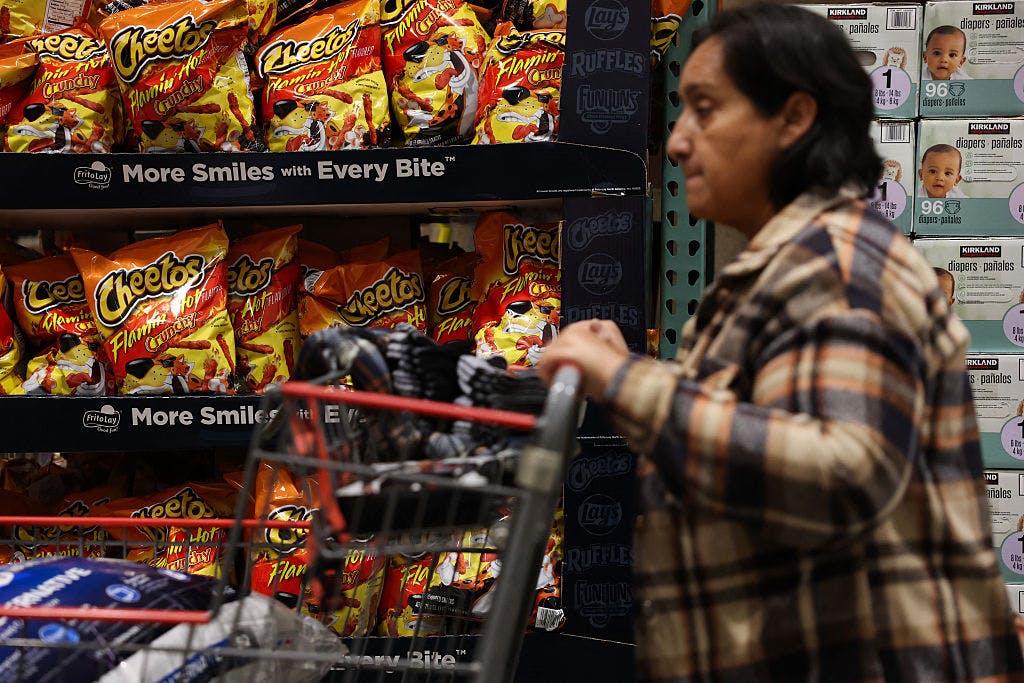
Customer passes PepsiCo Cheetos
(Patrick T. Fallon/Getty Images)
chips are down

PepsiCo is cutting snack prices across the US, with consumers “feeling the strain”

Snacks accounted for 85% of Pepsi’s North American profits last year. Does PepsiCo need a name change?

Tom Jones

Inflation-weary snack fans who struggle to resist picking up a pack of Lay’s, Doritos, or Flamin’ Hot Cheetos might find the next walk down the aisles marginally less painful, after PepsiCo announced it would be cutting prices across a range of its snacks on Tuesday.

The snack and beverage behemoth has been inundated with email and phone complaints about rising snack prices from cash-strapped consumers of late, per exclusive reporting from The Wall Street Journal. If retailers follow PepsiCo’s price cut recommendations, US customers could see lower prices on shelves starting this week, according to the company, which topped Q4 estimates yesterday.

Though the business’s execs said rising snack prices have come alongside broader inflation and soaring production costs, there’s no escaping the fact that food products have ballooned into the most lucrative part of the North American Pepsi business by some stretch.
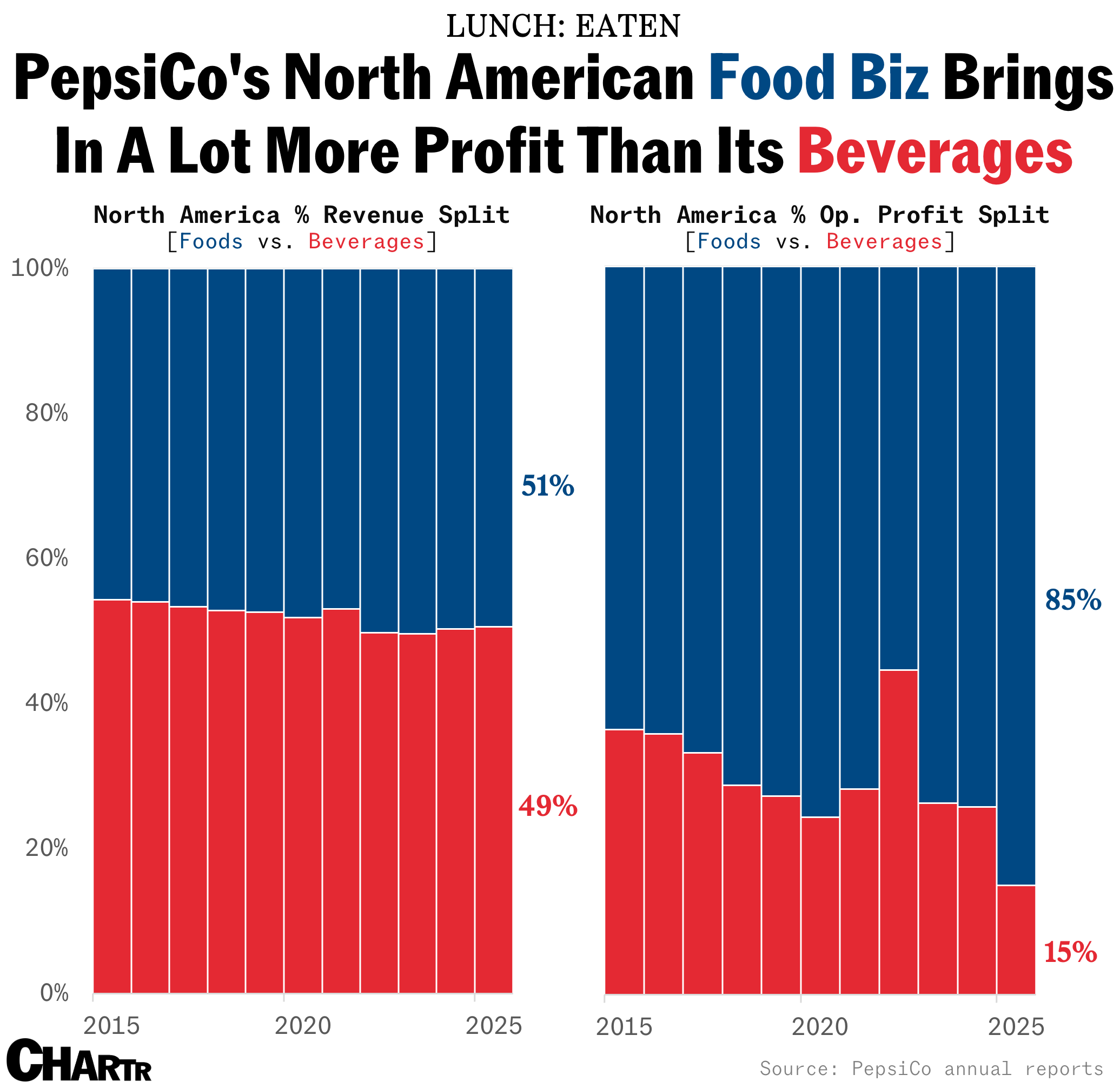
PepsiCo food/bev NA split chart
Sherwood News

In recent years, the revenue split between the PepsiCo Foods North America division — previously separated as the Frito-Lay and Quaker Foods segments — and its Beverages North America division has gotten a little closer, with an almost exact 50-50 split seen in each of the last four years. Growing more disparate, however, is the share of profit between the two: last year, the Foods division posted $6.2 billion worth of operating profit on $27.5 billion in sales, while Beverages returned just $1.1 billion on $28.2 billion worth of revenues.

More Business

See all Business
business

Lucid climbs after Uber revealed to be its second-largest shareholder following recent investment

Shares of luxury EV maker Lucid are up more than 7% in premarket trading on Tuesday, following the release of a regulatory filing that revealed Uber is now its second-largest shareholder, trailing only Saudi Arabia’s PIF sovereign wealth fund.

The news follows an announcement earlier this month that Uber and Lucid would expand their robotaxi partnership from 20,000 planned vehicles to 35,000. Along with the expansion, Uber also said it would invest an additional $200 million into the EV maker.

Per Monday afternoon’s filing, it seems that investment pushed Uber’s ownership stake in Lucid to 11.52%.

Lucid’s stock is down 29% in April. It hit an all-time low of $6.75 on Monday ahead of the regulatory filing becoming public.

In a mark of just how painful the slide has been for Lucid shareholders, as of Monday, the company’s market cap had dropped to a quarter of the approximately $9.5 billion that Saudi Arabia’s PIF has sunk into it.

Capsule Pill and Dots

Justice Department accuses telehealth Zealthy of fraud, says remedy may bankrupt it

The feds say they don’t think Zealthy has the liquidity to pay what it owes customers.

Latest Stories

Sherwood Media, LLC produces fresh and unique perspectives on topical financial news and is a fully owned subsidiary of Robinhood Markets, Inc., and any views expressed here do not necessarily reflect the views of any other Robinhood affiliate, including Robinhood Markets, Inc., Robinhood Financial LLC, Robinhood Securities, LLC, Robinhood Crypto, LLC, Robinhood Derivatives, LLC, or Robinhood Money, LLC. Futures and event contracts are offered through Robinhood Derivatives, LLC.