


GameStop’s rebooted its entire business model: 5 charts show how
Treasuries. Hardware. Collectibles. Games. In that order.
The last four years of GameStop’s history have probably been more interesting than the previous 37 combined, after the ailing video game retailer found itself at the center of a short squeeze, a movie, and a social media movement.
But since the RoaringKitty-induced mania of January 2021, the company’s actual business model has changed so much as to almost become unrecognizable.
For starters, as Sherwood News’ Luke Kawa wrote a few months ago, the company has been on the brink of being a collectibles store as much as it’s a video game giant — and now, that transition looks complete. In the Q1 results it reported last night, GameStop revealed that it sold ~$212 million worth of collectibles, 20% more than the ~$176 million it made from selling software (a segment that’s mostly video games, but also includes downloadable content). That’s a lot of trading cards, plush playthings, models, and merch.
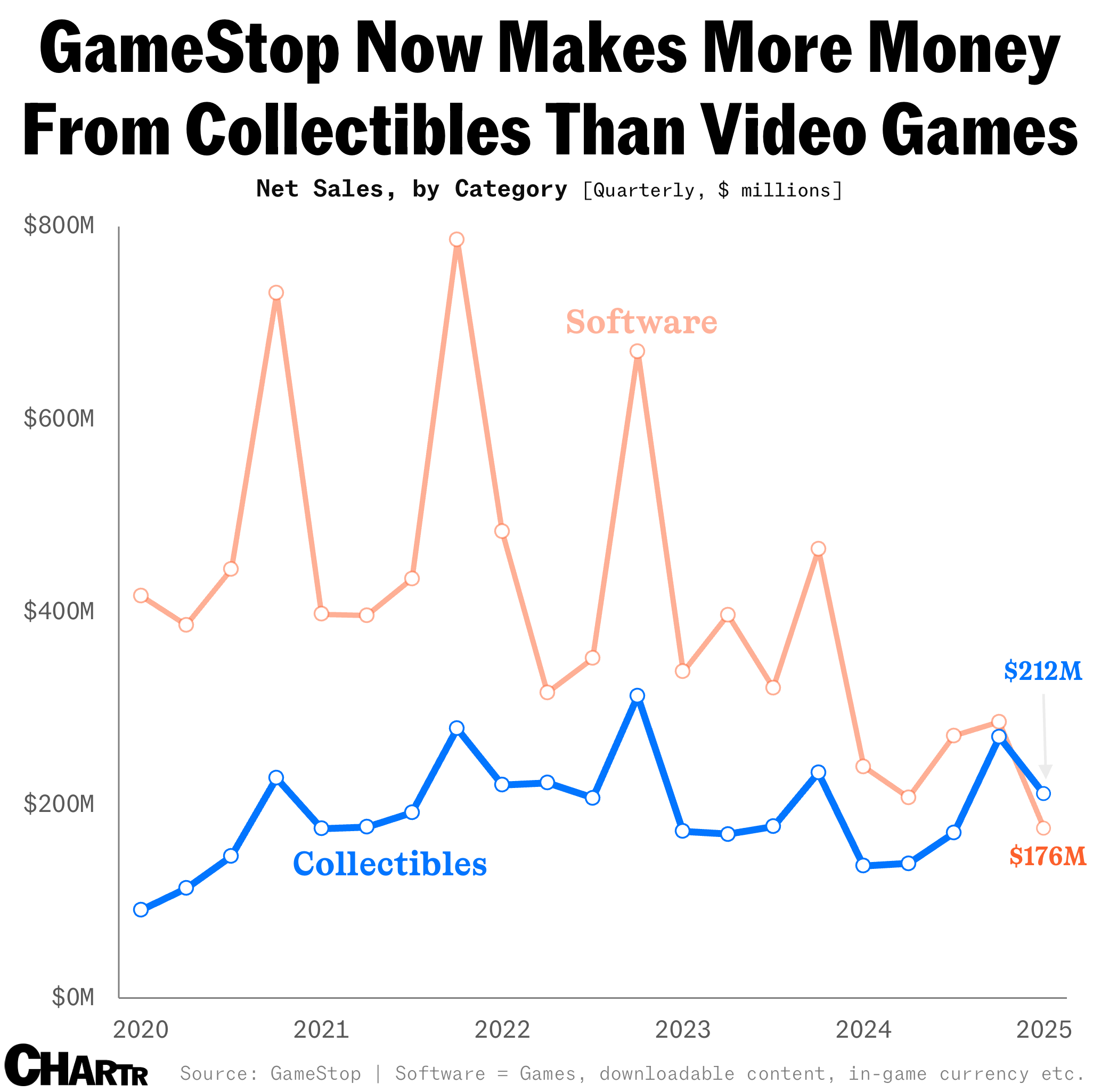
For now, the company’s hardware segment (consoles, controllers, headsets, etc.) is still its biggest source of revenue, notching $345 million in sales last quarter. But the category’s continued decline — hardware revenues dropped 38% year on year — means that GameStop can’t rely on its core operations to turn a profit like it once could. How is it, then, that GameStop has gone from a bleeding retailer, racking up hundreds of millions of dollars in losses every year, into a solidly profitable company?
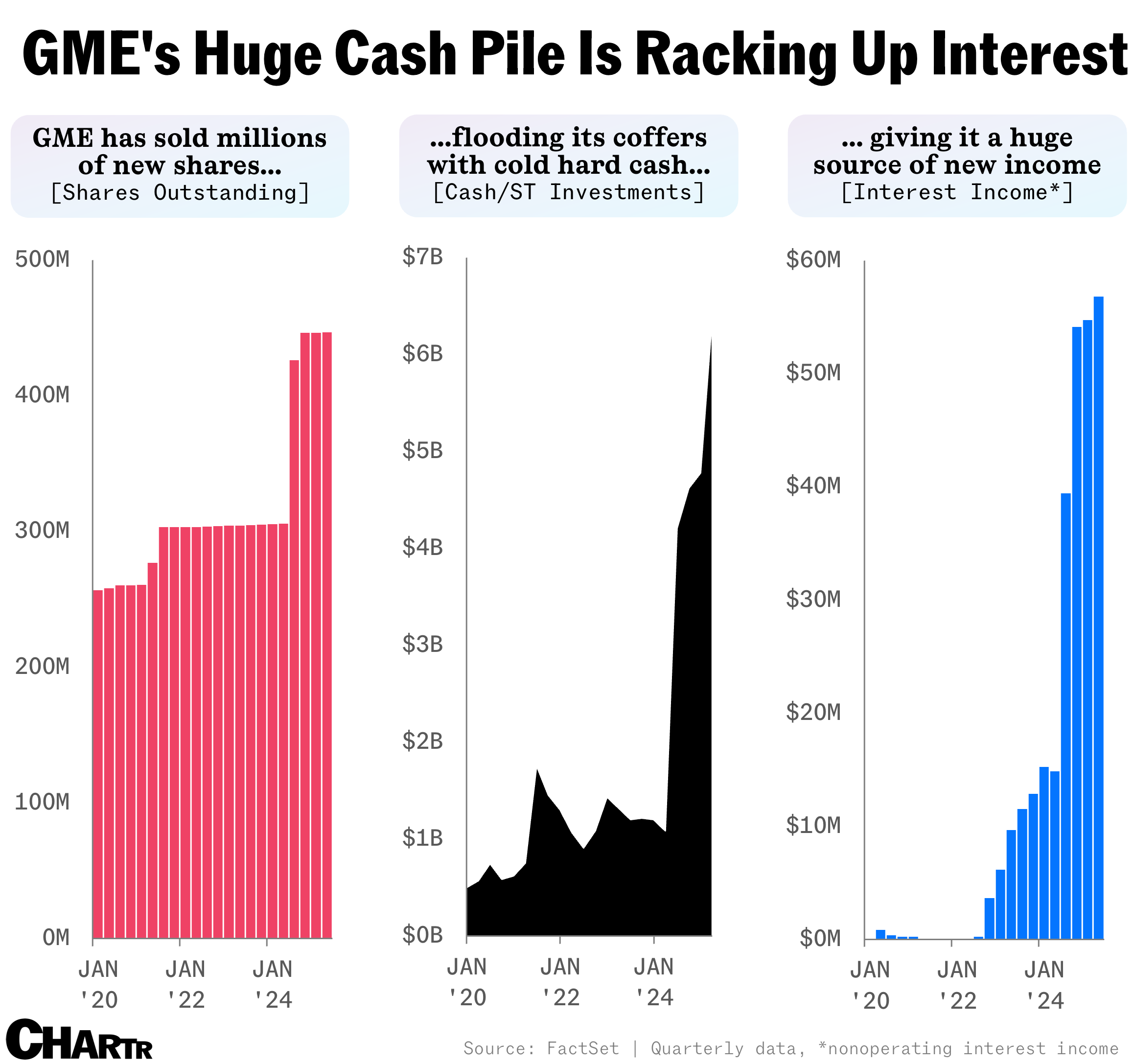
The answer, of course, is that the company has swapped selling games for selling equity, as the number of shares outstanding in GME have exploded across a two-year stretch. In turn, GameStop’s built a huge cash reservoir and parked it in US Treasurys and other bonds, giving it a steady stream of interest income that flows through to the bottom line each quarter.
Of course, investors can buy T-bills on their own dime — they don’t need to use the equity from a nostalgic retailer as an investment vehicle — though it seems many aren’t ready to exit GME just yet.



