


Diageo is considering selling parts of its struggling China business
The Guinness and Johnnie Walker giant has its work cut out in the nation, where drinking has sunk since 2015.
According to recent Bloomberg reporting, Diageo — the beverage behemoth that counts Guinness, Johnnie Walker whisky, Don Julio tequila, and more in its expansive drinks cabinet — is mulling the options for its assets in China, including potentially selling them off.
Cheers, China
The rumored move comes roughly two weeks into the tenure of new CEO Sir David Lewis, known colloquially by the British press as “Drastic Dave,” owing to his severe turnaround efforts in executive positions at companies like Unilever and UK supermarket Tesco. Under Lewis’ leadership, Diageo is looking to trim its global portfolio. China, a market that the drinks maker pointed to for dragging down net sales by around 2.5% in its first quarter of FY26, seems like quite a sensible place to start.
The fact that nationals don’t seem to be drinking nearly as much as they did 10 years ago probably hasn’t helped Diageo’s China plight, either.
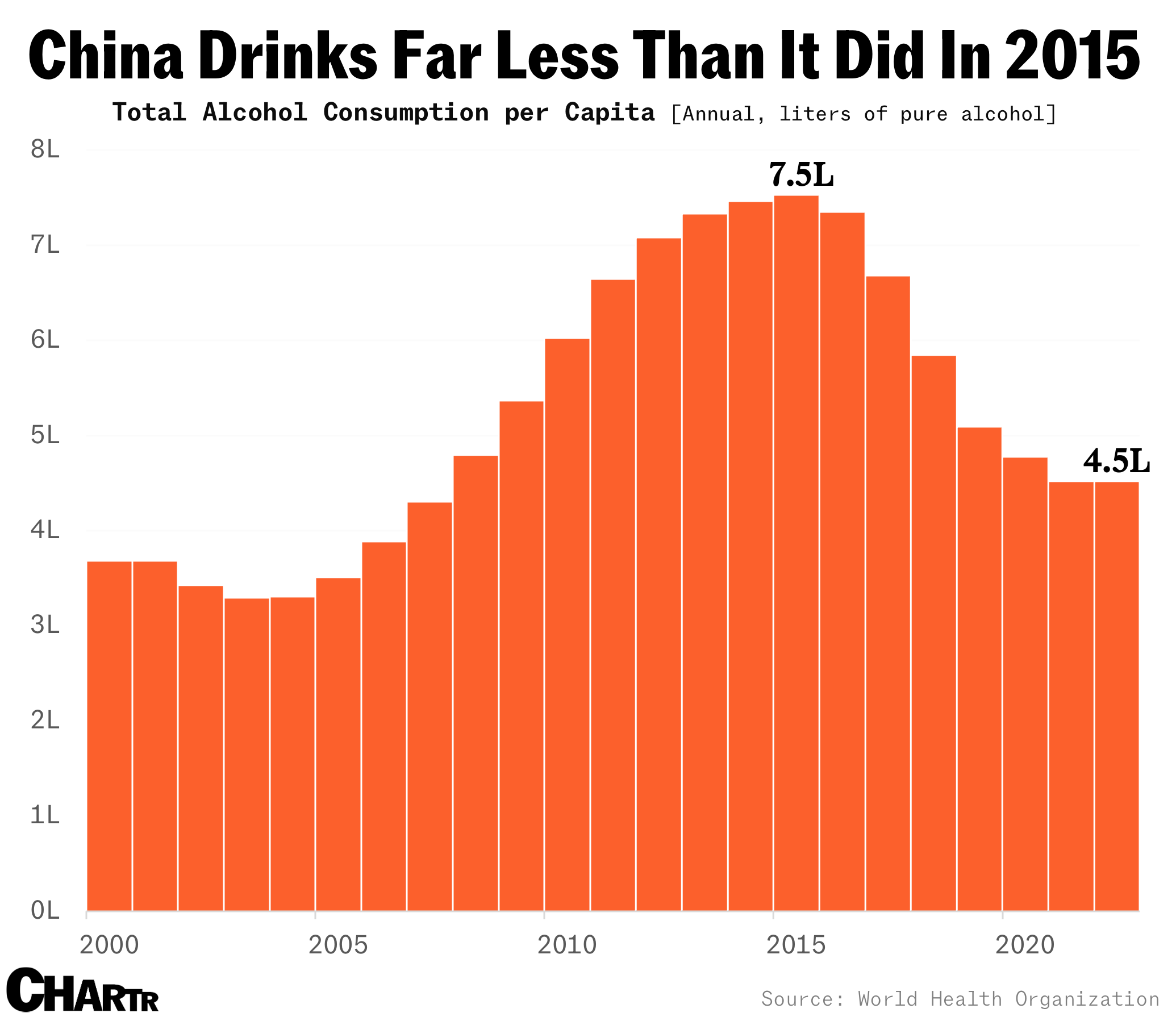
Though Diageo specifically singled out declining consumption of Chinese white spirit, or Baijiu, the country’s 5,000-year-old national alcoholic beverage of choice, to explain slumping sales in the region, China’s alcohol consumption rates more broadly have been slipping in recent years. Per figures from the World Health Organization, the average Chinese person over 15 drank the equivalent of 7.53 liters of pure alcohol in 2015; in 2022, the latest year the health body has numbers for, that consumption rate had shrunk to just 4.52 liters.
One recent study of China’s drinking drop-off picked out public health campaigns, stricter taxes and market regulations, shifting demographics, and more stringent government policies — just last summer the state cracked down on government workers drinking at official engagements as part of a wider “anti-extravagance” movement — as key contributors to the national decline.



