

INTO ORBIT?
...or back to Earth?
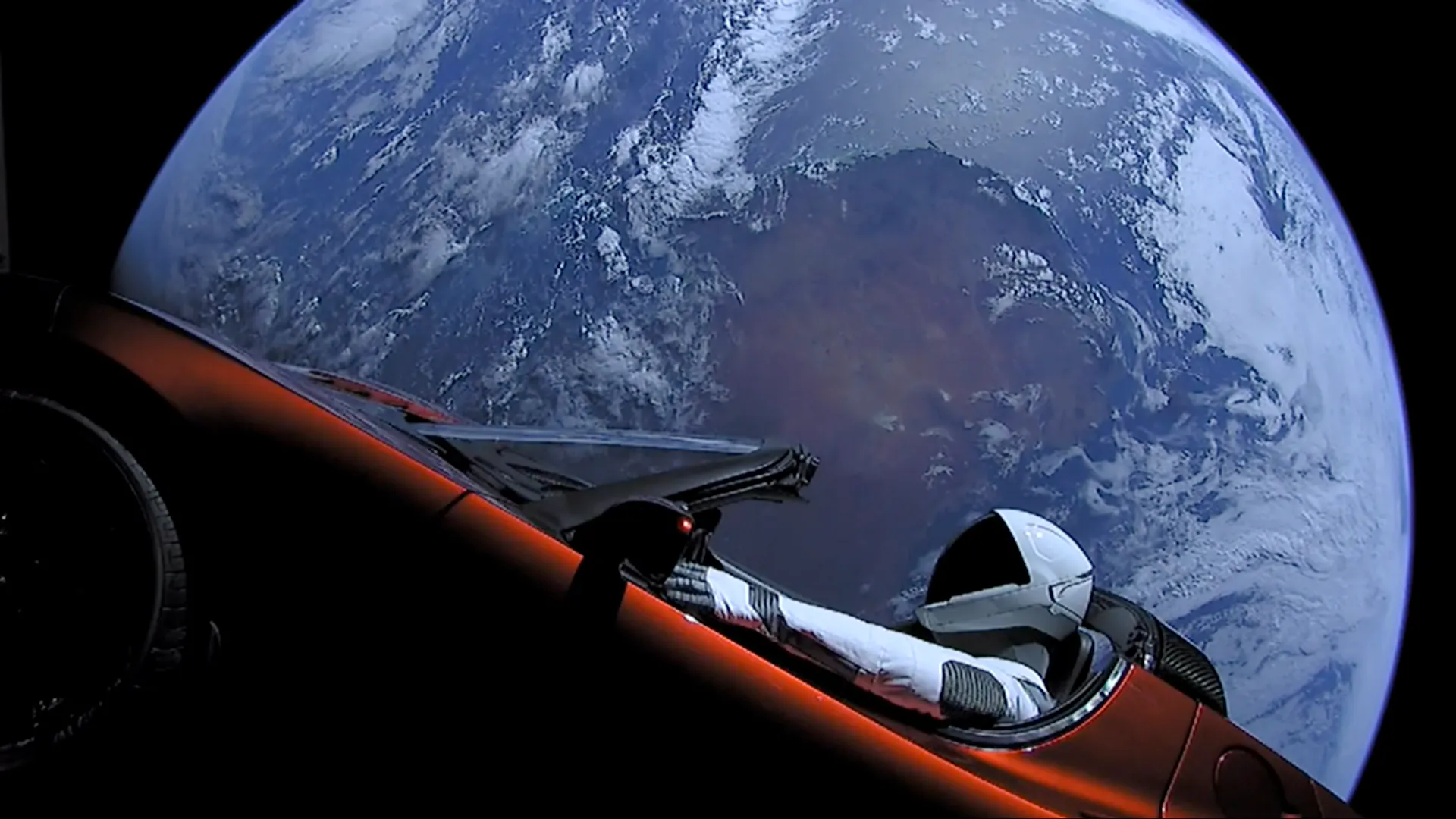
What happens to Tesla stock when SpaceX goes public?
Will one of retail’s favorite stocks take a back seat when a trendier, hipper Elon Musk company storms the market?
Tesla has long been a favorite among retail investors drawn in by the company’s relentless growth story and its leader’s singular presence.
For years, the Tesla and Elon Musk faithful have piled into the stock, driving huge gains even when results were uneven and pushing the company to a market value of more than $1 trillion. Tesla’s fundamentals have cooled off lately as Musk has shifted the company’s priorities away from producing cars, its core revenue engine, and toward an even more ambitious AI and robotic growth story.
This hasn’t dampened retail enthusiasm. In fact, this year Tesla has been the second-most-traded stock by value among retail investors, data from Vanda Research shows. Those investors account for roughly 30% to 40% of discretionary trading volumes, Vanda said.
But that loyalty has never really been tested by a true alternative — another Elon Musk company investors could easily buy into. That could change with a SpaceX IPO looming as soon as June, which could reportedly give retail investors an unusually large 30% allocation.
And it could call into question how strong Tesla’s hold over the retail market truly is.
Both Tesla and SpaceX are led by the same iconoclastic figure, tackling seemingly impossible problems. Both are built on growth narratives that ask investors to rethink not just what’s financially possible, but also what’s physically possible. Musk’s pay at each company hinges on hitting extraordinary valuation targets — $8.5 trillion at Tesla and $7.5 trillion at SpaceX — far beyond even today’s largest companies.
We’ve previously argued that the companies have so much in common, they may already be merged in Musk’s mind. But until that happens, is this a zero-sum game for retail investors, or can both of Musk’s ships rise together?
So what will happen to Tesla when SpaceX goes public? We asked some experts, and here are the possibilities.
Nothing
Melissa Otto, head of research at S&P Global Visible Alpha, says SpaceX’s value proposition won’t hurt Tesla’s.
“Investors want to get behind stories where they feel like the company is going to create a lot of shareholder value: it’s going to outperform the index. It’s going to make great use of free cash flow and drive momentum in a way that delivers outsized returns,” she told Sherwood News.
“If you’ve got two stories that are doing that, so be it.”
While Otto acknowledged that there’s a limited amount of retail capital, she doesn’t see it coming out of Tesla and going into SpaceX.
“You could see a rotation; you could see investments coming out of other things,” she said.
Between Tesla and SpaceX, however, she said it’s not a zero-sum game.
Something
Seth Goldstein, a senior equity research analyst at Morningstar, said he expects retail investors to be enthusiastic about both SpaceX and Tesla. But he sees limited retail funds as a potential downside for Tesla.
“To the extent that a lot of retail investors have a lot of their money in Tesla, they’ll probably trim some of that and put it into SpaceX,” he said, but he thinks they won’t forgo their Tesla stake altogether. However, going forward, investors already holding Tesla may choose to allocate future investments to SpaceX so they can get exposure to both.
“I wouldn’t be surprised if most of the Tesla enthusiast retail holders would end up holding both Tesla and SpaceX shares,” Goldstein said.
In case you’re wondering what Wall Street thinks more broadly, analysts’ price targets for Tesla’s stock had been trending down since late December, before recovering some of their ground recently.
Everybody wins
After a sell-off in the fall, retail investors have been buying Tesla again in recent weeks, according to Viraj Patel, deputy head of research at Vanda. And sure enough, the stock is up more than 20% over the past month after losing about 30% of its value from mid-December to early April.
“Could it be SpaceX? Could it be some pre-positioning of earnings? Could it be their love for Tesla has just come back again? Something has happened,” he said.
Patel isn’t quite sure what, noting there’s “no template for companies like this.”
When Patel considers retail interest in Tesla and SpaceX during the lead-up to the SpaceX IPO, one comparison that keeps coming up is SPACs in 2021.
Back then, retail investors piled into celebrity-led blank-check companies that raised money first and figured out what to buy later.
“It didn’t matter what the company was — if a certain individual was linked to it, retail bought it,” he said. “Rather than looking at the valuations or the bottom-up or the accounts, the sort of meme stock nature of this trade is going to attract interest.”
This time, he said, it’s possible that anticipation around the SpaceX IPO is helping draw retail investors back into Tesla and into tech more broadly.
Or perhaps investors see the companies as closely linked — two parts of a broader Musk ecosystem with multiple business partnerships spanning AI, robotics, and space — and are betting that momentum in one could lift the other.




