
Markets
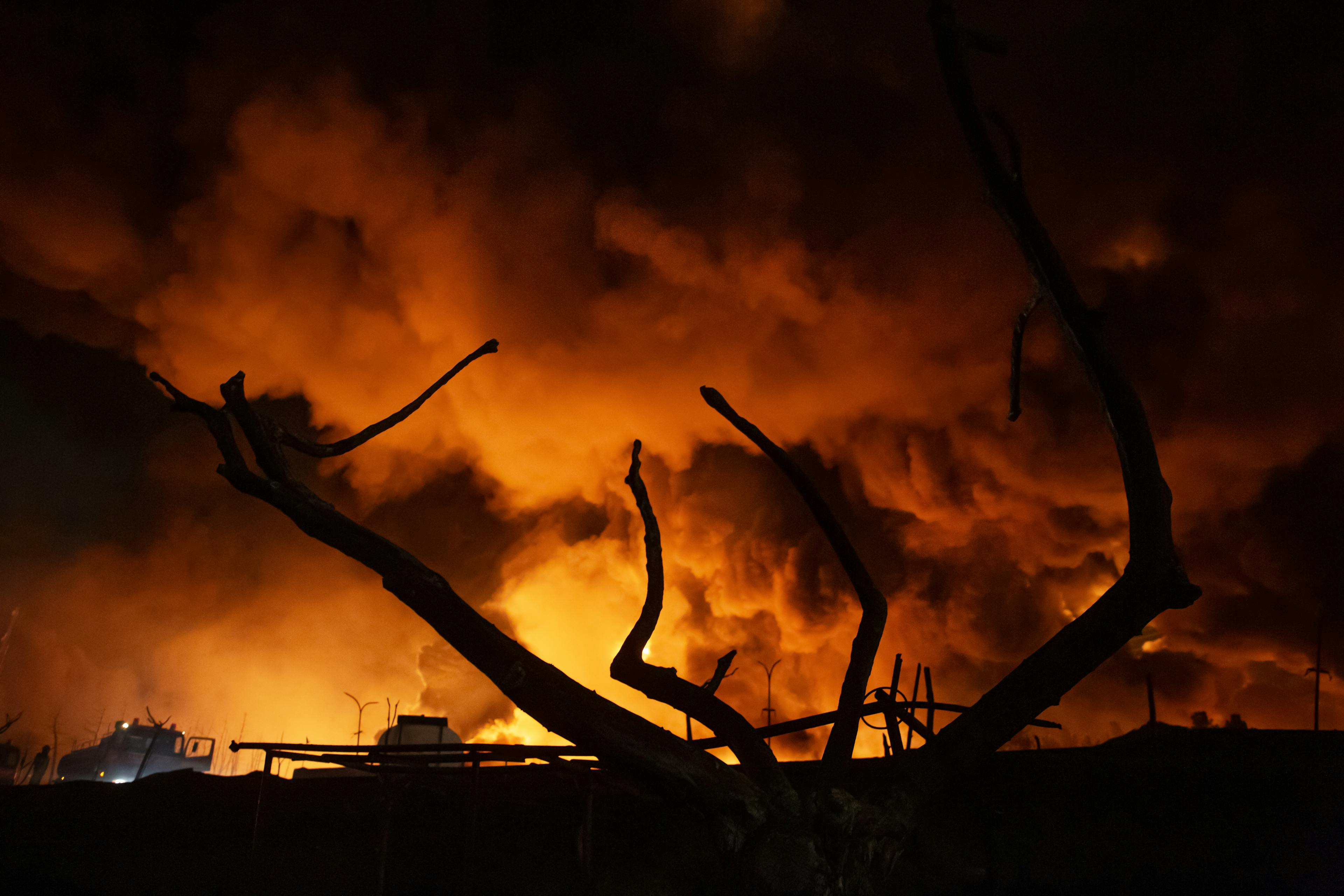
Tehran’s Shahran oil depot burns after US and Israeli attacks. (Photo by Hassan Ghaedi/Anadolu via Getty Images)
Tehran’s Shahran oil depot burns after US and Israeli attacks (Hassan Ghaedi/Getty Images)

What analysts say they’re looking for next in the oil markets

“It has the makings of a once-in-a-generation market dislocation.”

Oil markets continue to whipsaw on the latest headlines on the war in Iran, with the president’s comments yesterday that the war “is very complete, pretty much,” apparently helping to calm the nerves of traders.

Benchmark US oil prices are now down over 25% from the eye-popping nearly $120 a barrel they touched Sunday night.

A report out of Reuters — citing three unnamed sources — that the White House is considering easing sanctions on Russia to cool off energy prices may be adding to the downward pressure.

Oil field services companies such as SLB Limted, Baker Hughes, and Halliburton rallied on the news Tuesday. Fuel refiners and retailers like Valero, Marathon Petroleum, and Phillips 66 also rose, as the decline in oil prices could boost their profit margins.

Still, the price of crude is up more than 30% in the last month. And the national average price of a gallon of gas is up more than 20%. The crucial regional choke point known as the Strait of Hormuz remains, essentially, closed.

As long as the Iran war continues, the eyes of investors and traders will be riveted to energy costs, with much of the market taking its cues from the latest headlines about what can still become a global energy crisis.

We spoke to two top energy analysts, asking them for their thoughts and ideas about what to watch as the situation evolves.

“It has the makings of a once-in-a-generation market dislocation,” said Tom Liles, senior vice president of upstream research at energy consulting firm Rystad.

Liles said one area to watch is the effort to find alternative ways to move crude oil out of the Persian Gulf.

The closure of the Strait has left producers without a way to move most of their liquid energy products. As a result, producers in Iraq, Kuwait, and Saudi Arabia have started to cut production. Production cuts in the Persian Gulf region have now amounted to roughly 7% to 8% of global demand, Liles said.

That makes other shipping options crucial, Liles said. The best option is an east-west pipeline carrying oil from Saudi Arabia’s primary oil-producing region in the east of the country to the western port city of Yanbu on the Red Sea.

That pipeline could help alleviate some of the pressure related to the Strait.

“That’s where they’re going to attempt to send a lot of volumes,” Liles said.

On Tuesday, Saudi Aramco Chief Executive Amin Nasser told analysts on the company’s Q4 conference call that he expects that pipeline to Yanbu to reach its capacity of 7 million barrels a day within a few days.

But about 2 million barrels of that will be used for domestic refining. And despite having roughly 5 million barrels available for export, there will delays in shipping related to redirecting tankers into the Red Sea, rather than the Persian Gulf, Nasser said.

That means the key issue remains the Strait, which remains roughly 90% closed, according to Rory Johnston, an independent energy analyst and the founder of research group Commodity Context.

President Trump had mused on social media about ordering naval escorts for tankers attempting to cross the channel. But on Tuesday, General Dan Caine, chairman of the Joint Chiefs of Staff, told reporters at a Pentagon briefing that no orders for such an escort have been issued.

Liles said such an escort wouldn’t be without risk, either.

“It could help,” he said. “It could also go in a lot of different directions if a Navy ship is hit or if a tanker is hit.”

The pressure, however, is building. And the combination of high oil prices and the renewed availability of war insurance coverage for tankers will raise incentives for someone to try to cross the Strait, Johnston said.

“The longer this goes on and the higher prices get and the more kind of insurance is available, etc., you’re going to begin to build incentives to begin pressuring people to cross the Strait again,” Johnston said. “We’re waiting to see when that will happen. And if Iran starts bombing those tankers very aggressively, well that resets it again, and then we need to figure something else out.”

In the meantime, high oil prices — if sustained — could begin to weigh on the global economy and even erode demand for oil, a process known as “demand destruction.”

Johnston is keeping a close eye on so-called crack spreads — essentially refiner margins — which give a sense of the cost end users will actually have to pay for refined fuel products like gasoline or diesel.

“Diesel as an example was around a crack spread, or a refining margin, of around $40 going into this. And now it’s at $60 a barrel,” Johnston said. “I think that will continue. And it’s those prices that are going to force the demand destruction across the consuming world.”

Another development to watch, Johnston said, would be for any chatter about possible releases from strategic oil reserves, which could ease pressure on prices. (Energy ministers from the G7 group of nations on Tuesday asked the International Energy Agency to study options for releases from strategic reserves.)

During Covid-era inflation, which coincided in part with an energy shock related to sanctions on Russia in response to its invasion of Ukraine, the Biden administration released oil from the US strategic reserve to ease prices.

“The White House is quite resistant to tapping those reserves, because they lambasted Biden about it,” Johnston said.

At any rate, without a conclusive resolution to the war or the reopening of the Strait, Johnston expects crude oil prices to rise.

“When we jumped $25 a barrel in a day, I thought that might be overdoing it,” Johnston said of the price spike that hit early Monday morning. “But I think we will get back there very soon if this doesn’t end.”

More Markets

See all Markets
markets

Boeing faces Q1 delivery slowdown after discovering 737 wiring issues

Boeing shares dropped on Tuesday following the company’s announcement that it will delay some 737 Max deliveries this month after discovering scratches on wiring within the planes.

According to the plane maker, fixing the issues could take a matter of days for each plane. This could impact March and Q1 delivery figures, but Boeing doesn’t expect yearly totals to be affected.

Boeing is still producing an average of 42 737 Max planes per month, The Seattle Times reported. The FAA raised Boeing’s 737 production cap late last year.

Boeing delivered 51 commercial planes in February, its highest total for the month since 2018. The figure far exceeded the 35 deliveries for Airbus, the company’s European rival.

Boeing is still producing an average of 42 737 Max planes per month, The Seattle Times reported. The FAA raised Boeing’s 737 production cap late last year.

Boeing delivered 51 commercial planes in February, its highest total for the month since 2018. The figure far exceeded the 35 deliveries for Airbus, the company’s European rival.

markets

Hims continues to rise on analyst upgrades following its Novo Nordisk partnership

Shares of telehealth company Hims & Hers climbed Tuesday as analysts upgraded the stock following the Monday announcement of its landmark deal with Wegovy maker Novo Nordisk.

Shares were recently up 12%.

Citi upgraded Hims to “neutral/high risk” from “sell/high risk” in a Monday afternoon note, writing that the deal “significantly de-risks Hims.” Citi analyst Daniel Grosslight wrote:

“Valuation remains tricky for Hims as much hinges on (1) how much compounded GLP-1 revenue/adj. EBITDA remains post-partnership and (2) how much of the hole HIMS can fill with its branded offering.”

Hims also received an upgrade to “neutral” from “underperform” from Bank of America:

“By partnering with Novo Nordisk and transitioning patients to Novo’s branded product, Hims is likely to experience some attrition, but is also likely to gain new members that are looking for a branded drug.”

The deal will see Novo’s Wegovy offered on Hims in its injection and pill forms later this month, priced at the level Novo charges for self-pay. Hims will also offer Ozempic to treat diabetes. Hims won’t advertise compounded GLP-1s, according to Novo Nordisk. A previous deal between the companies last year fell apart in 55 days after Novo accused Hims of “illegal mass compounding and deceptive marketing.”

markets

Nio just reported its first-ever quarterly profit in its Q4 results

Chinese EV maker Nio jumped in premarket trading on Tuesday after it reported solid top- and bottom-line results, booking its first-ever quarter of positive (non-GAAP) operating profits, some 1,251 million yuan ($179 million), on a quarterly basis.

Nio reported adjusted net earnings of $0.04 per share in Q4, beating the $0.02 loss per share expected by Wall Street analysts (compiled by FactSet).

The company booked $4.95 billion in revenue, also topping the $4.86 billion consensus estimate, and deliveries came in at 124,807, up more than 70% year on year.

Looking ahead, the company says that it expects deliveries of vehicles “to be between 80,000 and 83,000 vehicles” in Q1 — an acceleration in growth, with those figures implying annual rises of 90% and 97% from the same quarter of 2025. However, Bloomberg estimates suggest this figure might marginally disappoint — with analysts currently penciling in 88,700 deliveries for Q1 2026.

Celebrating its first quarter of profits, CFO Stanley Yu Qu cited the company’s “strong delivery and revenue growth, an optimized product mix, and cost reduction and efficiency enhancement initiatives” in its press release.

CEO William Bin Li also added, “Looking ahead to 2026, we will continue to invest decisively in our twelve full-stack core technologies, launch new models, enhance the commercial and operational capabilities of our battery swapping and charging network, and continue upgrading our sales and service network.” Nio shares climbed in late February after it announced that it had reached 1 million battery swaps — its alternative to fast charging — in less than a week amid the Lunar New Year holiday. This month, Nio’s Chinese rival BYD unveiled a fast-charging battery seen as a direct challenge to the EV maker’s swap station network.

markets

Oil slides and stocks tepidly rise after Trump says US-Iran war is nearing its end

Oil prices dropped on Tuesday morning, with front-month crude futures down more than 6%, as traders digested President Trump’s comments late Monday suggesting the US-Iran conflict may soon end — easing fears that have rattled global energy and stock markets over the past 10 days.

On Monday, Trump told CBS News reporter Weijia Jiang in a phone interview that the war is “very complete, pretty much.” He later tempered that somewhat at a separate press conference held at Trump National Doral in Miami, saying the conflict would end “very soon,” though not this week.

Since US and Israeli strikes on Iran began on February 28, markets have been experiencing relentless volatility: Brent crude surged to nearly $120 per barrel during Mondays trading session, the highest intraday price since the early days of the Russia-Ukraine war in 2022. Gas prices, which largely track crude, even breached the $3.50-per-gallon mark, with analysts and prediction markets eyeing the $4 mark as a real possibility if the conflict drags on.

Despite Tuesday’s pullback following Trump’s remarks, oil prices remain elevated, up roughly 50% since the start of the year as disruptions continue around the Strait of Hormuz, through which about a fifth of the world’s oil flows.

After turning a deeply red day into a green one yesterday, equity traders continued to breathe a tentative sigh of relief. After the S&P 500, Nasdaq 100, and Russell 2000 closed higher Monday, wiping out steep intraday losses, S&P 500 futures were modestly in the green early on Tuesday, while Europe’s STOXX 600 rallied ~2%.

As of 9:07 a.m. ET, however, S&P 500 futures have dipped 0.22% and oil has pared some of its earlier losses, following Defense Secretary Pete Hegseth’s warning that today would be the “most intense day of strikes inside Iran.”

Go Deeper: Why extreme oil price volatility sets off alarm bells for markets and the economy

Latest Stories

Sherwood Media, LLC produces fresh and unique perspectives on topical financial news and is a fully owned subsidiary of Robinhood Markets, Inc., and any views expressed here do not necessarily reflect the views of any other Robinhood affiliate, including Robinhood Markets, Inc., Robinhood Financial LLC, Robinhood Securities, LLC, Robinhood Crypto, LLC, or Robinhood Money, LLC.