Hyperscalers and hard hats
If you build it, gains will come

Tech giants including Microsoft and Oracle can’t get data centers built fast enough. Construction stocks are ripping on the demand.
The buy-the-AI-bottleneck trade is starting to encompass builders, whose margins are rising.
Everyone knows beneficiaries of the AI buildout have been great trades over the past few years.
From memory plays like Sandisk and Micron to AI energy stocks like GE Vernova and Constellation Energy, some of the biggest gainers have been participants in the data center boom taking their cut of the hundreds of billions of dollars tech giants are pouring into AI.
Now, a slightly less glamorous group of AI beneficiaries are getting their moment in the spotlight: the staid construction and engineering companies performing the nuts-and-bolts work of clearing sites, pouring concrete, running wiring, and designing water and HVAC systems.
Analysts and tech executives say construction work itself has become another big bottleneck in the AI buildout, putting a significant amount of negotiating leverage in the hands of the companies performing the work.
Construction and engineering companies like Comfort Systems USA, MasTec, Sterling Infrastructure and Everus Construction, are seeing their profitability rise, and in some cases, hit record highs, as they find themselves in a strong position to negotiate with tech companies desperate to get data center “shells” — as the structures are commonly called — built and powered up as quickly as possible.
“What's limiting their capacity is that they don't have enough powered-up data center square footage,” said longtime Wall Street analyst Mark Moerdler, who covers hyperscalers like Microsoft and Oracle for Bernstein Research. “They can get the servers. They can get the GPUs. They just can't get the physical space to put the servers in.”
The frenzy reflects rising pressure data center owners are facing to prove the profitability of their investments, which hinges largely on having as many centers running as possible. It also suggests some of the big spenders see the growing difficulty and delays in the data center business — in part because of growing political pushback to data centers among the public — as an indication that the initial gold rush phase of the AI era could be waning.
Either way, construction companies look set to capitalize. The struggle to build data centers is behind a surge in share prices that has made the industry, by some measures, the best-performing segment of the stock market this year outside of the war-driven energy sectors.
The S&P 1500 construction and engineering sub-index, a group of 16 mid-to-large cap companies, is up more than 25% in 2026 and has more than doubled over the past 12 months. (For comparison, the entire S&P composite 1500 is down slightly this year.)
Houston-based mechanical contractor Comfort Systems USA has more than quadrupled over the last 12 months. Civil infrastructure builder Sterling Infrastructure, also out of Texas, has tripled. Bismarck, North Dakota, electrical contractor Everus Construction, Florida engineering and construction firm MasTec, and telecommunications and wiring system builder Dycom, also from Florida, have all doubled. Norwalk, Conn.-based electrical and mechanical contractor Emcor is up roughly 90% over the past year.
The reason why is fairly straightforward: for many of these companies, levels of profitability are hitting never-before-seen heights, as hard-hat executives find themselves, remarkably, in a powerful position to negotiate with the world’s largest companies trying frantically to spend a seemingly inexhaustible amount of money on AI.
“We see no slowing of demand from most of our end markets and continue to see exceptional prospects in our data center markets,” Emcor CEO Anthony Guzzi told analysts after the company’s earnings results late last month. In that report, it posted record annual revenues, operating margins, and adjusted earnings per share.
That balance of power is perhaps easiest to see in the expanding profit margins of some of these companies:
Since the fourth quarter of 2022, net income margin for Emcor has risen from 4.3% to more than 9% at the end of last year.
Comfort Systems’ net margin has risen from under 5% to more than 12% over the same period.
Sterling Infrastructure’s margin is nearly 12% too, a massive improvement from 4.5% where it hovered ended 2022, before the AI boom hit.
“Data center, that margin is historically better than the smaller kind of industrial commercial jobs,” Joseph Cutillo, CEO of Sterling Infrastructure, told analysts last month after his company reported the highest adjusted operating margins in its history.
In part, contractors are benefiting from the clear imperative hyperscalers have to get data centers built as quickly as possible, as tech executives fixate on the lack of powered-up “shells” as the hurdle to maximizing AI-related profits. Late last year, Microsoft CEO Satya Nadella said, “It’s not a supply issue of chips; it’s actually the fact that I don’t have warm shelves to plug into.”
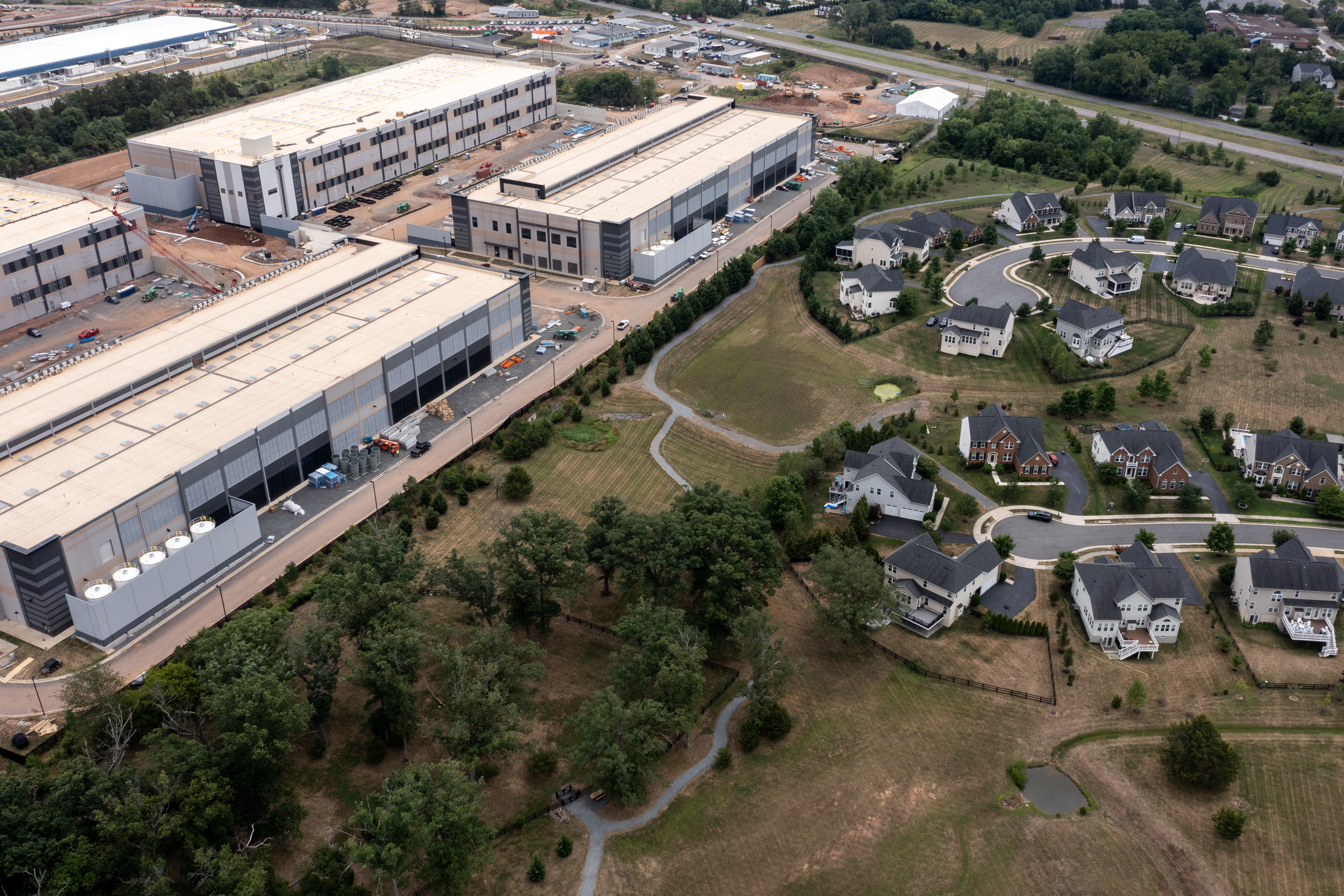
Just this month, Oracle CEO Clayton Magouyrk made a similar point on his company’s earnings call.
“The reason that we're not even more profitable right now — despite the fact that we are continuing to grow EPS, etc. — is because we have so much under construction at one time,” he said. He continued, “as our business is going through this hyper-growth phase, that's the only drag on profitability.”
At the same time, there are indications that the AI buildout is increasingly getting bogged down by issues that can’t be solved any faster merely by money alone.
For many data center projects, construction delays would perhaps be more accurately described as delays in accessing adequate power due to the unique requirements of the industry.
Unlike traditional, large commercial construction customers — which tap into nearby substations operated by the local utility — AI data centers now commonly require, essentially, a separate onsite substation for the data center’s own use, says Gordon Dolven, who heads up research on the data center sector for giant commercial real estate brokerage CBRE.
“This is unprecedented in terms of the requirement to go out and procure these pieces of electrical equipment,” Dolven said, adding that delivery of such the required gear now takes more than a year.
This is a big part of the reason that data center buildouts are increasingly hitting delays and snags. Analysts at Jefferies in a note last month reported that some 25 data centers had been delayed or canceled in January, a 56% increase from the prior month. And delays appear to be proliferating.
“If a company hasn’t admitted to missing a delivery date in the data center business, it is likely not telling the truth,” wrote a Citizens Bank analyst, paraphrasing the commentary of an industry executive at a recent conference, in a late February report.
And building isn’t getting any easier, as public opinion seems to be turning against data centers, complicating corporate plans for AI domination based on owning large fleets of these facilities.
Recent polling has shown the public has rising concerns related to home energy costs, environmental impacts, and the quality of life for people living nearby. As a result, local political pushback against plans for data center projects has grown across the country.
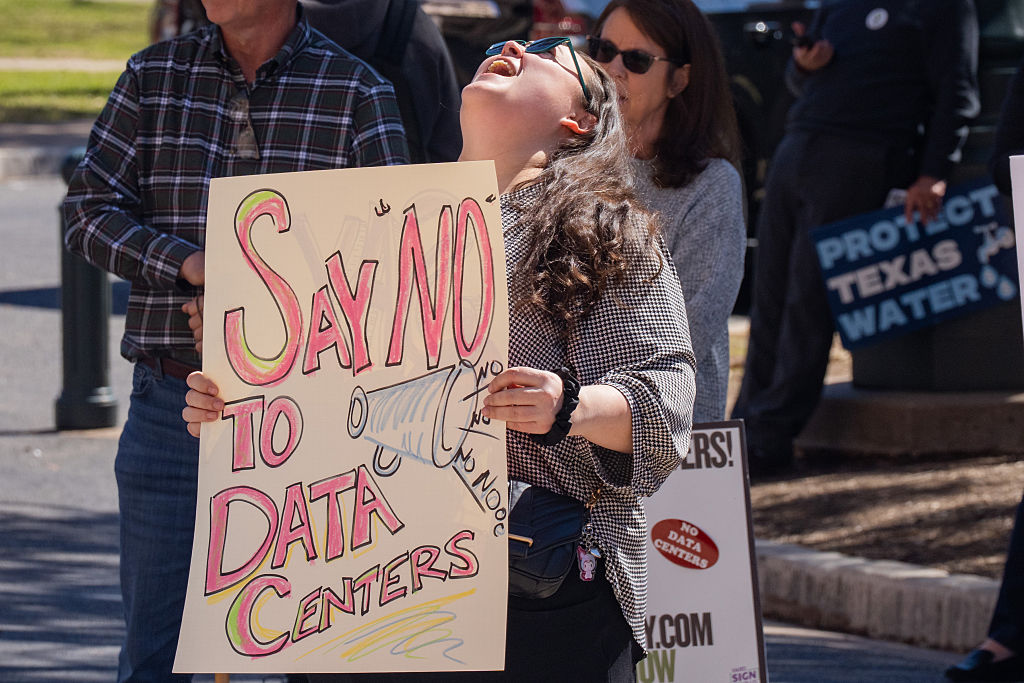
“Data center NIMBY-ism on the rise,” wrote analysts covering data center REITs for Jefferies Research in a note late last month, adding that “this dynamic raises execution risk for new projects.”
In a note published last week, Barclays analysts remarked on the “significant focus on growing not-in-my-backyard (NIMBY) resistance to data center development,” at a March conference on AI power demands hosted by the Federal Reserve Bank of Dallas.
That backdrop puts additional pressure on companies to get their data centers finished as fast as possible, and strengthens the hand of the construction and engineering companies. As their margins show, they can, relatively speaking, name their price, as companies rush to build as much as possible before this window of the AI boom closes.
After all, as Barclays analysts put it in a recent note: “The days of flying into a town and easily developing a data center are over.”