Will investing in kids games finally make Netflix Games “the Netflix of games”?
Netflix is launching a game for preschoolers, its latest foray into stuff-you-play instead of stuff-you-watch.
The world of kids entertainment has moved on a lot in just a few generations. Gone are the days of wooden toys, marbles, and toy soldiers — now, tech giants launch apps directly targeted at preschoolers, hoping to convince their parents that the distractions are just the right amount of stimulating (enough to keep them occupied without rotting their brains, in case you were wondering).
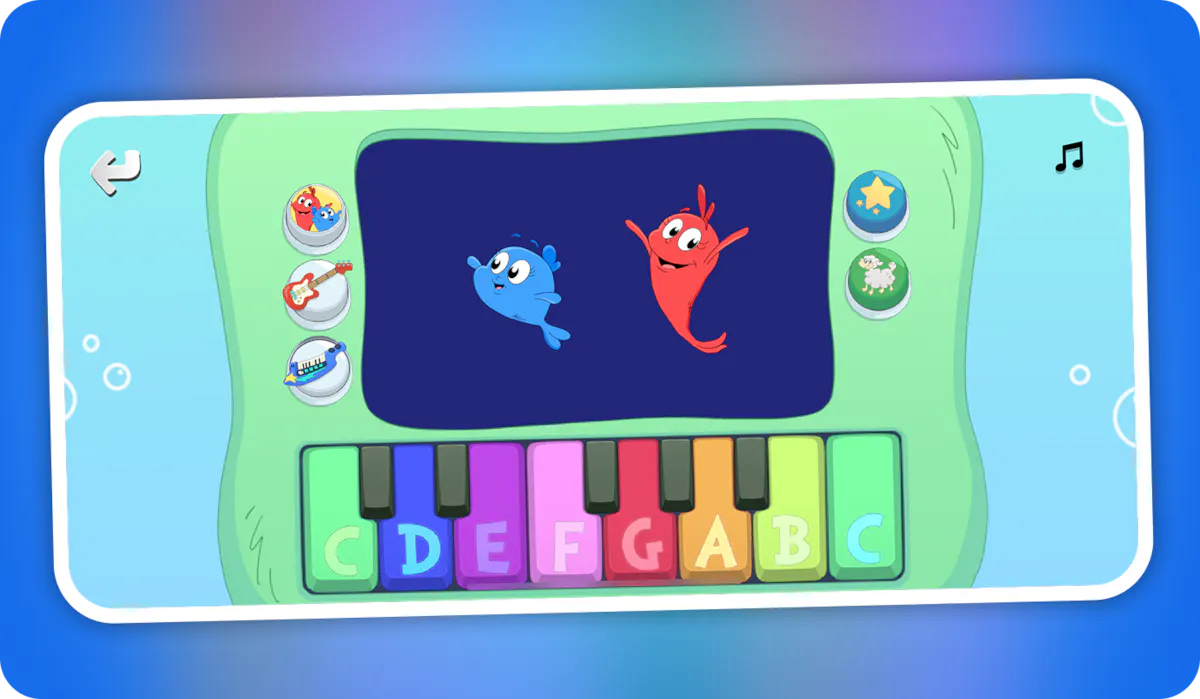
Netflix’s latest gaming app, “Playground,” is exactly that — “a world where your kids can step inside their favorite stories and interact with their best-loved characters in entirely new ways,” per the company. And it’s a prime example of Netflix’s renewed gaming strategy: serve up compelling content that supplements its main streaming offering.
Netflix is not chill
Despite spending at least $2 billion in its gaming business — analysts estimate that Netflix spent $1 billion by fall of 2023, and another billion in 2024 alone — downloads for apps under the Netflix Games portfolio have largely hovered around 2 million to 4 million new monthly downloads in the past three years, according to estimates provided to Sherwood News by Appfigures. There have been some huge hits, including highly anticipated launches like “Grand Theft Auto: The Trilogy” in December 2023, which boosted downloads north of 25 million in a single month, but many of these spikes were short-lived.

In a talk at the Game Developers Conference last year, senior leaders within Netflix’s gaming division characterized the company’s initial strategy as focused on pumping out as many games onto the service as possible.
But starting in late 2024, Netflix gaming went under the knife, with the company shutting down its high-budget, blockbuster AAA game studio “Team Blue” before it released even a single title, laying off dozens of gaming employees, and trimming down its typical 30 to 40 annual game releases to only 18 in 2025, per Appfigures data.

The company’s latest releases are simpler games like “Pictionary: Game Night” — formats that are a long way from the blockbuster games that once dominated the industry. Indeed, Netflix is cutting back on expensive games based on “borrowed” intellectual property, like “Grand Theft Auto,” which is probably costing Netflix an undisclosed fortune — likely tens of millions of dollars, if Take-Two’s inferred deals with other companies are anything to go by.
The key difference behind the transition is how it’s now trying to “match the overall ambition of Netflix” to avoid being a “distraction.” That makes Netflix Games’ internal criteria for success quite different from other game makers. The ability to drive engagement back to its linear programming matters, making experiments like the “watch along” feature for “Squid Game: Unleashed,” which unlocked certain rewards for players who viewed the show, possible. That means a very different business model to the smaller independent game publishers, which often need to cram their games with ads and in-app purchases.
For Netflix execs, it’s also hopefully making the existing audience base more “sticky.” 70% of Netflix’s viewership happens on TV, and making sure games can be played on mobile and smart TVs is a priority. Building more interactive games that could extend the life of its shows means better bang for its content buck — and that makes kids a key gaming audience, too, as they make up some 15% of Netflix’s linear entertainment viewing hours.
Are you still playing?
Back in its end-of-year letter in 2019, Netflix told investors that “we compete with (and lose to) ‘Fortnite’ more than HBO,” situating itself in a competitive attention economy with all forms of media vying for audience screen time.
As the lines between shows, sports, podcasts, and games get increasingly blurred, that comment is still relevant — but Netflix now seems to be looking at gaming more as another opportunity than a threat, especially considering its rich audience base and cash pile, which gives it something of a “golden ticket” amid the wider struggling gaming landscape. After all, Netflix Games’ estimated $2 billion spend up until 2024 would still only be roughly one-tenth of its eye-popping $20 billion content spending planned for 2026.