Business
The economics of coffee: A visual breakdown

The economics of coffee: A visual breakdown

Caffeine dreams

Giuseppe Lavazza, chairman of one of the world's leading coffee roasters, expects customers to be able to get their caffeine fix cheaper in the coming months, as consumers begin to benefit from the falling price of wholesale beans. With more than 60% of Americans drinking coffee every single day, you might expect the price of coffee to be headline news.

But, even if coffee wholesale prices do tumble, your morning fix — particularly if bought from a cafe — is unlikely to change much.

A study in the UK from 2019, reveals the breakdown of the costs of a typical cup of coffee, finding that just ~4% of a your morning cup is actually for the coffee itself — which worked out to about £0.10 ($0.13). The figures would undoubtedly be higher today — a £2.50 ($3.20) cup of coffee in the UK is a rare sight these days — but the proportions would be similar. Indeed, if you have a particularly fancy drink order, with lots of sweeteners or alternative milks, then the actual beans will be an even smaller share of the costs.

That means, even if the wholesale cost of coffee were to plunge by 40-50%, the cost savings likely to be passed on to consumers would be unlikely to be more than a few cents, as the price of your daily caffeine fix is much more dependent on shop rent and staff wages.

A bitter brew

Although a few years out of date, and from just one study in the UK, the breakdown gives a good sense of just how complicated the coffee supply chain is. The coffee roaster usually accounts for most of the cost of the actual coffee, while exporters, transporters and processors take their cuts, leaving the actual grower with around just 10% of the coffee revenue. In this study, that worked to be just one penny from a typical £2.50 ($3.20) cup of coffee.

More Business

See all Business
Television Set

Streamers continued retreating from original shows in 2025

The death of “peak TV” has not been exaggerated, per a new report from Luminate.

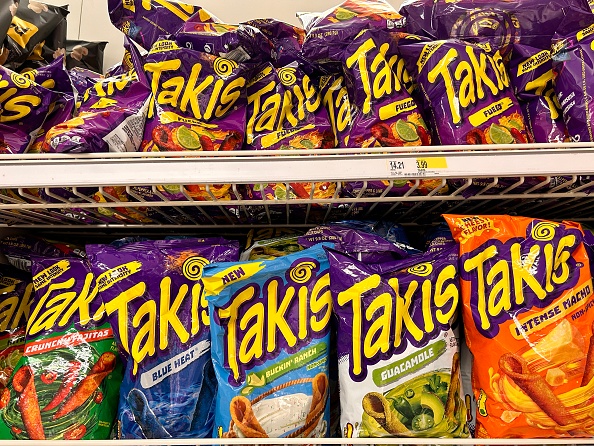
Retail display of Takis snack food in various spicy flavors in Target store, Queens, New York

America’s love for spicy food and mouth-tingling sauces has surged, but are we approaching “peak heat”?

Takis doesn’t think so, as it searches for a “Chief Intensity Officer.”

business
Tom Jones

OpenAI’s ARR reached over $20 billion in 2025, CFO says

Sam Altman’s $500 billion artificial intelligence behemoth hit a major financial milestone last year, according to a new blog post over the weekend from OpenAI CFO Sarah Friar, as the company confirmed it had hit a more than $20 billion annual revenue run rate at the end of 2025.

Elsewhere in the blog post, Friar spent time addressing the company’s shifting goals, referencing plans to “close the distance between where intelligence is advancing and how individuals, companies, and countries actually adopt and use it.” As has become customary in the AI company press release genre, the CFO was also keen to tout the unending growth of the business, writing:

  • Both our Weekly Active User (WAU) and Daily Active User (DAU) figures continue to produce all-time highs. This growth is driven by a flywheel across compute, frontier research, products, and monetization.

  • Compute grew 3X year over year or 9.5X from 2023 to 2025: 0.2 GW in 2023, 0.6 GW in 2024, and ~1.9 GW in 2025.

And, perhaps most importantly for current backers and those keeping an eye on the private company before its rumored mega IPO:

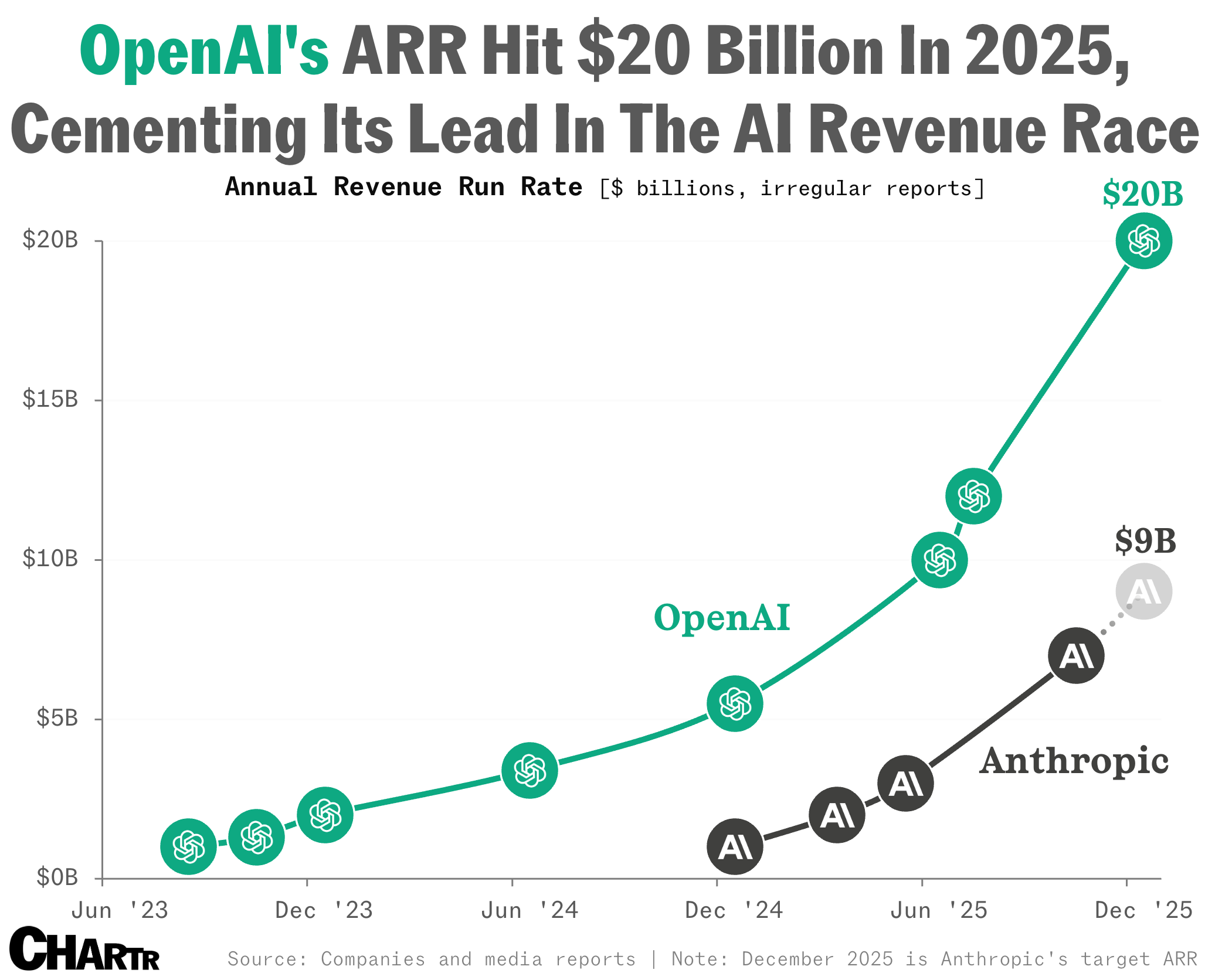
  • Revenue followed the same curve growing 3X year over year, or 10X from 2023 to 2025: $2B ARR in 2023, $6B in 2024, and $20B+ in 2025. This is never-before-seen growth at such scale.

That latest figure has certainly set tongues in the tech world wagging, just as the company announced it would begin rolling out ads to free and ChatGPT Go users. It also puts the chatbot giant a fair way ahead of competitors like Anthropic, the company behind Claude.

OpenAI Anthropic ARR race
Sherwood News

Elsewhere in the blog post, Friar spent time addressing the company’s shifting goals, referencing plans to “close the distance between where intelligence is advancing and how individuals, companies, and countries actually adopt and use it.” As has become customary in the AI company press release genre, the CFO was also keen to tout the unending growth of the business, writing:

  • Both our Weekly Active User (WAU) and Daily Active User (DAU) figures continue to produce all-time highs. This growth is driven by a flywheel across compute, frontier research, products, and monetization.

  • Compute grew 3X year over year or 9.5X from 2023 to 2025: 0.2 GW in 2023, 0.6 GW in 2024, and ~1.9 GW in 2025.

And, perhaps most importantly for current backers and those keeping an eye on the private company before its rumored mega IPO:

  • Revenue followed the same curve growing 3X year over year, or 10X from 2023 to 2025: $2B ARR in 2023, $6B in 2024, and $20B+ in 2025. This is never-before-seen growth at such scale.

That latest figure has certainly set tongues in the tech world wagging, just as the company announced it would begin rolling out ads to free and ChatGPT Go users. It also puts the chatbot giant a fair way ahead of competitors like Anthropic, the company behind Claude.

OpenAI Anthropic ARR race
Sherwood News

Latest Stories

Sherwood Media, LLC produces fresh and unique perspectives on topical financial news and is a fully owned subsidiary of Robinhood Markets, Inc., and any views expressed here do not necessarily reflect the views of any other Robinhood affiliate, including Robinhood Markets, Inc., Robinhood Financial LLC, Robinhood Securities, LLC, Robinhood Crypto, LLC, or Robinhood Money, LLC.