So what’s even the point of investing in startups now?
Anti-trust regulators are making it harder for larger startups to get acquired.
An investor’s thought process before investing in a startup goes something like this:
“My stake in this company won’t be liquid, and the odds of losing my money on this investment are probably, like, 90%, BUT, if the company is successful, my investment will be worth millions.”
The last six words are, as you could probably guess, the primary attraction for investing in a startup. Assuming that the company is successful, you need one of two things to happen to realize your returns:
Your company goes public.
A bigger company, such as Google/Meta/Apple/Microsoft/Amazon, acquires your company for a nice premium, you make millions, and you can add your name to the annual Midas List of top venture investors.
For over a decade, option one made a lot of people rich.
There were 539 tech IPOs between 2010 and 2021, including 46 in 2020 and 121 in 2021. Roughly three out of four of those companies were venture capital-funded, and the average valuation of successful IPOs climbed in tandem, from $545 million in 2010, to $860 million in 2015, to $4.5 billion in 2020.
And then the IPO market froze. In 2022, investors lost their appetite for new listings, and there were only 15 total tech IPOs through 2022 and 2023.
That left option two: acquisition. A playbook that has worked pretty well for startup founders over the last decade is the following:
You raise a Series A, then B, then C, then maybe another letter or two. Your valuation climbs from the 10s of millions to 10 figures, and Google/Meta/Apple/Microsoft/Amazon says, “Hey, listen, we want to acquire you for a few billion. You interested?”
You think to yourself, “Interested? Yeah I’m interested,” and you sign a letter of intent to be acquired. You’re happy, your employees are happy, and your investors are really, really happy.
Over the last five years, government regulators have increasingly added another step to this process, especially with tech startups, saying, “Hey, listen, we saw that you were about to get acquired. We’re going to sue, in the name of fair competition, to stop this deal from going through.”
An expensive, multi-month (or year) legal battle ensues, and eventually a judge either rules in favor of the merger (in which you make a lot of money) or the regulators (in which you’re “rich” in stock options only).
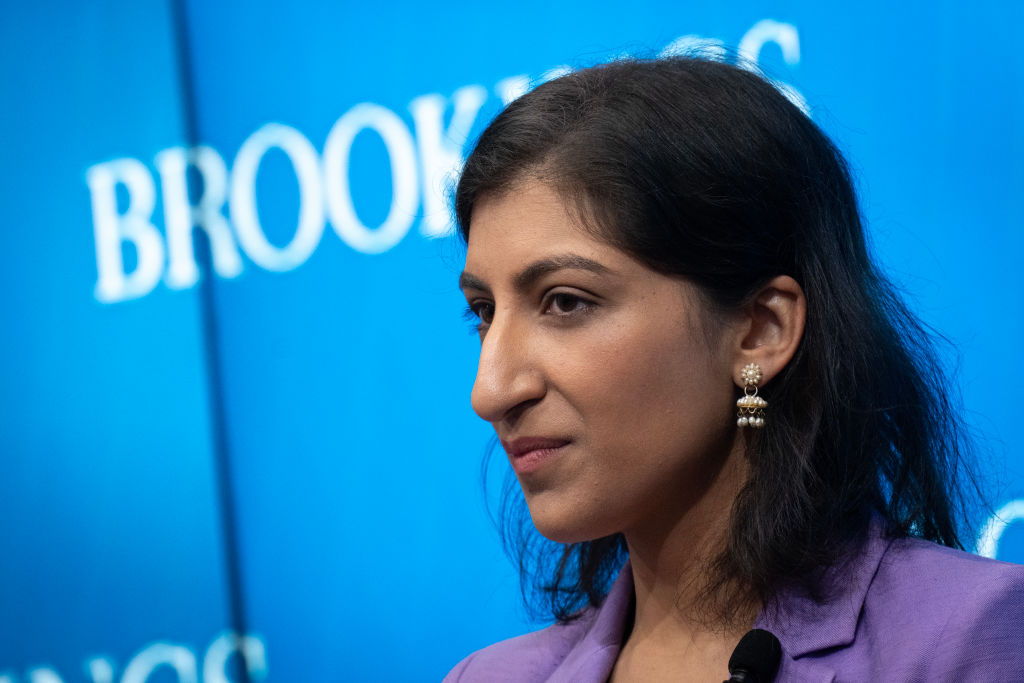
This is happening more and more frequently, largely because of FTC Commissioner Lina Khan.
Since taking the helm of the FTC, Khan has been quite vocal about her intent to 1) expand the definition of antitrust law beyond simply keeping consumer prices down, warning of the dangers that tech businesses such as (you guessed it) big tech companies like Amazon and Meta pose, and 2) focus on litigating rather than settling (read: suing instead of accepting merger concessions).
A brief overview of the FTC’s higher profile actions during Khan’s tenure:
The FTC sued to block Illumina’s acquisition of Grail (2024)
The FTC sued to block Kroger from acquiring Albertsons (2024)
The FTC sued to block Meta from acquiring VR company Within (2022)
The FTC filed a complaint to block Microsoft from acquiring Activision Blizzard (2022)
The FTC sued to block Lockheed Martin from acquiring Aerojet Rocketdyne (2022)
The FTC sued to block Nvidia from acquiring Arm (2021)
Most notably, the FTC saved us from the dangers of big vacuum by pressuring Amazon to drop its iRobot (the creator of the Roomba) acquisition.
The FTC has also sued Meta and Amazon on the grounds that their current business models are inherently anticompetitive.
This antimerger sentiment has been contagious among regulators, with the United Kingdom’s Competition and Markets Authority and the US’s Department of Justice blocking their fair share of big tech deals too:
The UK’s CMA blocked Adobe’s Figma acquisition (2023)
The UK’s CMA forced Meta to divest recently-acquired images platform Giphy (2022)
The US DoJ sued to Block Visa’s acquisition of Plaid (2020)
Why does all of this matter?
Public market conditions still aren’t favorable for IPOs, so M&A has become the default exit opportunity for startups. Regulatory roadblocks (or even the possibility of regulatory roadblocks) from agencies that have been quite candid about their opposition to big tech, as well as hefty breakup fees (such as the $1 billion that Adobe had to pay Figma) are enough to dissuade big tech companies from pursuing acquisitions that could raise red flags.
Meera Clark, an investor at Redpoint Ventures, summed up the situation well:
“There is a gap in the market in terms of exit opportunities: you either need to get sold for under $1 billion to avoid regulator scrutiny, or you have to be capable of hitting a more-and-more difficult IPO.”
Until IPO conditions improve, startups are in a tricky position: you want to be valuable enough to be worth acquiring, but not too valuable, otherwise the government might shut down the deal, leaving your investors and employees with millions in equity and no way to sell it.