Business
Canned Food Maker Del Monte Files For Bankruptcy
(Justin Sullivan/Getty Images)
CANNED

Del Monte’s bankruptcy is a reflection of just how much America’s eating habits have changed

Once a pantry staple, the brand has been squeezed by a costly postpandemic reset and softening demand.

Hyunsoo Rim

Del Monte Foods, the 138-year-old canned goods giant, has filed for Chapter 11 bankruptcy and is seeking a buyer.

The bankruptcy follows Del Monte's miscalculated bet on the Covid boom, when it ramped up production to meet record-high demand for shelf-stable goods. But as that buying frenzy tapered off, the company was left with excess inventory it had to store, write off, or sell at “substantial losses, per its court filing. That, combined with rising interest rates that nearly doubled its annual interest expense since 2020, drove the company’s liquidity to historic lows.

Saddled with more than $1.2 billion in secured debt, the company has secured financing to continue operations during the sale process. But, even if the company had weathered the postpandemic period more prudently, it’s hard to escape the reality that’s been eating away at its core business: canned food just isn’t what America wants.
Del Monte
Sherwood News

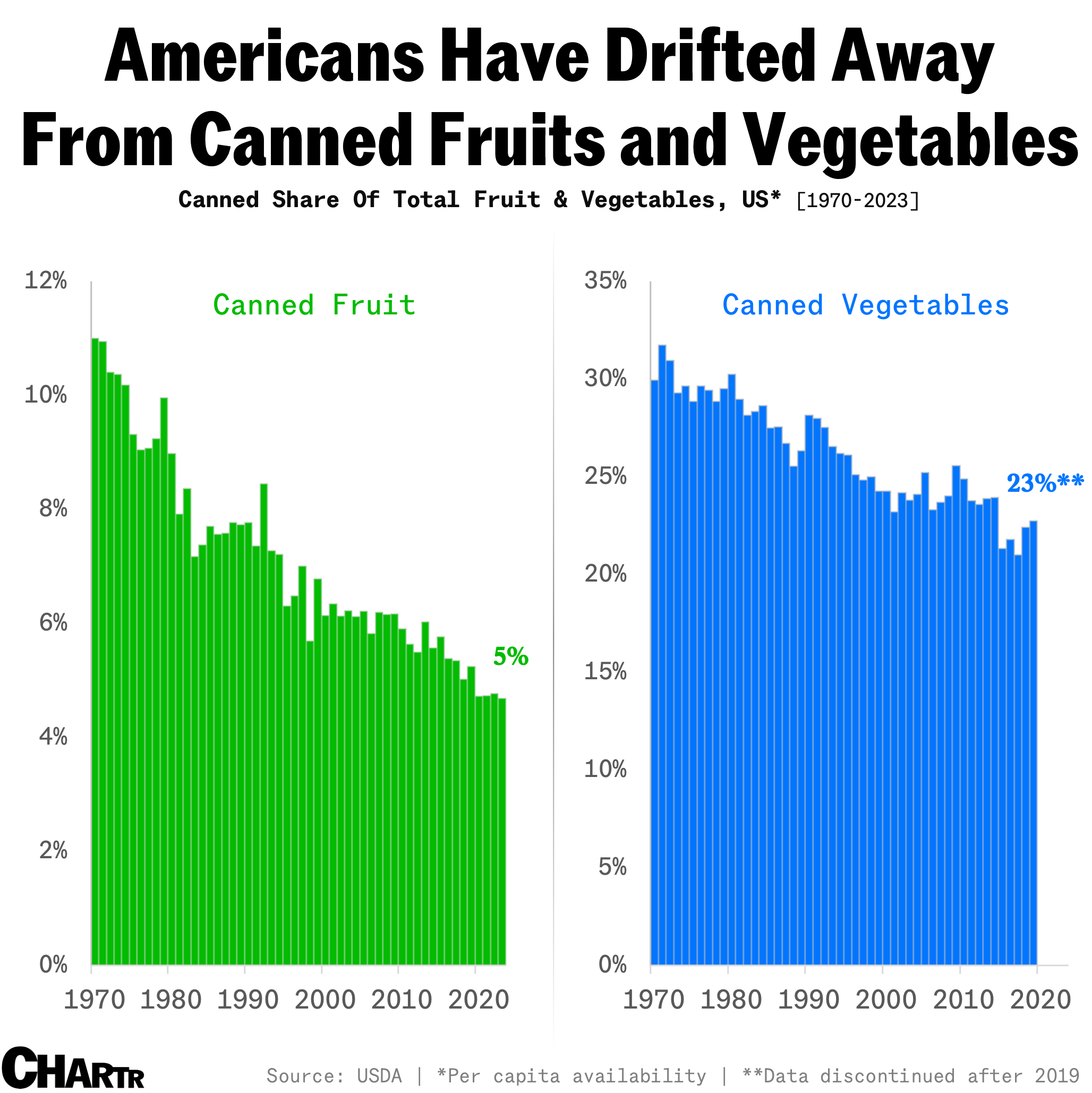
According to the USDA, canned vegetables accounted for just 23% of total US vegetables available for consumption in 2019 — down from 30% five decades earlier. The decline is even steeper for canned fruit, whose share more than halved, from 11% to 5% by 2023.

Consumers are increasingly opting for fresher, healthier options — and with inflation still biting, many are also trading down to cheaper store-brand alternatives, leaving legacy packaged goods companies like Del Monte struggling to keep up.

Meanwhile, newly imposed 50% tariffs on imported steel and aluminum — the key materials used to make cans — could put pressure on margins, especially since ~80% of US can-grade steel is sourced from abroad.

More Business

See all Business
Luigi Mangione And His Lawyers Attends Hearing In Manhattan Court

Health giants and other S&P 500 companies spent big on executive security in 2025

Major health insurers spent over $3 million on protecting executives last year, as security budgets at S&P 500 companies across various sectors hit new highs.

business

Lucid climbs after Uber revealed to be its second-largest shareholder following recent investment

Shares of luxury EV maker Lucid are up more than 7% in premarket trading on Tuesday, following the release of a regulatory filing that revealed Uber is now its second-largest shareholder, trailing only Saudi Arabia’s PIF sovereign wealth fund.

The news follows an announcement earlier this month that Uber and Lucid would expand their robotaxi partnership from 20,000 planned vehicles to 35,000. Along with the expansion, Uber also said it would invest an additional $200 million into the EV maker.

Per Monday afternoon’s filing, it seems that investment pushed Uber’s ownership stake in Lucid to 11.52%.

Lucid’s stock is down 29% in April. It hit an all-time low of $6.75 on Monday ahead of the regulatory filing becoming public.

In a mark of just how painful the slide has been for Lucid shareholders, as of Monday, the company’s market cap had dropped to a quarter of the approximately $9.5 billion that Saudi Arabia’s PIF has sunk into it.

Latest Stories

Sherwood Media, LLC produces fresh and unique perspectives on topical financial news and is a fully owned subsidiary of Robinhood Markets, Inc., and any views expressed here do not necessarily reflect the views of any other Robinhood affiliate, including Robinhood Markets, Inc., Robinhood Financial LLC, Robinhood Securities, LLC, Robinhood Crypto, LLC, Robinhood Derivatives, LLC, or Robinhood Money, LLC. Futures and event contracts are offered through Robinhood Derivatives, LLC.