

With US coffee prices reaching record highs, will Americans rethink their consumption?
Even after the US scrapped tariffs on coffee last November, new BLS data shows stateside prices are still soaring.
It’s been a while since the US was a tea-drinking country, with the nation adopting a coffee habit in the 1700s that quickly shifted from being politically revolutionary to, for many, absolutely necessary.
Today, America is the world leader in coffee consumption: a total of ~1.6 billion kilograms were consumed domestically last year, per USDA figures, and the National Coffee Association estimated that, as of January 2025, two-thirds (66%) of American adults were drinking coffee every day.
But anyone who relies on a first-thing cup of joe might have noticed over the past few months how much their morning kick is costing them.
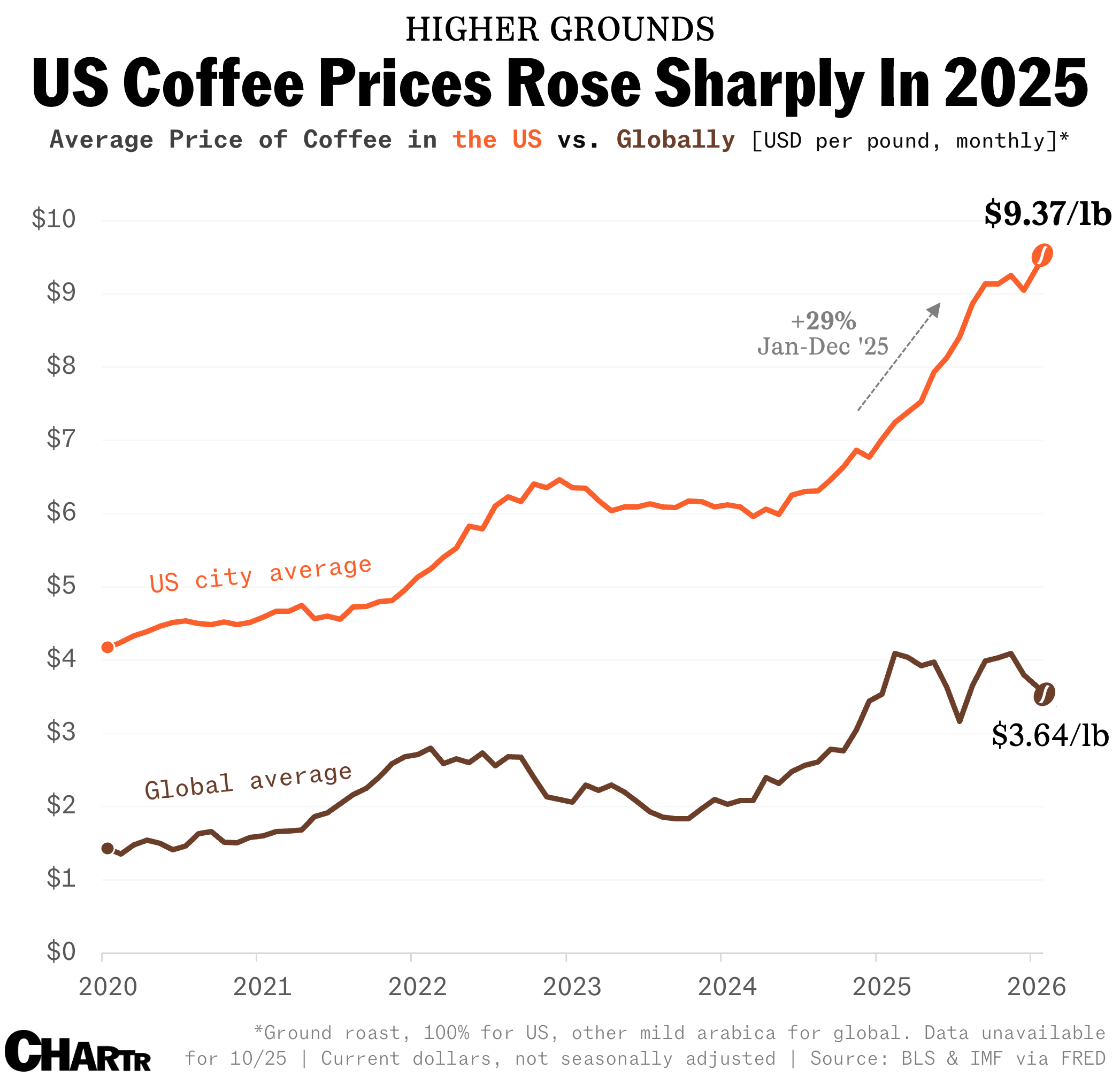
According to Friday data from the Bureau of Labor Statistics, the average price of coffee across US cities went up to $9.37 per pound in January — the most expensive since records began in 1980, and up 33% from January 2025. Meanwhile, the global price of coffee dropped to $3.64 per pound last month.
Filtering through
In case you missed it, the US imposed import taxes on a few countries (and non-countries) in 2025. Unsurprisingly, coffee products, ~99% of which the US imports from abroad, were hit hard — raising the tariff on Brazil, the world’s biggest coffee producer, to 50% in July didn’t help.
However, even after these tariffs were rolled back at the end of last year, coffee prices have continued to rise in the US. That’s partly because the tariff reversal will take some time to filter through the supply chain, as importers generally order beans months in advance. Mix in last year’s production shortfalls from America’s top importing countries and a more positive supply outlook for 2026, and you get a record US-global split in coffee costs.
While some are looking to cheaper caffeine fixes, higher bean-to-cup costs likely won’t be enough to kill the average American’s coffee consumption. Maybe they swap their Starbucks habit for home brewing — but stop altogether? That would be too hard to swallow.