




Google searches for “roman numerals” hit a new peak this Super Bowl
Following on from last year’s Super Bowl LIX, and Super Bowl LVIII before that, you’d be forgiven for thinking that the title “Super Bowl LX” might have created less confusion than previous iterations.
But it seems that the archaic notation denoting this year’s Big Game was no exception: monthly search volumes for “roman numerals” in the US were at the highest volume seen in over two decades this February, according to Google Trends data.
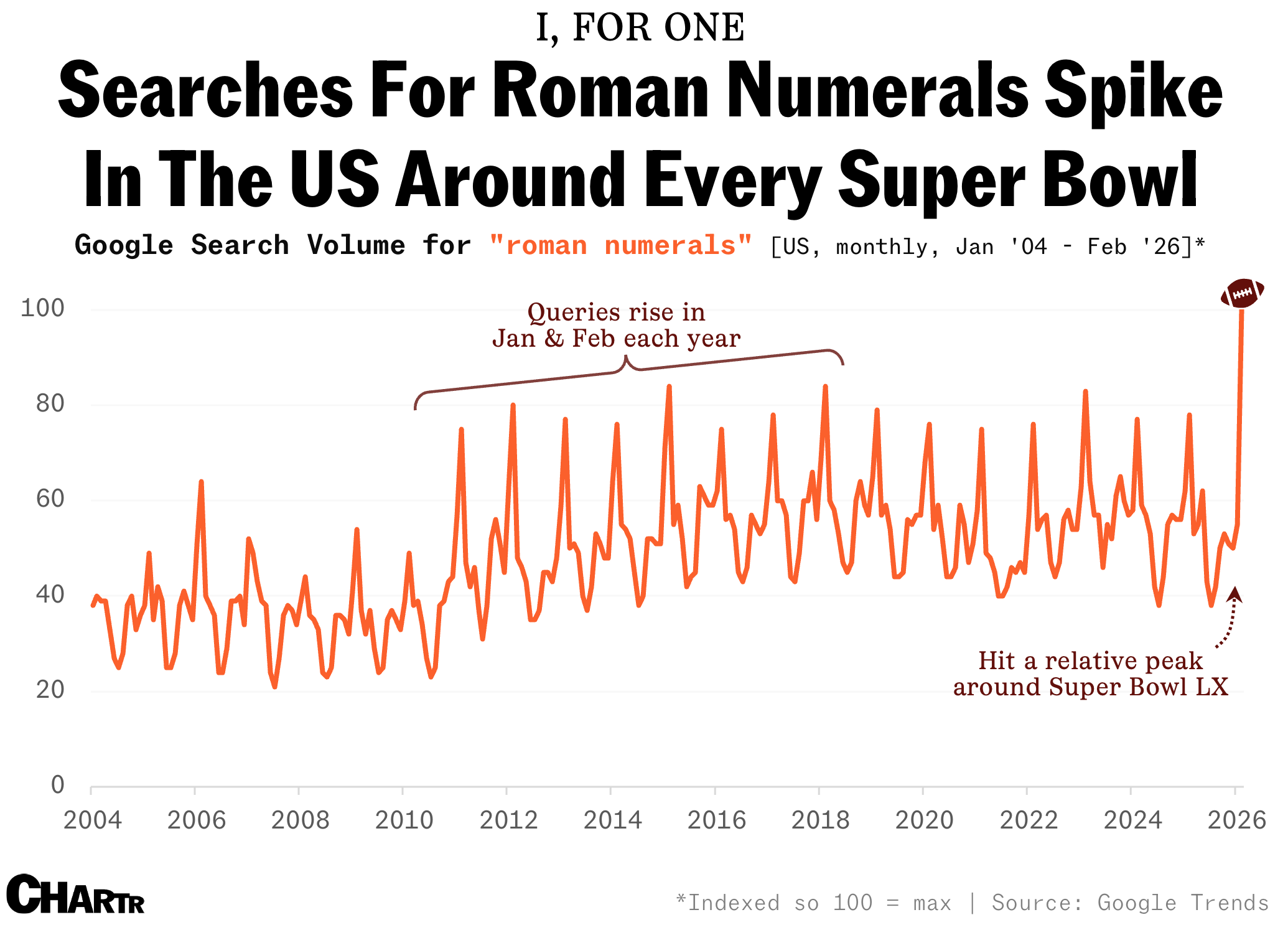
If people in shoulder pads throwing around a weirdly shaped ball is your Roman Empire, one thing you have to know is Roman numerals — or join the millions who turn to Google to work out how to read them every Super Bowl season.
Ironically, according to the NFL, the numbering system was adopted for clarity, as the game is played at the start of the year “following a chronologically recorded season.” And so, over its 60-year history, the NFL has labeled almost every Super Bowl with a selection of capital letters like X’s, I’s, and V’s — one of the rare exceptions being Super Bowl 50 in 2016, when the NFL ad designers felt Super Bowl L was too unmarketable.
At least stumped football fans in 2026 will be faring much better than those in the year 12,965 would be, who’d have to refer to the Big Game as Super Bowl (breathes in) MMMMMMMMMMDCCCCLXXXXVIIII.


UK prime minister vows to take action against Elon Musk’s X over AI-generated images of minors, as Grok limits image generation to paid users
Sir Keir Starmer has vowed to “take action” against Elon Musk’s X over its AI tool Grok producing sexualized images of children.
Speaking on Thursday, the UK premier called the images “unlawful” and urged the social media platform to “get their act together and get this material down,” as public outrage mounts over Grok generating explicit deepfakes on X.

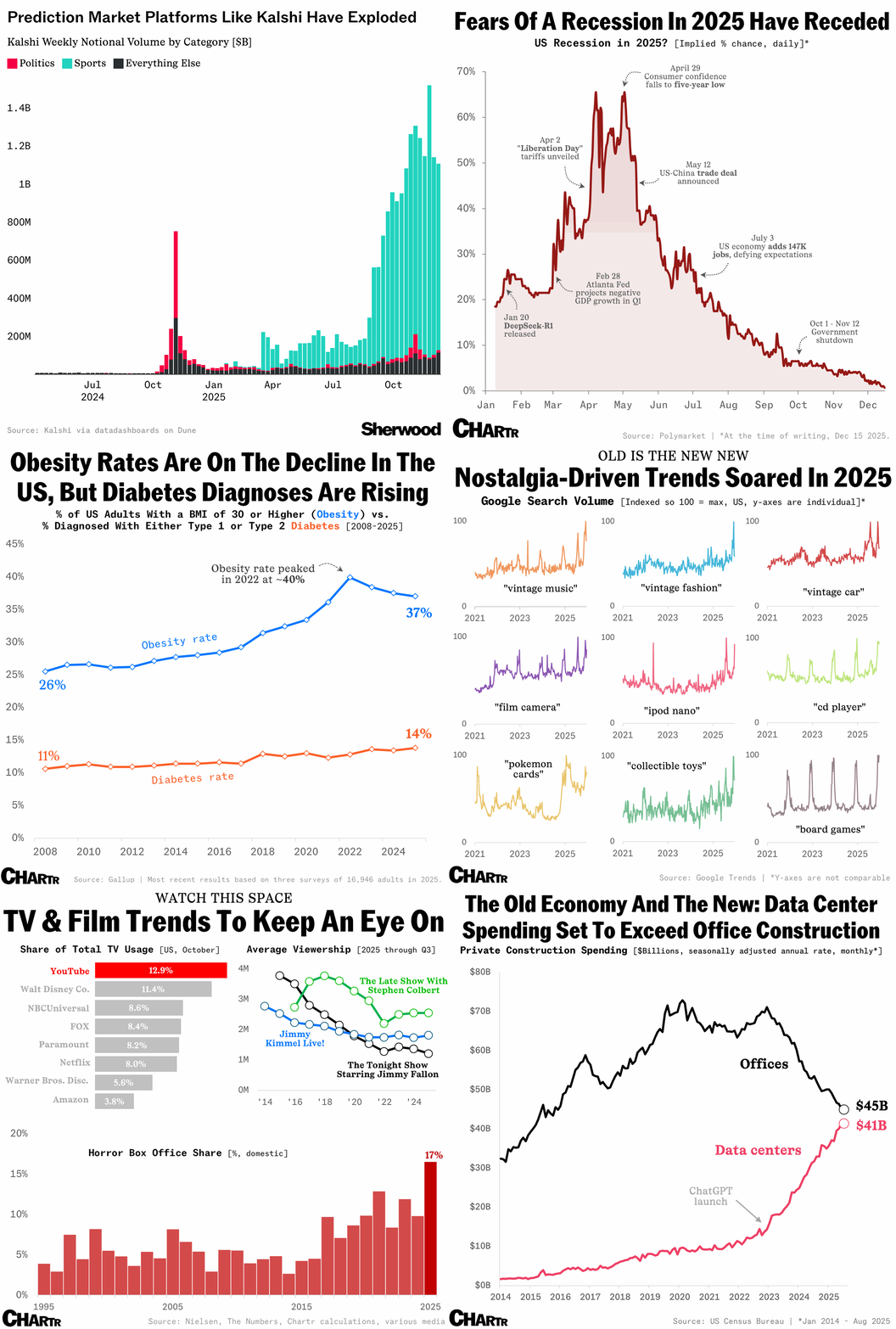
Charting six major trends to keep watching in 2026
We’ve made a lot of charts this year — here are some of the biggest trends of 2025 and where we think they might go in the 12 months ahead. And no, it’s not just about AI.
Starbucks sells control of China business for $4 billion
Starbucks disclosed on Monday evening in a regulatory filing that it will sell control of its ailing China business to Boyu Capital for about $4 billion.
Under the agreement, Boyu will own a 60% stake in the China segment, which will become a joint venture between Boyu and Starbucks. The coffee chain will retain a 40% interest in the entity and will continue to own and license the brand and intellectual property.
Bloomberg reported earlier this year that the company was looking to sell its China segment. The American coffee giant has struggled to succeed in China, its second-largest market after the US.


John Wayne Airport in Orange County tops the list of North America’s favorite airports
Despite a record year of passenger numbers, flight cancellations, and delays, a new survey has revealed that flyers have been increasingly satisfied about their experiences in North American airports.
According to this year’s North America Airport Satisfaction Study from data analysts at J.D. Power, overall passenger satisfaction scores were up 10 points (on a 1,000-point scale), largely from “improvements in food, beverage and retail and ease of travel through the airport.” The annual survey measures overall traveler satisfaction across the region’s airports in seven categories (in order of importance): ease of travel, level of trust, terminal facilities, airport staff, airport departure experience, food and retail, and airport arrival experience.
Here are the region’s favorites:

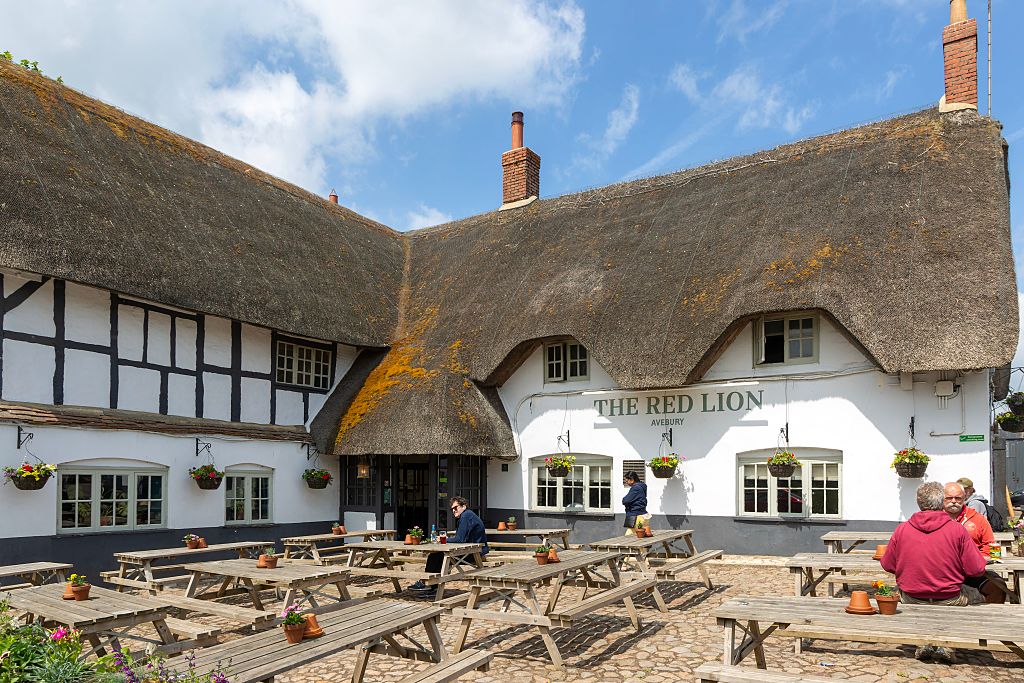
Britain is on track to shed more than one pub a day this year
Rising costs and lower spending are hitting the UK’s drinking establishments.