


Uber’s focus on robotaxis might also accelerate its stalling electrification efforts
The ride-hailing app’s new deal with Lucid marks a major push toward autonomous vehicles — after falling behind on its zero-emission goals.
Last Thursday, Uber announced a major deal with electric vehicle maker Lucid to create a fleet of robotaxis in the US — sending Lucid stock soaring, closing up more than 36% on the day.
The deal signals just how seriously Uber is planning for autonomous rides. The ride-hailing app is set to take a $300 million stake in Lucid and will aim to deploy at least 20,000 custom vehicles from the company, equipped with a self-driving system developed by autonomous technology startup Nuro, over the next six years.
Indeed, Uber has pledged to make “multi-hundred-million dollar investments” in both companies to pull off its latest goal of launching its own robotaxi service in a major US city next year. Meanwhile, one of its previous promises — to become a totally zero-emission platform globally by 2040 — is falling to keep pace.
Taking charge
In May, Uber outlined that 230,000 of its drivers worldwide were using zero-emission vehicles (ZEVs) at the end of Q1, a 60% increase from a year prior. But, as noted by Rest of World, that electrification effort has diminished significantly — particularly in the US, where its ZEV uptake has plateaued.
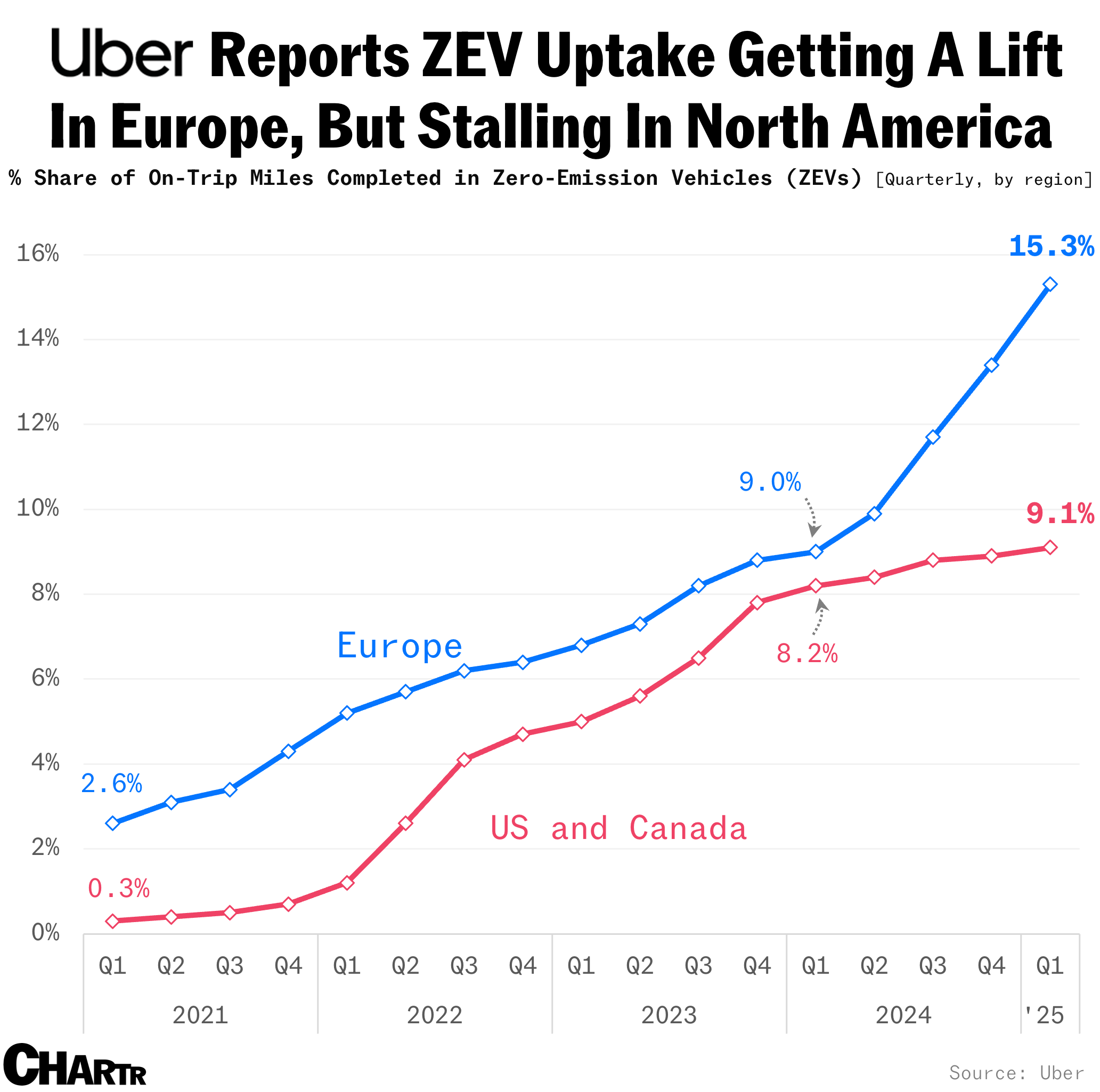
While Europe’s pro-EV policies, such as tax breaks and congestion charge exemptions for drivers, have seen the share of Uber’s on-trip miles completed in ZEVs rise to ~15% in the region, the US and Canada have only seen their ZEV share nudge up slightly in the past year to just 9.1% of miles.
Ironically, though, Uber’s sudden interest in robotaxis might actually help it meet one of its more overlooked goals, both in the US and globally. Just two days before news broke of the Lucid-Nuro deal, Uber also announced that it’s teaming up with Baidu, which runs one of China’s largest robotaxi EV fleets.




