

Tech
tech
Rani Molla

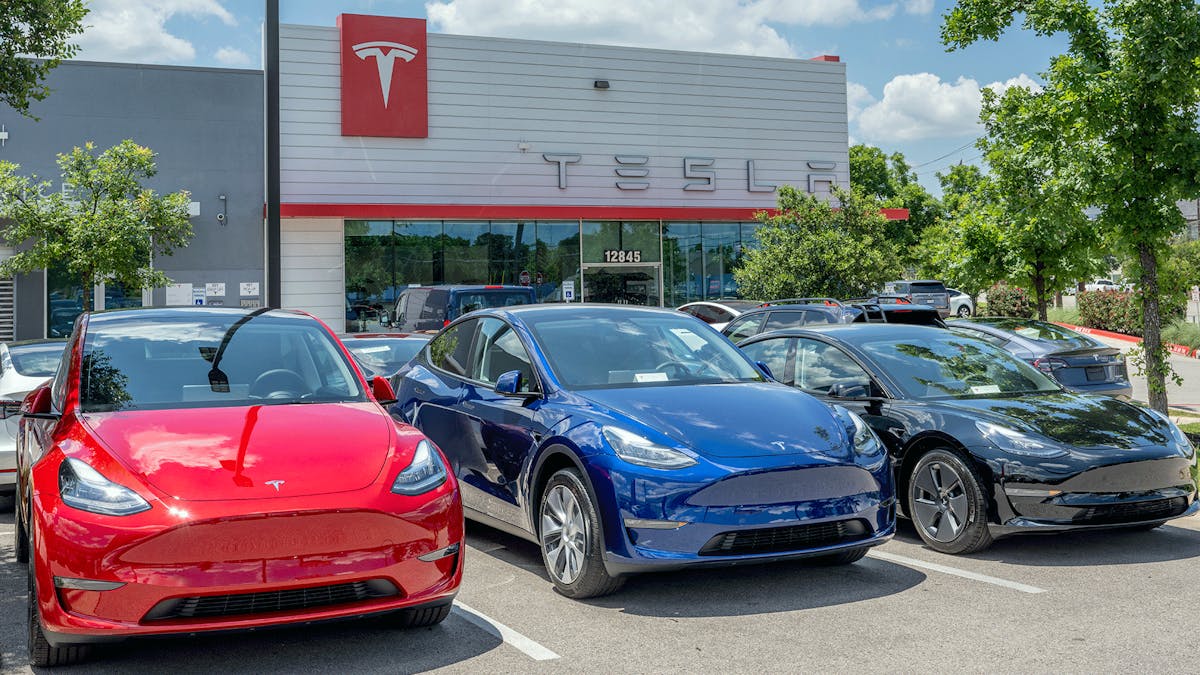
Tesla is supposed to offer driverless robotaxis next month. As of last month, it reportedly hasn’t tested a single driverless ride.

Tesla says it’s still on track to launch its driverless robotaxis in Austin next month (or maybe July) but, as of last month, the electric vehicle company had yet to actually test a driverless ride, The Information reports, citing an “engineer close to the testing and a former employee.”

In April, Tesla announced that a very limited set of people — Tesla employees in the Bay Area and Austin — could get a ride in the company’s robotaxis... with a person sitting in the passenger seat. But with its launch just weeks away, there’s no evidence that the company has conducted any “unsupervised, no one in the car” rides yet.

Meanwhile, Google’s Waymo, which launched in Austin earlier this year, tested driverless rides for six months before opening them to the public. Now it’s doing more than a quarter million paid driverless rides per week.

Federal safety investigators would also like to know “how Tesla plans to evaluate its vehicles and driving automation technologies for use on public roads,” including which software the company is planning to deploy and which vehicles will be included in its robotaxi effort.

The robotaxi effort is high stakes for Tesla. CEO Elon Musk said last month, “The future of the company is fundamentally based on large-scale autonomous cars and large scale and large volume, vast numbers of autonomous humanoid robots.”
In April, Tesla announced that a very limited set of people — Tesla employees in the Bay Area and Austin — could get a ride in the company’s robotaxis... with a person sitting in the passenger seat. But with its launch just weeks away, there’s no evidence that the company has conducted any “unsupervised, no one in the car” rides yet.

Meanwhile, Google’s Waymo, which launched in Austin earlier this year, tested driverless rides for six months before opening them to the public. Now it’s doing more than a quarter million paid driverless rides per week.

Federal safety investigators would also like to know “how Tesla plans to evaluate its vehicles and driving automation technologies for use on public roads,” including which software the company is planning to deploy and which vehicles will be included in its robotaxi effort.

The robotaxi effort is high stakes for Tesla. CEO Elon Musk said last month, “The future of the company is fundamentally based on large-scale autonomous cars and large scale and large volume, vast numbers of autonomous humanoid robots.”

More Tech

See all Tech
tech

Elon Musk says Tesla Robotaxis are operating without drivers, sending stock higher

Tesla CEO Elon Musk said that Tesla’s Robotaxis are now operating in Austin without a safety monitor. Tesla has been testing driverless cars in the area for about a month, and Musk had previously said the company would remove safety drivers by the end of 2025.

It’s unclear how many exactly of the roughly 50 Robotaxis the company operates in the area don’t have drivers. Tesla is “starting with a few unsupervised vehicles mixed in with the broader robotaxi fleet with safety monitors, and the ratio will increase over time,” Ashok Elluswamy, Tesla’s head of AI, posted shortly after Musk. Ethan McKenna, the person behind Robotaxi Tracker, estimates it’s two or three vehicles.

What is clear is that the move is good for Tesla’s stock, which is currently up 3.5%, extending its gains after Musk’s tweet. Morgan Stanley said yesterday that it considers the removal of safety drivers a “precursor to personal unsupervised FSD rollout.” Unsupervised Full Self-Driving is widely considered to be integral to the would-be autonomous company’s value proposition.

At the World Economic Forum earlier on Thursday, Musk said, “Self-driving cars is essentially a solved problem at this point.”

tech

Survey: CEOs and workers have wildly different thoughts on AI productivity gains

One of the main reasons companies are rushing to adopt AI is to give their workers the miraculous productivity boost that AI companies have been promising — and believe will quickly earn back their investment.

But now that companies have been using AI for a while, a growing perception gap is emerging between the C-suite and their employees.

The Wall Street Journal reported on new findings by research firm Section, which surveyed 5,000 white-collar workers from companies with more than 1,000 employees.

More than 70% of the corporate executives in the survey said they were “excited” by AI, and 19% of them said the tools have saved them more than 12 hours of work per week.

But nonmanagement workers had a very different take on AI. Almost 70% of this group said AI made them feel “anxious or overwhelmed,” and 40% said the tools saved them no time at all.

The Wall Street Journal reported on new findings by research firm Section, which surveyed 5,000 white-collar workers from companies with more than 1,000 employees.

More than 70% of the corporate executives in the survey said they were “excited” by AI, and 19% of them said the tools have saved them more than 12 hours of work per week.

But nonmanagement workers had a very different take on AI. Almost 70% of this group said AI made them feel “anxious or overwhelmed,” and 40% said the tools saved them no time at all.

tech

Tesla jumps as Musk says he expects Optimus sales next year, European and Chinese FSD approval next month

Tesla CEO Elon Musk now says he thinks the company’s Optimus robots will be for sale to the public “by the end of next year.”

According to Musk, “That’s when we are confident that there is very high reliability, very high safety, and the range of functionality is also very high.”

Like many of Musk’s other timelines, that’s later than he previously predicted. In 2024, for example, Musk said the AI robots would be for sale in 2025.

Speaking with BlackRock CEO Larry Fink on a panel today at the World Economic Forum, Musk said the robots are currently doing “simple tasks” in Tesla factories, but believes “they’ll be doing more complex tasks and be deployed in an industrial environment” by the end of this year, before going on sale to the public in 2027.

Musk forecasts a future with “billions” of AI robots that “saturate all human needs.”

On a separate topic, Musk was bullish on regulatory approval for what Tesla calls Full Self-Driving technology in markets outside the US. “We hope to get supervised Full Self-Driving approval in Europe, hopefully next month, and then maybe a similar timing for China,” he said. Musk has said in the past that the pending regulatory approval for FSD in Europe is a key reason why Tesla’s sales in the region have been tanking.

tech

Waymo is now offering autonomous rides in Miami

Google subsidiary Waymo announced Thursday that it’s officially open for autonomous ride-hailing in Miami, expanding the company’s coverage area to six US cities. The company will be “inviting new riders on a rolling basis” to take rides across its 60-square-mile service area, which includes the Design District, Wynwood, Brickell, and Coral Gables. Waymo said it plans to expand to Miami International Airport “soon.”

Competitor Tesla currently operates a ride-hailing service with a safety monitor in the vehicle in Austin and the Bay Area.

tech

Apple to promote Siri from assistant to chatbot

Bloomberg reports that Apple plans to transform its Siri assistant into a full-fledged chatbot similar to OpenAI’s ChatGPT.

The chatbot would be integrated throughout the iPhone’s operating system rather than offered as a stand-alone app. It’s expected to arrive later this year and would be separate from more incremental, non-chatbot improvements to Siri rolling out in the coming months aimed at making the existing assistant more usable.

Both updates will be powered by Google’s AI models, Bloomberg reports, but the chatbot upgrade will be more advanced and akin to the much-lauded Gemini 3.

While the difference between an assistant and a chatbot may sound subtle, it represents a meaningful shift for Apple, which has long avoided a fully conversational interface and has lagged rivals that embraced one. Any new Siri chat capabilities could also eventually extend to other Apple devices under development, including wearables such as the pin Apple is developing.

Both updates will be powered by Google’s AI models, Bloomberg reports, but the chatbot upgrade will be more advanced and akin to the much-lauded Gemini 3.

While the difference between an assistant and a chatbot may sound subtle, it represents a meaningful shift for Apple, which has long avoided a fully conversational interface and has lagged rivals that embraced one. Any new Siri chat capabilities could also eventually extend to other Apple devices under development, including wearables such as the pin Apple is developing.

Latest Stories

Sherwood Media, LLC produces fresh and unique perspectives on topical financial news and is a fully owned subsidiary of Robinhood Markets, Inc., and any views expressed here do not necessarily reflect the views of any other Robinhood affiliate, including Robinhood Markets, Inc., Robinhood Financial LLC, Robinhood Securities, LLC, Robinhood Crypto, LLC, or Robinhood Money, LLC.