

Tech
tech
Rani Molla

Tesla halts orders for US-made models in China but didn’t sell many there in the first place

Tesla is no longer taking orders in China for the American-made Model S and Model X, but it didn’t sell many of those in the first place.

The vast majority of Teslas sold in China are the Shanghai-made Model 3 and Model Y, accounting for 661,820 of sales there last year while the Model S and Model X represented less than 2,000, or about 0.3% of all China sales. So the impact on Tesla sales there will be minimal.

Instead the move is more symbolic of other problems Tesla is facing in its most important market besides the US. Tesla is dealing with steep competition from Chinese EV brands like BYD, which has pulled ahead of Tesla in both unit sales and revenue. Tesla sales have been falling in China for half a year. A trade war between the US and China certainly isn’t going to help.
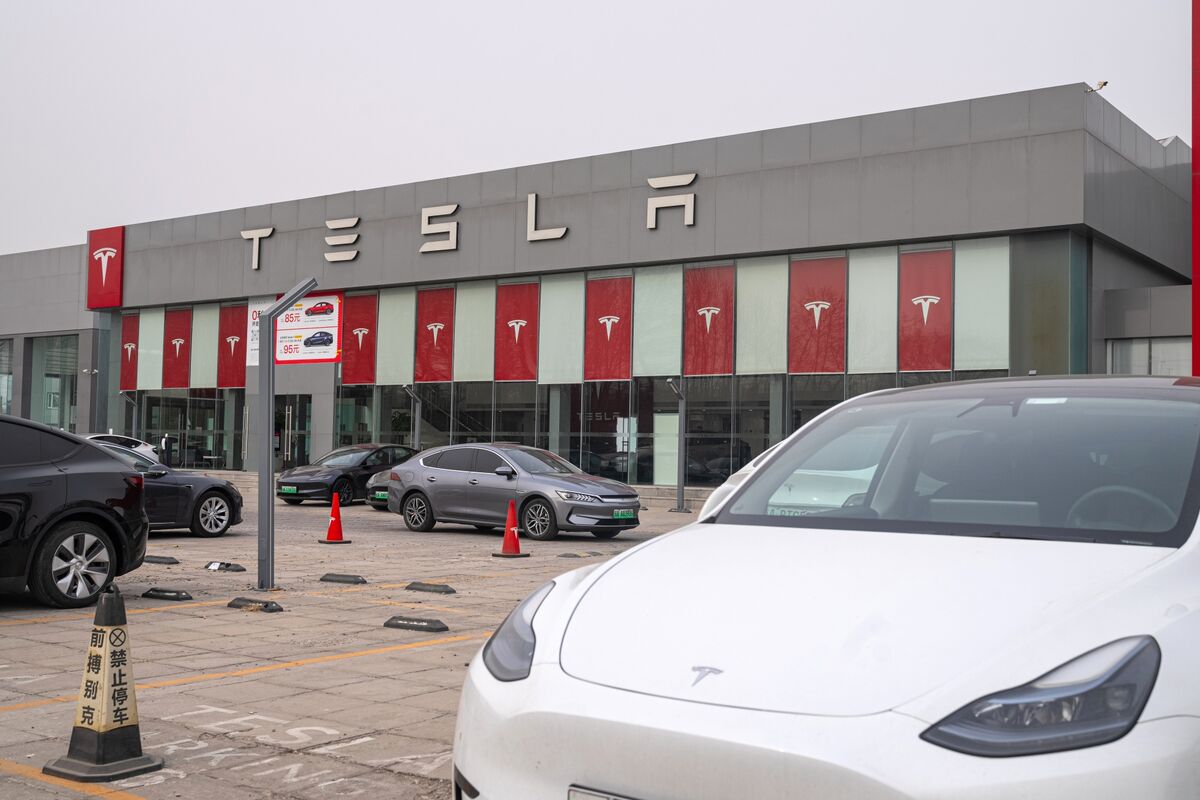
Instead the move is more symbolic of other problems Tesla is facing in its most important market besides the US. Tesla is dealing with steep competition from Chinese EV brands like BYD, which has pulled ahead of Tesla in both unit sales and revenue. Tesla sales have been falling in China for half a year. A trade war between the US and China certainly isn’t going to help.

More Tech

See all Tech
tech

Tesla and SpaceX to jointly run “most epic chip-building exercise in history by far”

In the latest instance that Elon Musk views Tesla and SpaceX as effectively one company, the CEO of both announced Saturday that the two firms will join forces on his Terafab project — what Musk says will be “the most epic chip-building exercise in history by far.”

Many of the details mirror what we reported last week, with one major addition: SpaceX will play a leading role.

Terafab, planned for the north campus of Tesla’s Gigafactory Texas, aims to vertically integrate the entire chipmaking process, from design and fabrication to testing and packaging. The goal is to supply AI chips to Tesla, SpaceX, and its subsidiary, Musk’s AI company, xAI, whose suppliers Musk said will be unable to handle their demand in “three or four years.” While Tesla has designed its own chips, it has never manufactured them.

Musk said the facility is intended to produce up to 1 terawatt of compute annually. The plant will manufacture two types of chips: inference chips for Tesla’s robotaxis and Optimus robots, and custom AI chips intended for space-based applications like solar-powered AI satellites. According to Musk, roughly 80% of the compute will be allocated to space-related uses, with the remaining 20% supporting projects on Earth.

Morgan Stanley has estimated the project could cost Tesla an additional $35 billion to $45 billion in capital expenditures, though now perhaps some of that capex might be shared with SpaceX. Like many of Musk’s ambitions, the project is enormous in scale and will likely to take years to complete — potentially into the end of the decade or beyond.

tech
Jon Keegan

White House releases AI legislative framework

The White House has released its policy wish list for AI legislation — and what it wants excluded.

Still, the odds of any actual AI regulation getting passed in Congress right now are very slim.

The “National Policy Framework” for AI lays out seven issues that the Trump administration wants to see reflected in any congressional action around AI.

The items listed in the framework include:

  • Child safety protections, age verification, and parental controls for AI.

  • Data center projects voluntarily pay their own way when it comes to power, but incentives should still be encouraged.

  • Copyright laws should allow for training models on copyrighted works, while protecting individuals’ voice and likeness.

  • Free speech should be defended for AI systems, preventing the government from pressuring companies to ban or alter content based on partisan agendas.

  • A light touch to regulation to encourage innovation, and no federal agency to regulate AI.

  • American workers vulnerable to AI job replacement should be retrained and supported.

  • Federal AI rules should preempt any state AI legislation to prevent a patchwork of laws that companies would hate.

The policy list is the latest in a series of proposals from the AI-friendly Trump administration.

The items listed in the framework include:

  • Child safety protections, age verification, and parental controls for AI.

  • Data center projects voluntarily pay their own way when it comes to power, but incentives should still be encouraged.

  • Copyright laws should allow for training models on copyrighted works, while protecting individuals’ voice and likeness.

  • Free speech should be defended for AI systems, preventing the government from pressuring companies to ban or alter content based on partisan agendas.

  • A light touch to regulation to encourage innovation, and no federal agency to regulate AI.

  • American workers vulnerable to AI job replacement should be retrained and supported.

  • Federal AI rules should preempt any state AI legislation to prevent a patchwork of laws that companies would hate.

The policy list is the latest in a series of proposals from the AI-friendly Trump administration.

tech
Jon Keegan

WSJ: OpenAI rolling everything into one desktop “superapp”

OpenAI is trying to eliminate distractions and focus on building AI that helps with enterprise productivity tasks like coding and organizing spreadsheets.

As part of that effort, the startup is consolidating some of its side quests into one superapp, according to a report from The Wall Street Journal.

The plan is to merge ChatGPT, Codex, and the Atlas browser together, as it seeks to focus its efforts as it competes with Anthropic and Google for lucrative enterprise customers.

OpenAI Head of Apps Fidji Simo told staffers in an internal memo that “we realized we were spreading our efforts across too many apps and stacks, and that we need to simplify our efforts. That fragmentation has been slowing us down and making it harder to hit the quality bar we want,” per the report.

The plan is to merge ChatGPT, Codex, and the Atlas browser together, as it seeks to focus its efforts as it competes with Anthropic and Google for lucrative enterprise customers.

OpenAI Head of Apps Fidji Simo told staffers in an internal memo that “we realized we were spreading our efforts across too many apps and stacks, and that we need to simplify our efforts. That fragmentation has been slowing us down and making it harder to hit the quality bar we want,” per the report.

Latest Stories

Sherwood Media, LLC produces fresh and unique perspectives on topical financial news and is a fully owned subsidiary of Robinhood Markets, Inc., and any views expressed here do not necessarily reflect the views of any other Robinhood affiliate, including Robinhood Markets, Inc., Robinhood Financial LLC, Robinhood Securities, LLC, Robinhood Crypto, LLC, Robinhood Derivatives, LLC, or Robinhood Money, LLC. Futures and event contracts are offered through Robinhood Derivatives, LLC.