Tech
AI image of Sam Altman grilling Pikachu
AI image of Sam Altman grilling Pikachu (@shlms on Sora)

OpenAI’s Altman: Sora will let copyright holders control how their characters appear

The buzzy AI video generation app is tweaking its lax controls for generating copyrighted characters in users’ videos.

Updated 10/6/25 4:05PM

OpenAI is moving fast and breaking things. Its new invite-only generative-AI video app, Sora, spent the weekend at the top of the App Store charts, letting users generate videos of copyrighted characters in situations that would make a brand manager blush.

Sora was released into the world with few controls to prevent people from violating intellectual property rights, using a novel opt-out mechanism for media companies. Now OpenAI CEO Sam Altman has announced some changes that will give IP owners control over how their characters could appear in Sora videos (or not at all).

“We are hearing from a lot of rightsholders who are very excited for this new kind of ‘interactive fan fiction’ and think this new kind of engagement will accrue a lot of value to them, but want the ability to specify how their characters can be used (including not at all).”

The service is not cheap to run. At today’s OpenAI DevDay keynote, Altman announced Sora 2 API access, which gives a first glimpse of the cost of generating the videos. The “sora-2-pro” model, which is used for the Sora app, costs developers $0.30 per second, which works out to $3 for each of Sora’s 10-second videos.

Altman seems interested in figuring out how to monetize all this:

“We are going to have to somehow make money for video generation. People are generating much more than we expected per user, and a lot of videos are being generated for very small audiences. We are going to try sharing some of this revenue with rightsholders who want their characters generated by users.”

That sounds good, but what revenue? The app is free and has no ads, and it remains to be seen if people would stick around for endless AI slop of Sam Altman barbecuing Pikachu or cringe-rapping.

Bill Peebles, the head of Sora at OpenAI, posted on X that new controls are available today for users to manage the context in which their “cameos” appear in other users’ videos.

An example of the new controls shared by an OpenAI staffer shows a preference panel that lets a user say that they must always appear wearing a hat that says “#1 Ketchup Fan” and never appear in videos with mustard or relish.

UPDATE (October 6, 4 p.m. ET): Added details around the cost for generating Sora videos.

More Tech

See all Tech
tech

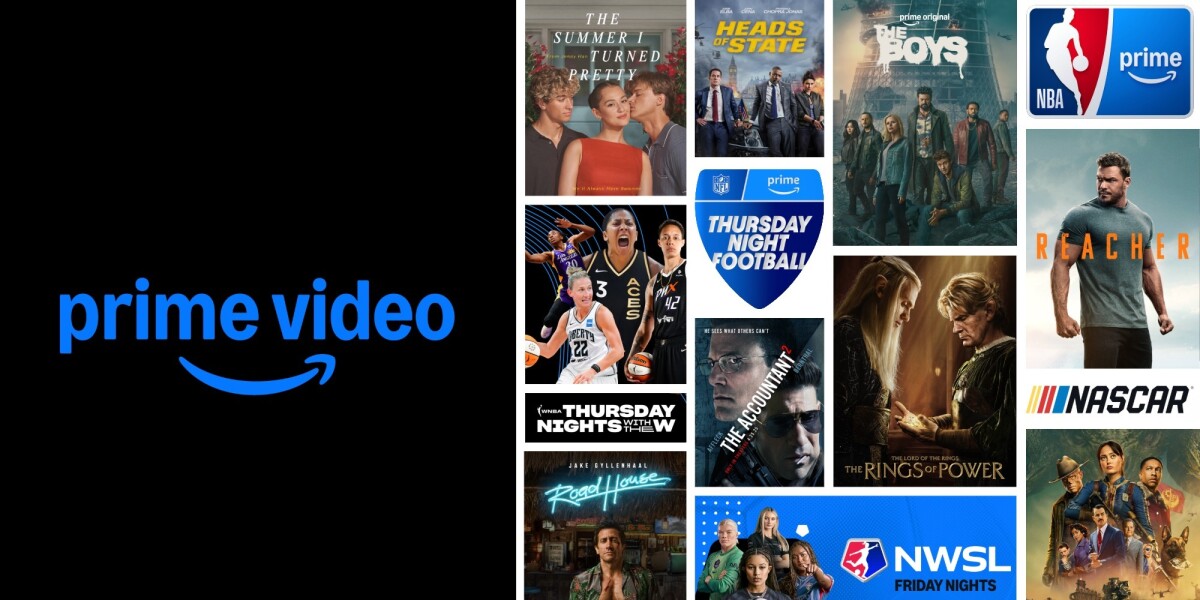
Amazon raises the price for ad-free Prime Video to $4.99

Amazon is giving consumers more — for more. The e-commerce giant is raising the price of its ad-free Prime Video tier to $4.99 a month, up from $2.99.

On April 10, the service, now rebranded as Prime Video Ultra, will allow more concurrent streams (five instead of three) and up to 100 downloads, up from 25. Ad-free Prime Video had been included with a Prime membership until 2024, when Amazon added ads and began charging $2.99 a month to remove them.

For what it’s worth, ad-free Prime Video is still cheaper than the other increasingly expensive streaming services — if you don’t include the cost of Prime.

For what it’s worth, ad-free Prime Video is still cheaper than the other increasingly expensive streaming services — if you don’t include the cost of Prime.

tech
Rani Molla

Uber relaunches robotaxi service with Hyundai-backed Motional in Las Vegas

What happens in Vegas, keeps happening in Vegas.

Uber users in Las Vegas can now be matched with an electric Motional IONIQ 5 robotaxi along parts of the Strip and at select casinos, resorts, and the Town Square shopping district near the airport, the companies said. For now, each vehicle includes a human safety operator monitoring from behind the wheel, who the companies say will be removed by year’s end.

Uber and Hyundai-backed autonomous tech company Motional previously tested a service there in 2022. “Motional is ready to put our extensive ride hail experience to work with Uber again,” said David Carroll, vice president of commercialization at Motional, which paused its commercial deployments in 2024 to refocus on its core driverless technology after scaling back operations.

This time around, the companies will be joining a much more crowded field. Amazon-owned Zoox has been offering free rides along select destinations on the Strip since last year, and both Tesla’s Robotaxi and Alphabet-owned Waymo have plans to open up shop there in the near future.

Thanks to a spate of recent AV partnerships, Uber, which sold its own autonomous unit back in 2020, is finding itself at the center of the nascent robotaxi boom.

tech
Rani Molla

Musk says “xAI was not built right” amid executive departures, Cursor hires

There’s been a lot of turnover lately at xAI, with numerous executive departures and, yesterday, news that the SpaceX-owned company was hiring two senior leaders from Cursor, an AI coding startup that’s raising funds at a $50 billion valuation.

The reason? “xAI was not built right first time around, so is being rebuilt from the foundations up,” CEO Elon Musk posted on xAI-owned X yesterday, in response to a post about the Cursor hires. Earlier this month, Musk told a conference audience, “Grok is currently behind on coding.”

The news amounts to an admission of a reset inside xAI and an acknowledgment that the company is trailing AI peers like Anthropic and OpenAI in one of AI’s most commercially important applications: coding.

tech
Jon Keegan

War in the Middle East halts Meta’s undersea fiber project

Meta’s massive undersea cable project connecting Africa and the Middle East to Europe has run into an unexpected obstacle — not under the sea, but in the sky and land above: the war in the Middle East.

According to a report from Bloomberg, France’s Alcatel Submarine Networks, the company that is laying the cable, notified customers that it can no longer safely operate in the area.

The 2Africa project consists of a 45,000-kilometer chain of undersea fiber-optic cables that encircles Africa and runs through the Red Sea, up through the Gulf of Oman, where the Strait of Hormuz sits. Iran has declared the strait — a crucial choke point for oil and natural gas tankers — closed for traffic.

Meta is building the network in partnership with Bayobab, China Mobile, Orange, Telecom Egypt, Vodafone, WIOCC, and Center3.

The 2Africa project consists of a 45,000-kilometer chain of undersea fiber-optic cables that encircles Africa and runs through the Red Sea, up through the Gulf of Oman, where the Strait of Hormuz sits. Iran has declared the strait — a crucial choke point for oil and natural gas tankers — closed for traffic.

Meta is building the network in partnership with Bayobab, China Mobile, Orange, Telecom Egypt, Vodafone, WIOCC, and Center3.

Latest Stories

Sherwood Media, LLC produces fresh and unique perspectives on topical financial news and is a fully owned subsidiary of Robinhood Markets, Inc., and any views expressed here do not necessarily reflect the views of any other Robinhood affiliate, including Robinhood Markets, Inc., Robinhood Financial LLC, Robinhood Securities, LLC, Robinhood Crypto, LLC, Robinhood Derivatives, LLC, or Robinhood Money, LLC. Futures and event contracts are offered through Robinhood Derivatives, LLC.