OpenAI inks $38 billion deal with Amazon for compute
Amazon managed to pull off its monster quarter without any of those juicy OpenAI deals on its books that many of its competitors had. But now it too has one. The company’s stock, which vaulted on its earnings report last week, jumped 5% in early trading.
The ChatGPT maker has signed a $38 billion multiyear deal with Amazon Web Services to use its compute and reduce its reliance on Microsoft.
Amazon CEO Andy Jassy hinted at the as yet announced deal on the company’s earnings call last week when he described the company’s massive backlog of AWS business:
“Backlog grew to $200 billion by Q3 quarter end, and doesn’t include several unannounced new deals in October, which together are more than our total deal volume for all of Q3. AWS is gaining momentum.”
The deal notes that the agreement calls for “hundreds of thousands of state-of-the-art Nvidia GPUs.” Notably, this deal does not appear to use Amazon’s Trainium chips, which it has been pushing as part of its massive Project Rainier. The initiative will run 500,000 of the custom chips.
In a press release announcing the deal, OpenAI CEO Sam Altman said:
“Scaling frontier AI requires massive, reliable compute. Our partnership with AWS strengthens the broad compute ecosystem that will power this next era and bring advanced AI to everyone.”
In a post on X, Jassy said the deal takes effect right away:
“OpenAI will start using AWS’s infrastructure immediately and we expect to have all of the capacity deployed before end of next year-- with the ability to expand in 2027 and beyond.”
In the wake of this news, Wedbush analyst Dan Ives bumped up his price target on the e-commerce and cloud giant to $340 from $330, writing that this deal “is a continued move in the right direction for Amazon as they broaden AI services.”
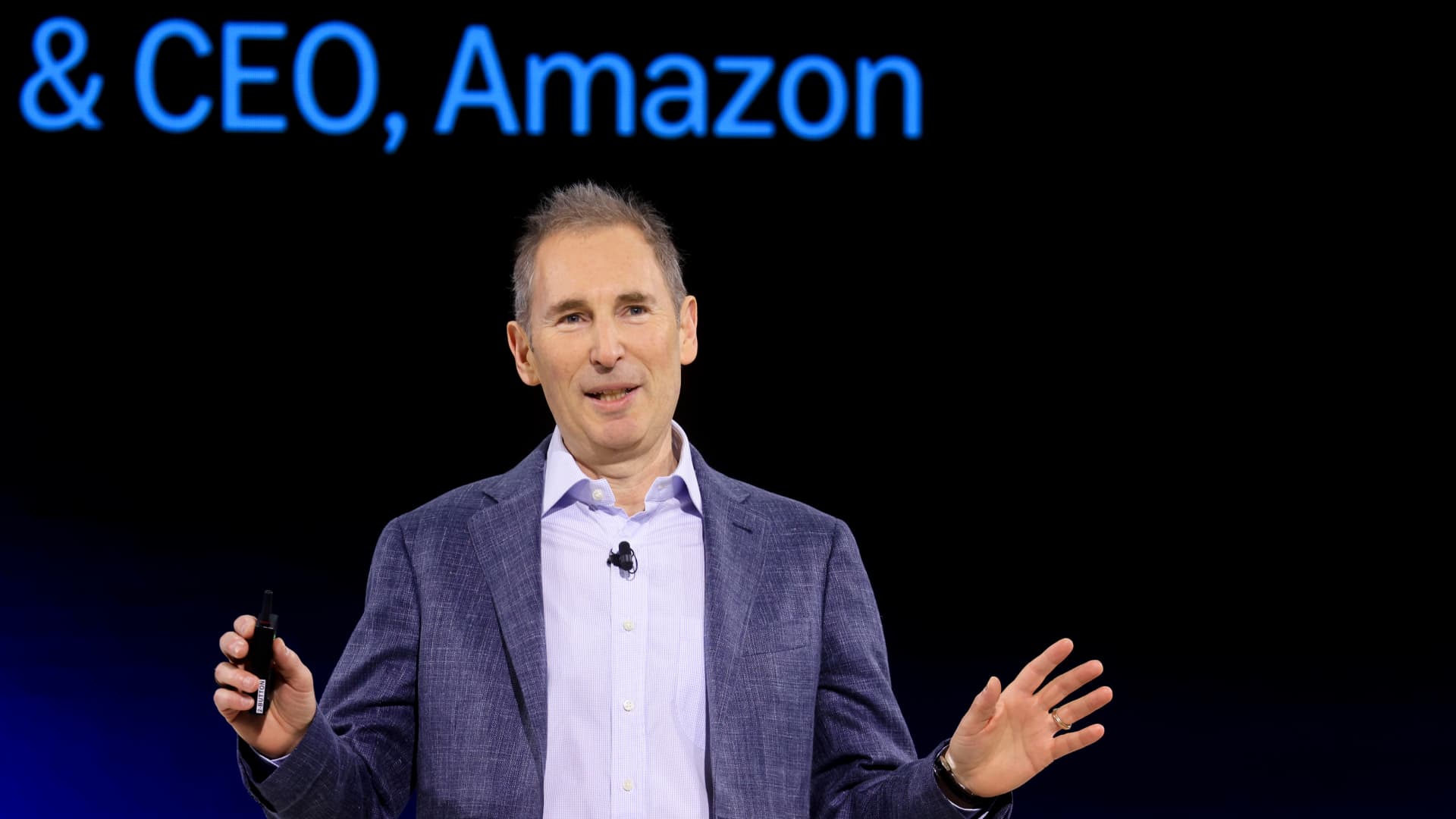
Amazon CEO Andy Jassy hinted at the as yet announced deal on the company’s earnings call last week when he described the company’s massive backlog of AWS business:
“Backlog grew to $200 billion by Q3 quarter end, and doesn’t include several unannounced new deals in October, which together are more than our total deal volume for all of Q3. AWS is gaining momentum.”
The deal notes that the agreement calls for “hundreds of thousands of state-of-the-art Nvidia GPUs.” Notably, this deal does not appear to use Amazon’s Trainium chips, which it has been pushing as part of its massive Project Rainier. The initiative will run 500,000 of the custom chips.
In a press release announcing the deal, OpenAI CEO Sam Altman said:
“Scaling frontier AI requires massive, reliable compute. Our partnership with AWS strengthens the broad compute ecosystem that will power this next era and bring advanced AI to everyone.”
In a post on X, Jassy said the deal takes effect right away:
“OpenAI will start using AWS’s infrastructure immediately and we expect to have all of the capacity deployed before end of next year-- with the ability to expand in 2027 and beyond.”
In the wake of this news, Wedbush analyst Dan Ives bumped up his price target on the e-commerce and cloud giant to $340 from $330, writing that this deal “is a continued move in the right direction for Amazon as they broaden AI services.”