

Tech
tech
Jon Keegan

On the first day of “shipmas,” Sam Altman gave to me...

Yesterday, OpenAI CEO Sam Altman announced that to wrap up the year, the company would celebrate “shipmas” and launch and demo a new product or feature each day for the next 12 days, or as he put it, “The 12 Days of OpenAI.

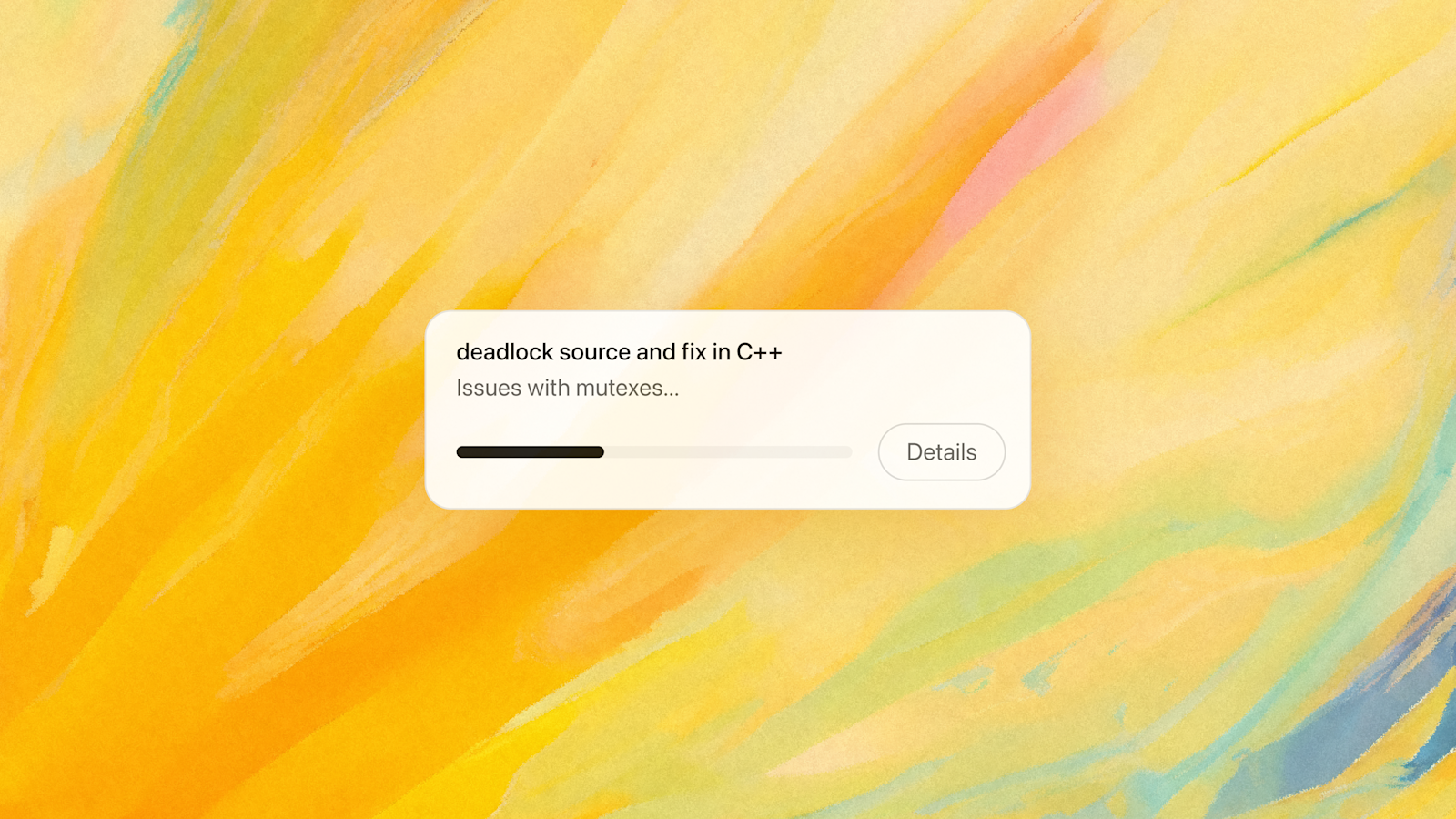
For the first release, OpenAI announced the “full” version of its latest OpenAI o1 model and a new $200 per month ChatGPT Pro tier that offers unlimited access to the company’s latest models. OpenAI o1’s biggest feature is its ability to use multistep “reasoning” to solve complex problems.

For that extra fee, you can ask ChatGPT to solve the “most challenging” math, science, and programming problems, which it can answer in one to three minutes.

OpenAI seems to be taking cues from its business partner Microsoft by embracing some confusing branding for its growing portfolio of services.

Now, when you pay for ChatGPT Pro (not to be confused with the $20 per month ChatGPT Plus), power users can choose to use “o1 Pro Mode,” which can be used to “ask the model to use even more compute to think even harder on some of the most difficult problems,” one engineer said.

In the livestream of the announcement, Sam Altman sat with three male OpenAI developers who worked on the products and walked through some pretty wonky and boring demos.

In one example, which lives up to a viral TikTok moment, one of the developers asked ChatGPT to “list the Roman emperors of the second century, including their dates and accomplishments.” It took the o1 model 14 seconds to answer.

Another demo involved uploading a hand-drawn sketch of a theoretical space-based, solar-powered AI data center to ChatGPT and asking it to estimate the surface area for a part of the contraption. After 10 seconds, ChatGPT returned an estimate along with a step-by-step solution including formulas and explaining its assumptions.

The demo for “Pro Mode” involved identifying a protein based on six criteria, which it completed in 53 seconds.
For the first release, OpenAI announced the “full” version of its latest OpenAI o1 model and a new $200 per month ChatGPT Pro tier that offers unlimited access to the company’s latest models. OpenAI o1’s biggest feature is its ability to use multistep “reasoning” to solve complex problems.

For that extra fee, you can ask ChatGPT to solve the “most challenging” math, science, and programming problems, which it can answer in one to three minutes.

OpenAI seems to be taking cues from its business partner Microsoft by embracing some confusing branding for its growing portfolio of services.

Now, when you pay for ChatGPT Pro (not to be confused with the $20 per month ChatGPT Plus), power users can choose to use “o1 Pro Mode,” which can be used to “ask the model to use even more compute to think even harder on some of the most difficult problems,” one engineer said.

In the livestream of the announcement, Sam Altman sat with three male OpenAI developers who worked on the products and walked through some pretty wonky and boring demos.

In one example, which lives up to a viral TikTok moment, one of the developers asked ChatGPT to “list the Roman emperors of the second century, including their dates and accomplishments.” It took the o1 model 14 seconds to answer.

Another demo involved uploading a hand-drawn sketch of a theoretical space-based, solar-powered AI data center to ChatGPT and asking it to estimate the surface area for a part of the contraption. After 10 seconds, ChatGPT returned an estimate along with a step-by-step solution including formulas and explaining its assumptions.

The demo for “Pro Mode” involved identifying a protein based on six criteria, which it completed in 53 seconds.

More Tech

See all Tech
tech

Lyft and Uber jump after announcing expanded robotaxi partnerships with Nvidia

Uber and Lyft both announced expanded AI and autonomous vehicle partnerships with Nvidia at the company’s GTC event, sending both ride-hailing stocks up after-hours.

Uber was recently up 3.3%, while Lyft rose 3%.

Uber said Nvidia-powered Level 4 robotaxis will launch on its platform in Los Angeles and San Francisco in 2027, with plans to scale to 28 cities globally by 2028. Meanwhile, Lyft said it will use Nvidia’s AI infrastructure to improve ride-matching, mapping, and efficiency, while also using Nvidia’s DRIVE Hyperion platform as a foundation for future autonomous fleets.

Separately, Nvidia announced expanded autonomous driving partnerships with Kia and Hyundai.

The announcements highlight Nvidia’s growing push to provide the AI hardware and software powering next-generation robotaxi networks — packaging the technology needed for self-driving cars into a platform that other companies can use to compete with Tesla.

15

Tesla’s Robotaxi program has disclosed its 15th accident, Electrek reports, citing the latest filing from the National Highway Traffic Safety Administration. According to Electrek’s estimation, extrapolated from the last time Tesla disclosed mileage figures, that amounts to a crash every 57,000 miles — about 9x the rate for humans.

The latest crash involved a Model Y hitting a fixed object at 9 mph in January while the autonomous system was engaged.

Humans are very much still involved with Tesla’s so-called autonomous driving service. Despite the service announcing in January that it had started removing safety monitors from the front seats, only two unsupervised vehicles have been spotted in the last month, per Robotaxi Tracker. The entire fleet has also dwindled from around 50 vehicles to just 35. Their mileage is unavailable.

tech

Meta’s reported 20% layoff could bring headcount to its lowest level since 2021

Meta is rising Monday morning after Reuters reported the tech giant is planning to lay off 20% of its employees in an effort to use AI to make its workforce more efficient and offset its surging AI capex costs.

On the company’s last earnings call, CEO Mark Zuckerberg touted 30% efficiency gains for its software engineers and said some “power users” of the company’s AI coding tools saw productivity jump as high as 80% — what some saw as a veiled threat to employees who failed to use AI to boost their output.

Meta’s headcount was nearly 79,000 last quarter, having steadily risen since its layoffs during the self-described “year of efficiency” in 2023. A 20% cut would bring headcount to around 63,000 — the company’s lowest level since 2021.

Shares were recently up 2.7%.

Meta’s headcount was nearly 79,000 last quarter, having steadily risen since its layoffs during the self-described “year of efficiency” in 2023. A 20% cut would bring headcount to around 63,000 — the company’s lowest level since 2021.

Shares were recently up 2.7%.

tech

Report: Amid safety failures, ChatGPT’s planned “adult mode” caused concern within OpenAI, with minors misclassified as adults 12% of the time

Despite a series of alarming mental health safety failures that resulted in ChatGPT users allegedly using the product to plan suicides and murder, OpenAI decided to double down on its plan to roll out an “adult mode,” allowing the AI chatbot to produce erotic content.

That decision raised alarms within the company, warning that users could develop unhealthy emotional dependence on the chatbot and that the new age estimation feature was imperfect — and therefore likely to allow minors to access the feature — according to a new report from The Wall Street Journal. Per the report, some 12% of the time, the age estimation feature mistakenly classified minors as adults.

OpenAI’s council of mental health experts were “furious” and unanimous in their opposition to the plans to move forward with the adult mode feature after they were told about the decision in January, with concerns about creating a “sexy suicide coach.”

Earlier this month, the company said it would delay the new feature to focus on other products.

That decision raised alarms within the company, warning that users could develop unhealthy emotional dependence on the chatbot and that the new age estimation feature was imperfect — and therefore likely to allow minors to access the feature — according to a new report from The Wall Street Journal. Per the report, some 12% of the time, the age estimation feature mistakenly classified minors as adults.

OpenAI’s council of mental health experts were “furious” and unanimous in their opposition to the plans to move forward with the adult mode feature after they were told about the decision in January, with concerns about creating a “sexy suicide coach.”

Earlier this month, the company said it would delay the new feature to focus on other products.

Latest Stories

Sherwood Media, LLC produces fresh and unique perspectives on topical financial news and is a fully owned subsidiary of Robinhood Markets, Inc., and any views expressed here do not necessarily reflect the views of any other Robinhood affiliate, including Robinhood Markets, Inc., Robinhood Financial LLC, Robinhood Securities, LLC, Robinhood Crypto, LLC, Robinhood Derivatives, LLC, or Robinhood Money, LLC. Futures and event contracts are offered through Robinhood Derivatives, LLC.