Tech
tech

Nvidia makes $3.6 million of revenue per employee — more than any of its Big Tech rivals

Among the $17 trillion BATMMAAN tech giants (Big Tech’s version of the Avengers), Nvidia is squeezing the most out of every employee.

After reporting blowout earnings, which the market found reasons to dislike anyway as Nvidia tumbled 8% in trading on Thursday, we can now calculate that last year Nvidia pulled in $3.6 million in revenue for each one of its employees.

That’s more than 1.5x that of Apple and Meta, and nearly double that of Alphabet. The gap is even wider when it comes to profit: Nvidia’s net income per employee sits at $2 million, surpassing Apple, Meta, Alphabet, and Amazon.

Of course, this isn’t entirely surprising given that Nvidia had the lowest number of employees among the BATMMAAN group, with its workforce heavy on research and development.

Contrast that with Amazon and Tesla — the least tech-y of the eight behemoths — which rank at the bottom in revenue and profit per employee, and it makes sense. After all, Amazon is the world’s second-largest retailer behind Walmart, relying on a massive workforce to keep its logistics engine running — hence its 1.6 million employees, nearly twice as many as the rest combined. Meanwhile, Tesla, despite its software-heavy ambitions, is still a capital-intensive car company.

More Tech

See all Tech
tech

Corporate sales aren’t going well for xAI’s Grok

The race for AI is not just about who has the highest scoring model, the biggest data center, or the most GPUs. AI companies are trying to build viable businesses with enough annual revenue to someday help offset today’s massive capital expenditures as they build out AI infrastructure.

According to a new report from The Information, xAI’s latest effort to sell its Grok model to corporate America isn’t going great — unless it’s a business with ties to Elon Musk (though even Tesla shareholders aren’t completely sold on xAI).

The company has raised $27 billion in debt and equity, and the number one source of revenue are subscriptions that cost $30 per month for “SuperGrok.” The company is building out an enterprise sales team to try and make up for its lack of experience selling to businesses, according to the report.

Competitors Anthropic and OpenAI have developed major revenue streams from sales to businesses.

Grok’s high profile controversies such as the “MechaHitler” episode, and its scantily clad anime AI companions might be sending the wrong messages to corporate America.

The company has raised $27 billion in debt and equity, and the number one source of revenue are subscriptions that cost $30 per month for “SuperGrok.” The company is building out an enterprise sales team to try and make up for its lack of experience selling to businesses, according to the report.

Competitors Anthropic and OpenAI have developed major revenue streams from sales to businesses.

Grok’s high profile controversies such as the “MechaHitler” episode, and its scantily clad anime AI companions might be sending the wrong messages to corporate America.

tech

Trump administration recruiting a “US Tech Force” for two year stints in government

Months after the dismantling of DOGE, and shedding hundreds of thousands of federal workers, the Trump administration is looking to Big Tech for some expert help to “solve the federal government's most critical technological challenges.”

The “US Tech Force” is a program to recruit workers from some of the largest tech companies in the country. The deal: for two years, participating companies will supply qualifying workers to do a stint as a federal employee, working on AI, cybersecurity, and data analytics.

The federal government isn’t exactly known for paying the kinds of huge salaries that tech workers are used to, but the program will offer participants salaries between $150,000 and $200,000.

A long list of companies are listed as participants in the project, including Apple, Amazon, Microsoft, Nvidia, OpenAI, and Meta.

The website says that the the Tech Force will be non-partisan, and will be “focused exclusively on improving government technology capabilities.”

The “US Tech Force” is a program to recruit workers from some of the largest tech companies in the country. The deal: for two years, participating companies will supply qualifying workers to do a stint as a federal employee, working on AI, cybersecurity, and data analytics.

The federal government isn’t exactly known for paying the kinds of huge salaries that tech workers are used to, but the program will offer participants salaries between $150,000 and $200,000.

A long list of companies are listed as participants in the project, including Apple, Amazon, Microsoft, Nvidia, OpenAI, and Meta.

The website says that the the Tech Force will be non-partisan, and will be “focused exclusively on improving government technology capabilities.”

tech

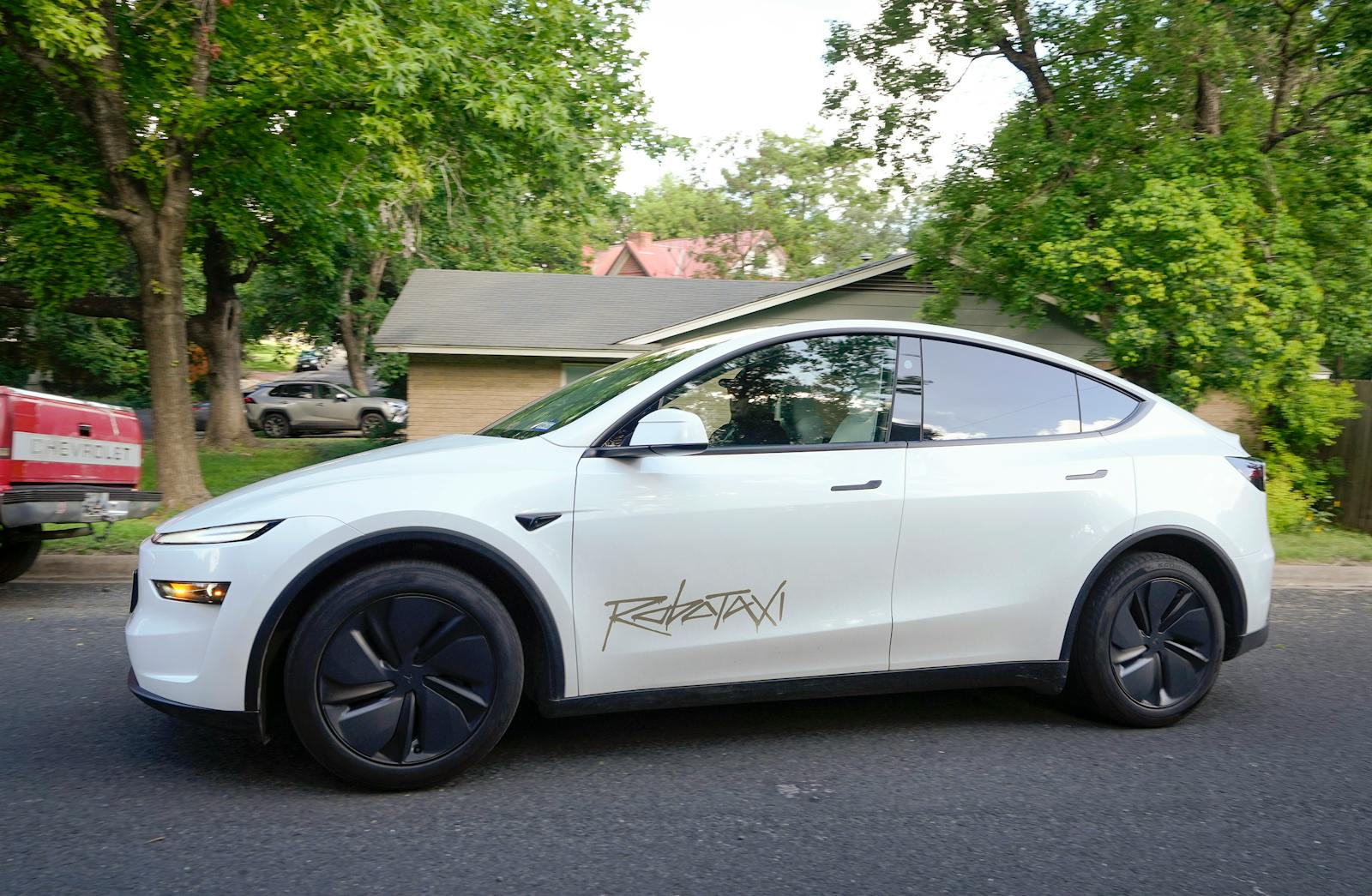
Tesla jumps while Uber and Lyft dive, as Tesla tests Robotaxis without safety drivers

Over the weekend, Tesla began testing its driverless cars without safety monitors — a move that’s sent Tesla up and competitors Uber and Lyft down as investors view it as concrete momentum toward Tesla’s autonomous future.

Even Google, which owns current autonomous taxi leader Waymo, is down slightly in early trading, though it’s unclear if the Tesla news has anything to do with it. Waymo and Tesla are widely considered to be front-runners in the autonomous driving space.

Tesla bull Dan Ives, of course, expects Tesla to win, predicting it will command about 70% of the global autonomous market over the next decade.

Even Google, which owns current autonomous taxi leader Waymo, is down slightly in early trading, though it’s unclear if the Tesla news has anything to do with it. Waymo and Tesla are widely considered to be front-runners in the autonomous driving space.

Tesla bull Dan Ives, of course, expects Tesla to win, predicting it will command about 70% of the global autonomous market over the next decade.

tech

Nearly 20% of Meta’s Chinese ad revenue came from scams and other banned content: Report

Meta found that 19% of its $18 billion in ad sales in China last year came from ads for scams, illegal gambling, pornography, and other banned content, according a new report from Reuters that examined the company’s internal documents. The latest report comes on the heels of another Reuters investigation that found 10% of Meta’s global revenue last year came from such ads. Chinese advertisers represent a growing share of the company’s revenue.

To combat the situation, Meta created an anti-fraud team that briefly managed to cut back the rate of problematic ads, but after CEO Mark Zuckerberg weighed in, the group was disbanded. Fraud rates then returned to 16% of Meta’s China revenue by mid-2025.

The trove of documents, Reuters said, “reveals Meta’s efforts over that period to understand the scale of abuse on its platforms and the company’s reluctance to introduce fixes that could undermine its business and revenues.”

To combat the situation, Meta created an anti-fraud team that briefly managed to cut back the rate of problematic ads, but after CEO Mark Zuckerberg weighed in, the group was disbanded. Fraud rates then returned to 16% of Meta’s China revenue by mid-2025.

The trove of documents, Reuters said, “reveals Meta’s efforts over that period to understand the scale of abuse on its platforms and the company’s reluctance to introduce fixes that could undermine its business and revenues.”

Latest Stories

Sherwood Media, LLC produces fresh and unique perspectives on topical financial news and is a fully owned subsidiary of Robinhood Markets, Inc., and any views expressed here do not necessarily reflect the views of any other Robinhood affiliate, including Robinhood Markets, Inc., Robinhood Financial LLC, Robinhood Securities, LLC, Robinhood Crypto, LLC, or Robinhood Money, LLC.