

Tech
tech
Jon Keegan

Musk’s xAI sues former employee, alleging theft of trade secrets

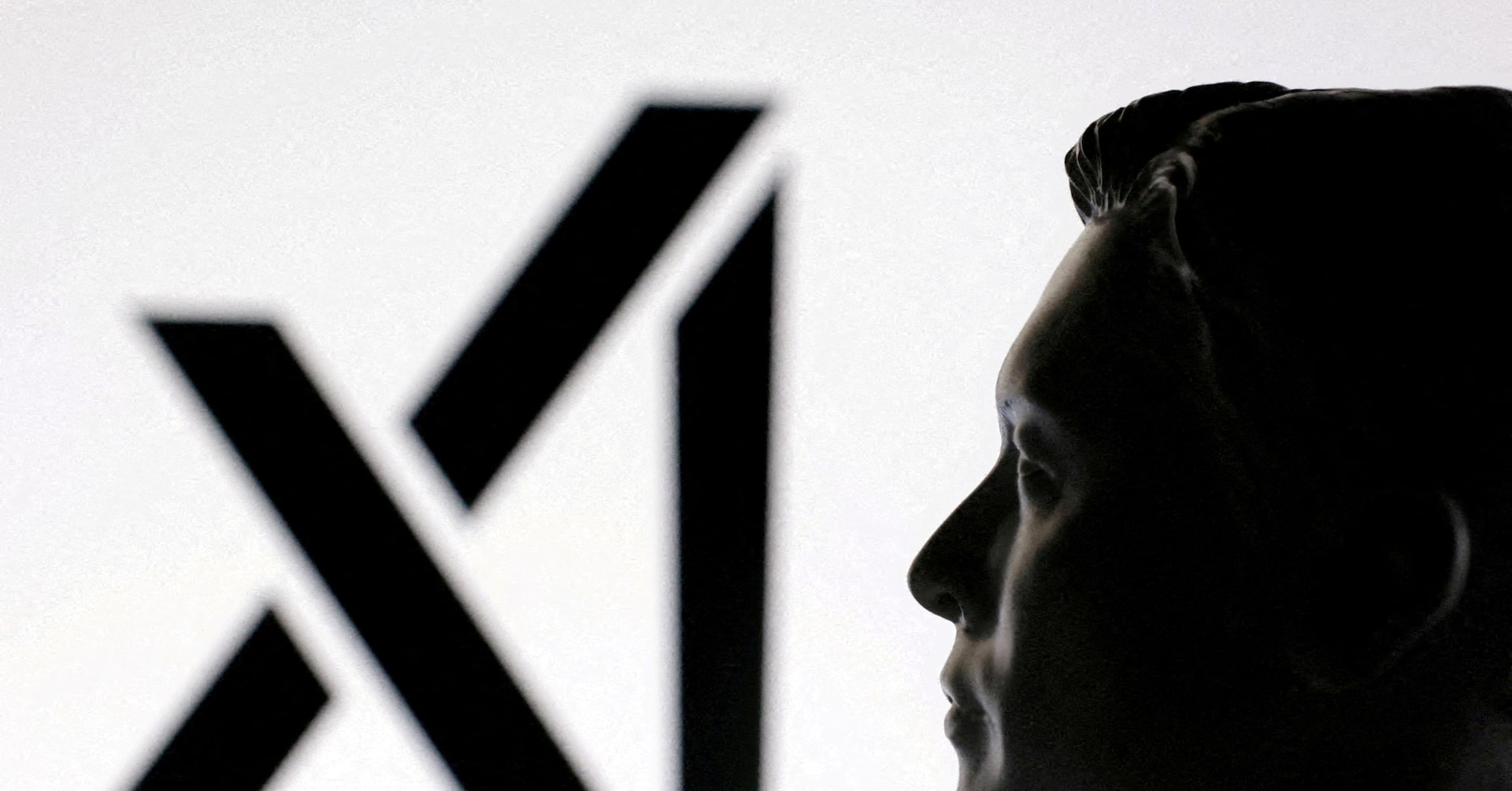
Elon Musk’s xAI has filed suit in Northern California federal court against a former engineer, alleging that he stole trade secrets from the company just before leaving for a job at OpenAI.

Xuechen Li started working for xAI in February 2024 after receiving his Ph.D. in computer science from Stanford University.

In late July, Li sold $7 million worth of his xAI shares to the company as part of a liquidity grant for employees.

The complaint alleges that once the sale was complete, Li illegally copied xAI files:

“On July 25, 2025 — the same day he concluded his second sale of equity and had millions in cash on hand — Defendant betrayed the trust and faith xAI had placed in him by willfully and maliciously copying xAI Confidential Information (as defined in the Agreement) and trade secrets from his xAI-issued laptop to one or more non-xAI physical or online storage systems within his personal control (collectively, ‘Personal System’).”

Three days later, Li resigned to take a job at OpenAI.

Reuters wrote that Li didn’t immediately respond to its request for comment.

The complaint also alleges:

“Defendant, with his attorney present, admitted in a handwritten document he provided to xAI that he misappropriated xAI’s Confidential Information and trade secrets, and again, with his attorney present, admitted verbally during in-person meetings with xAI that he engaged in such misappropriation and further admitted that he tried to hide his theft.”

The complaint also alleges Li withheld accounts and credentials from forensic investigators after handing over personal devices to the company.
The complaint alleges that once the sale was complete, Li illegally copied xAI files:

“On July 25, 2025 — the same day he concluded his second sale of equity and had millions in cash on hand — Defendant betrayed the trust and faith xAI had placed in him by willfully and maliciously copying xAI Confidential Information (as defined in the Agreement) and trade secrets from his xAI-issued laptop to one or more non-xAI physical or online storage systems within his personal control (collectively, ‘Personal System’).”

Three days later, Li resigned to take a job at OpenAI.

Reuters wrote that Li didn’t immediately respond to its request for comment.

The complaint also alleges:

“Defendant, with his attorney present, admitted in a handwritten document he provided to xAI that he misappropriated xAI’s Confidential Information and trade secrets, and again, with his attorney present, admitted verbally during in-person meetings with xAI that he engaged in such misappropriation and further admitted that he tried to hide his theft.”

The complaint also alleges Li withheld accounts and credentials from forensic investigators after handing over personal devices to the company.


More Tech

See all Tech
Two Cat Businessmen Holding Drinks

The most outlandish tech CEO quotes from 2025

Tech CEOs have been nuttier than ever.

Rani Molla12/12/25
tech
Rani Molla

Trump AI executive order is a “major win” for Open AI, Google, Microsoft, and Meta, says Ives

President Trump’s new executive order aiming to keep states from enacting AI laws that inhibit US “global AI dominance” is a “major win” for OpenAI, Google, Microsoft, and Meta, according to Wedbush Securities analyst Dan Ives. Big Tech companies have collectively plowed hundreds of billions into the technology, while seeing massive stock price gains, and Ives believes they stand to gain much more.

“Given that there have been over 1,000 AI laws proposed at the state level, this was a necessary move by the Trump Administration to keep the US out in front for the AI Revolution over China,” Ives wrote, adding that state-by-state regulation “would have crushed US AI startup culture.” The presidential order would withhold federal funds from states that put in place onerous AI regulations.

This morning, Whitehouse AI adviser Sriram Krishnan said in a CNBC interview that he’d be working with Congress on a single national framework for AI.

Despite Ives’ rosy read-through on the order, with the exception of Nvidia, which jumped on a report of boosted Chinese demand, many AI stocks are in the red early today. The VanEck Semiconductor ETF is down nearly 1% premarket, as the AI trade struggles thanks to underwhelming earnings results from Oracle earlier this week.

“Given that there have been over 1,000 AI laws proposed at the state level, this was a necessary move by the Trump Administration to keep the US out in front for the AI Revolution over China,” Ives wrote, adding that state-by-state regulation “would have crushed US AI startup culture.” The presidential order would withhold federal funds from states that put in place onerous AI regulations.

This morning, Whitehouse AI adviser Sriram Krishnan said in a CNBC interview that he’d be working with Congress on a single national framework for AI.

Despite Ives’ rosy read-through on the order, with the exception of Nvidia, which jumped on a report of boosted Chinese demand, many AI stocks are in the red early today. The VanEck Semiconductor ETF is down nearly 1% premarket, as the AI trade struggles thanks to underwhelming earnings results from Oracle earlier this week.

tech
Rani Molla

Epic scores two victories as “Fortnite” returns to Google Play and appeals court keeps injunction against Apple

“Fortnite” maker Epic Games notched two wins Thursday in its drawn-out battle against Big Tech’s app stores. “Fortnite” returned to the Google Play app store in the US, Reuters reports, as Epic continues working with Google to secure court approval for their settlement.

Meanwhile, a US appeals court partly reversed sanctions against Apple in Epic’s antitrust case, calling parts of the order overly broad, but upheld the contempt finding and left a sweeping injunction in place — keeping pressure on Apple to allow developers to steer users to outside payment options and reduce its tight control over how apps can communicate and monetize on iOS.

tech
Jon Keegan

Report: AI-powered toys tell kids where to find matches, parrot Chinese government propaganda

You may want to think twice before buying your kids a fancy AI-powered plush toy.

A new report from NBC News found that several AI-powered kids toys could easily be steered to dangerous as well as sexually explicit conversations in a shocking demonstration of the loose safety guardrails in this novel category of consumer electronics.

A report out by the Public Interest Research Group details what researchers found when they tested five AI-powered toys for kids bought from Amazon. Some of the toys offered instructions on where to find matches and how to start fires.

NBC News also bought some of these toys and found they parroted Chinese government propaganda and gave instructions for how to sharpen knives. Some of the toys also discussed inappropriate topics for kids, like sexual kinks.

The category of AI-powered kids toys is under scrutiny as major AI companies like OpenAI have announced partnerships with toy manufacturers like Mattel (which has yet to release an AI-powered toy).

A report out by the Public Interest Research Group details what researchers found when they tested five AI-powered toys for kids bought from Amazon. Some of the toys offered instructions on where to find matches and how to start fires.

NBC News also bought some of these toys and found they parroted Chinese government propaganda and gave instructions for how to sharpen knives. Some of the toys also discussed inappropriate topics for kids, like sexual kinks.

The category of AI-powered kids toys is under scrutiny as major AI companies like OpenAI have announced partnerships with toy manufacturers like Mattel (which has yet to release an AI-powered toy).

tech
Jon Keegan

OpenAI releases GPT-5.2, the “best model yet for real-world, professional use”

After feeling the heat from Google’s recent launch of its powerful Gemini 3 model, OpenAI’s response to its “code red” has been released, reportedly on an accelerated schedule to keep up with the competition.

The company’s new flagship model, GPT-5.2, is out, and the company is calling it “the most capable model series yet for professional knowledge work.”

OpenAI CEO Sam Altman called it the “smartest generally-available model in the world” and shared benchmarks that showed it achieving higher scores than Gemini 3 Pro and Anthopic’s Claude Opus 4.5 in some software engineering tests and abstract reasoning, math, and science problems.

In a press release announcing the new model, the company said: “Overall, GPT‑5.2 brings significant improvements in general intelligence, long-context understanding, agentic tool-calling, and vision — making it better at executing complex, real-world tasks end-to-end than any previous model.”

OpenAI CEO Sam Altman called it the “smartest generally-available model in the world” and shared benchmarks that showed it achieving higher scores than Gemini 3 Pro and Anthopic’s Claude Opus 4.5 in some software engineering tests and abstract reasoning, math, and science problems.

In a press release announcing the new model, the company said: “Overall, GPT‑5.2 brings significant improvements in general intelligence, long-context understanding, agentic tool-calling, and vision — making it better at executing complex, real-world tasks end-to-end than any previous model.”

Latest Stories

Sherwood Media, LLC produces fresh and unique perspectives on topical financial news and is a fully owned subsidiary of Robinhood Markets, Inc., and any views expressed here do not necessarily reflect the views of any other Robinhood affiliate, including Robinhood Markets, Inc., Robinhood Financial LLC, Robinhood Securities, LLC, Robinhood Crypto, LLC, or Robinhood Money, LLC.