

Tech
tech
Jon Keegan

Meta projected 10% of 2024 revenue came from scams and banned goods, Reuters reports

Meta has been making billions of dollars per year from scam ads and sales of banned goods, according internal Meta documents seen by Reuters.

The new report quantifies the scale of fraud taking place on Meta’s platforms, and how much the company profited from them.

Per the report, Meta internal projections from late last year said that 10% of the company’s total 2024 revenue would come from scammy ads and sales of banned goods — which works out to $16 billion.

Discussions within Meta acknowledged the steep fines likely to be levied against the company for not stopping the fraudulent behavior on its platforms, and the company prioritized enforcement in regions where the penalties would be steepest, the reporting found. The cost of lost revenue from clamping down on the scams was weighed against the cost of fines from regulators.

The documents reportedly show that Meta did aim to significantly reduce the fraudulent behavior, but cuts to its moderation team left the vast majority of user-reported violations to be ignored or rejected.

Meta spokesperson Andy Stone told Reuters the documents were a “selective view” of internal enforcement:

“We aggressively fight fraud and scams because people on our platforms don’t want this content, legitimate advertisers don’t want it, and we don’t want it either.”
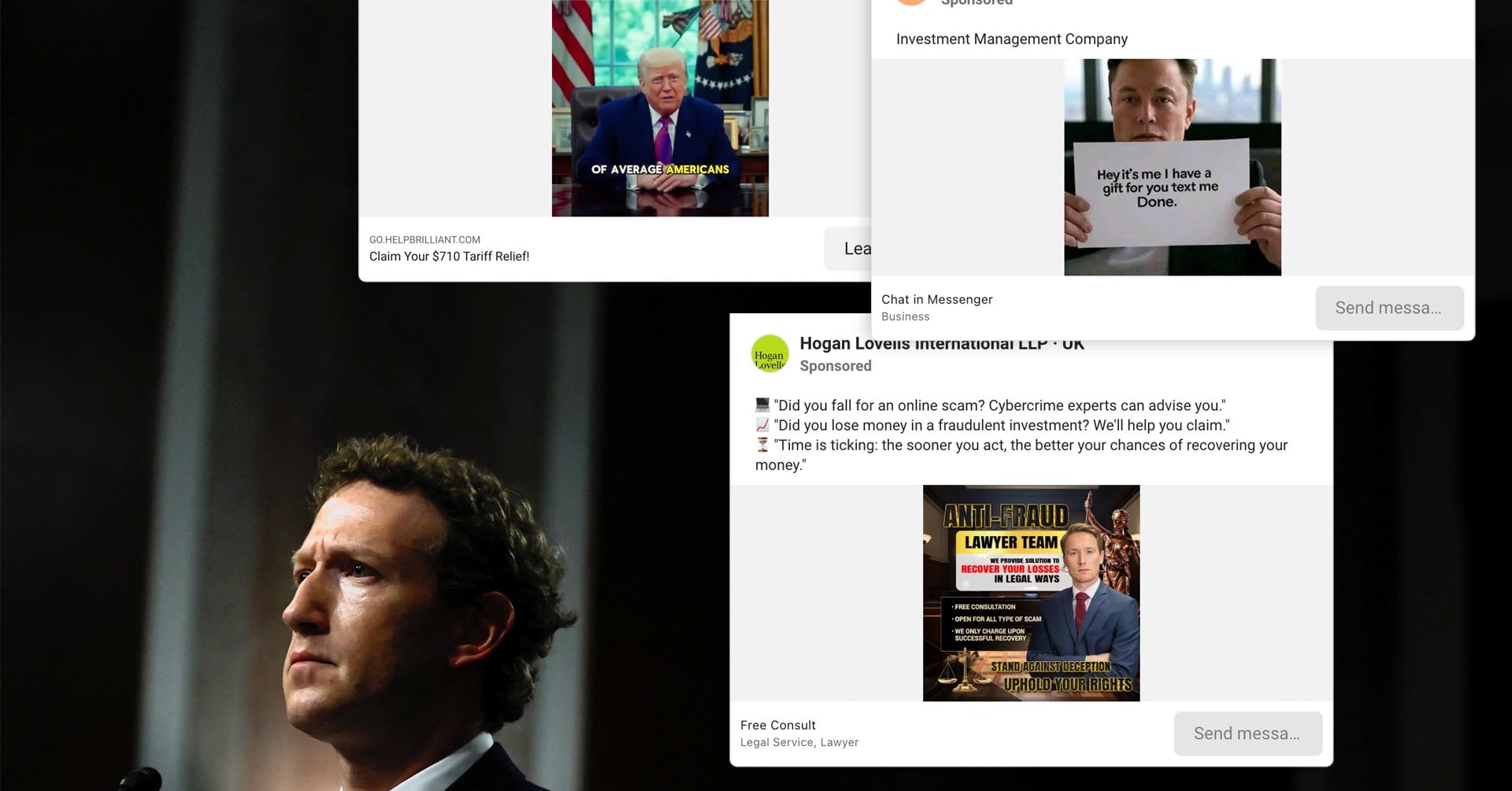
Per the report, Meta internal projections from late last year said that 10% of the company’s total 2024 revenue would come from scammy ads and sales of banned goods — which works out to $16 billion.

Discussions within Meta acknowledged the steep fines likely to be levied against the company for not stopping the fraudulent behavior on its platforms, and the company prioritized enforcement in regions where the penalties would be steepest, the reporting found. The cost of lost revenue from clamping down on the scams was weighed against the cost of fines from regulators.

The documents reportedly show that Meta did aim to significantly reduce the fraudulent behavior, but cuts to its moderation team left the vast majority of user-reported violations to be ignored or rejected.

Meta spokesperson Andy Stone told Reuters the documents were a “selective view” of internal enforcement:

“We aggressively fight fraud and scams because people on our platforms don’t want this content, legitimate advertisers don’t want it, and we don’t want it either.”


More Tech

See all Tech
tech

Anthropic reportedly doubles current fundraising round to $20 billion

Anthropic has doubled its current fundraising round to $20 billion on strong investor demand, according reporting from the Financial Times. The new fundraising round would value the company at a staggering $350 billion. That’s up 91% from September, when it raised at a valuation of $183 billion.

The company reportedly received interest totaling 5x to 6x its original $10 billion fundraising goal, and it’s expected to haul in several billion more than that tally before the current round closes.

Anthropic’s success with enterprise customers and the popularity of its Claude Code product are boosting the company’s momentum as it chases the current valuation leader of the AI startup pack: OpenAI.

The company reportedly received interest totaling 5x to 6x its original $10 billion fundraising goal, and it’s expected to haul in several billion more than that tally before the current round closes.

Anthropic’s success with enterprise customers and the popularity of its Claude Code product are boosting the company’s momentum as it chases the current valuation leader of the AI startup pack: OpenAI.

Produce At Whole Foods Market's Flagship Store

Amazon says it’s doubling down on opening Whole Foods stores. That sounds familiar.

The company says it’ll open 100 Whole Foods locations in the next few years. That sounds similar to plans Whole Foods’ CEO laid out in 2024 for opening 30 stores a year. Since then, it appears to have added 14, total.

Incredulous Man

One year after the DeepSeek freak, the AI industry has adjusted and roared back

A look back at how the Chinese startup shattered conventions, changed the way Big Tech thought about AI, and blew a $1 trillion hole in the stock market that got filled right back up... and then soared to new levels.

tech

Georgia lawmakers introduce data center construction moratorium amid statewide pushback

More and more communities across the US are wrestling with the pros and cons of having a data center come to town. Georgia has become a hotspot of resistance to the data centers planned by Big Tech, according to a new report from The Guardian. The Atlanta metro area led the nation in data center construction in 2024.

Georgia state representatives introduced legislation that would place a one-year moratorium on data center construction in the state. Ten Georgia municipalities have already passed local bans on data centers.

Per the report, at least three other states have seen similar data center moratorium legislation introduced in the last week, including Maryland and Oklahoma.

Georgia state representatives introduced legislation that would place a one-year moratorium on data center construction in the state. Ten Georgia municipalities have already passed local bans on data centers.

Per the report, at least three other states have seen similar data center moratorium legislation introduced in the last week, including Maryland and Oklahoma.

Latest Stories

Sherwood Media, LLC produces fresh and unique perspectives on topical financial news and is a fully owned subsidiary of Robinhood Markets, Inc., and any views expressed here do not necessarily reflect the views of any other Robinhood affiliate, including Robinhood Markets, Inc., Robinhood Financial LLC, Robinhood Securities, LLC, Robinhood Crypto, LLC, or Robinhood Money, LLC.