

Tech
tech
Jon Keegan

Meta and Apple hit with the EU’s first Digital Markets Act fines

The EU’s Digital Markets Act was designed to bring a battering ram to the Big Tech platforms considered “gatekeepers” — defined as “large digital platforms providing so called core platform services, such as for example online search engines, app stores, messenger services.”

The law went into force in November of 2022 (and became applicable in May of 2023), and since then it has not resulted in any fines... until today.

Apple was hit with a €500 million ($567 million) fine, and Meta received a €200 million fine ($227 million).

“Today, the European Commission found that Apple breached its anti-steering obligation under the Digital Markets Act (DMA), and that Meta breached the DMA obligation to give consumers the choice of a service that uses less of their personal data. Therefore, the Commission has fined Apple and Meta with €500 million and €200 million respectively.”

According to the EU, Apple’s violation of the DMA was that it failed to allow third-party app stores on iOS, and it should allow iPhone apps to be downloaded from the open web rather than exclusively through the App Store, which is the current setup.

Meta’s violation was related to its “pay or consent” policy in the EU, which gave users a choice to either consent to sharing personal data for free access to its platforms, or pay to use the platforms with no tracking. The DMA ruling said that Meta needs to offer a third option: free use with limited data sharing.

The companies have 60 days to comply with the orders or additional fines will be levied. The companies are reportedly planning on appealing the rulings.

The law went into force in November of 2022 (and became applicable in May of 2023), and since then it has not resulted in any fines... until today.

Apple was hit with a €500 million ($567 million) fine, and Meta received a €200 million fine ($227 million).

“Today, the European Commission found that Apple breached its anti-steering obligation under the Digital Markets Act (DMA), and that Meta breached the DMA obligation to give consumers the choice of a service that uses less of their personal data. Therefore, the Commission has fined Apple and Meta with €500 million and €200 million respectively.”

According to the EU, Apple’s violation of the DMA was that it failed to allow third-party app stores on iOS, and it should allow iPhone apps to be downloaded from the open web rather than exclusively through the App Store, which is the current setup.

Meta’s violation was related to its “pay or consent” policy in the EU, which gave users a choice to either consent to sharing personal data for free access to its platforms, or pay to use the platforms with no tracking. The DMA ruling said that Meta needs to offer a third option: free use with limited data sharing.

The companies have 60 days to comply with the orders or additional fines will be levied. The companies are reportedly planning on appealing the rulings.

More Tech

See all Tech
tech
Rani Molla

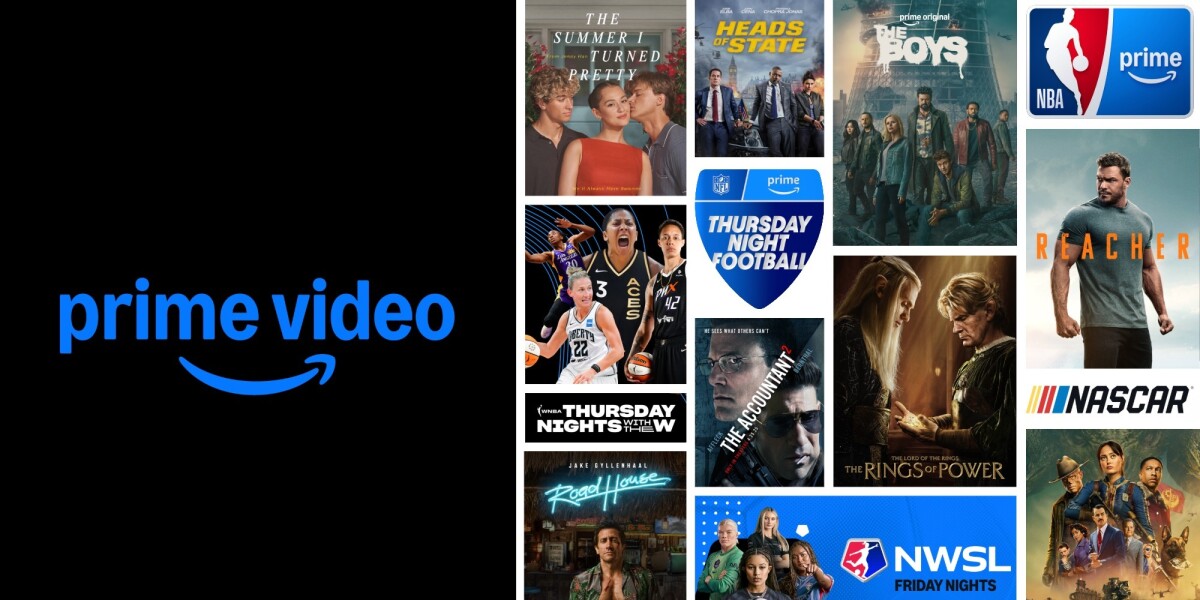
Amazon raises the price for ad-free Prime Video to $4.99

Amazon is giving consumers more — for more. The e-commerce giant is raising the price of its ad-free Prime Video tier to $4.99 a month, up from $2.99.

On April 10, the service, now rebranded as Prime Video Ultra, will allow more concurrent streams (five instead of three) and up to 100 downloads, up from 25. Ad-free Prime Video had been included with a Prime membership until 2024, when Amazon added ads and began charging $2.99 a month to remove them.

For what it’s worth, ad-free Prime Video is still cheaper than the other increasingly expensive streaming services — if you don’t include the cost of Prime.

For what it’s worth, ad-free Prime Video is still cheaper than the other increasingly expensive streaming services — if you don’t include the cost of Prime.

tech
Rani Molla

Uber relaunches robotaxi service with Hyundai-backed Motional in Las Vegas

What happens in Vegas, keeps happening in Vegas.

Uber users in Las Vegas can now be matched with an electric Motional IONIQ 5 robotaxi along parts of the Strip and at select casinos, resorts, and the Town Square shopping district near the airport, the companies said. For now, each vehicle includes a human safety operator monitoring from behind the wheel, who the companies say will be removed by year’s end.

Uber and Hyundai-backed autonomous tech company Motional previously tested a service there in 2022. “Motional is ready to put our extensive ride hail experience to work with Uber again,” said David Carroll, vice president of commercialization at Motional, which paused its commercial deployments in 2024 to refocus on its core driverless technology after scaling back operations.

This time around, the companies will be joining a much more crowded field. Amazon-owned Zoox has been offering free rides along select destinations on the Strip since last year, and both Tesla’s Robotaxi and Alphabet-owned Waymo have plans to open up shop there in the near future.

Thanks to a spate of recent AV partnerships, Uber, which sold its own autonomous unit back in 2020, is finding itself at the center of the nascent robotaxi boom.

tech
Rani Molla

Musk says “xAI was not built right” amid executive departures, Cursor hires

There’s been a lot of turnover lately at xAI, with numerous executive departures and, yesterday, news that the SpaceX-owned company was hiring two senior leaders from Cursor, an AI coding startup that’s raising funds at a $50 billion valuation.

The reason? “xAI was not built right first time around, so is being rebuilt from the foundations up,” CEO Elon Musk posted on xAI-owned X yesterday, in response to a post about the Cursor hires. Earlier this month, Musk told a conference audience, “Grok is currently behind on coding.”

The news amounts to an admission of a reset inside xAI and an acknowledgment that the company is trailing AI peers like Anthropic and OpenAI in one of AI’s most commercially important applications: coding.

tech
Jon Keegan

War in the Middle East halts Meta’s undersea fiber project

Meta’s massive undersea cable project connecting Africa and the Middle East to Europe has run into an unexpected obstacle — not under the sea, but in the sky and land above: the war in the Middle East.

According to a report from Bloomberg, France’s Alcatel Submarine Networks, the company that is laying the cable, notified customers that it can no longer safely operate in the area.

The 2Africa project consists of a 45,000-kilometer chain of undersea fiber-optic cables that encircles Africa and runs through the Red Sea, up through the Gulf of Oman, where the Strait of Hormuz sits. Iran has declared the strait — a crucial choke point for oil and natural gas tankers — closed for traffic.

Meta is building the network in partnership with Bayobab, China Mobile, Orange, Telecom Egypt, Vodafone, WIOCC, and Center3.

The 2Africa project consists of a 45,000-kilometer chain of undersea fiber-optic cables that encircles Africa and runs through the Red Sea, up through the Gulf of Oman, where the Strait of Hormuz sits. Iran has declared the strait — a crucial choke point for oil and natural gas tankers — closed for traffic.

Meta is building the network in partnership with Bayobab, China Mobile, Orange, Telecom Egypt, Vodafone, WIOCC, and Center3.

Latest Stories

Sherwood Media, LLC produces fresh and unique perspectives on topical financial news and is a fully owned subsidiary of Robinhood Markets, Inc., and any views expressed here do not necessarily reflect the views of any other Robinhood affiliate, including Robinhood Markets, Inc., Robinhood Financial LLC, Robinhood Securities, LLC, Robinhood Crypto, LLC, Robinhood Derivatives, LLC, or Robinhood Money, LLC. Futures and event contracts are offered through Robinhood Derivatives, LLC.