

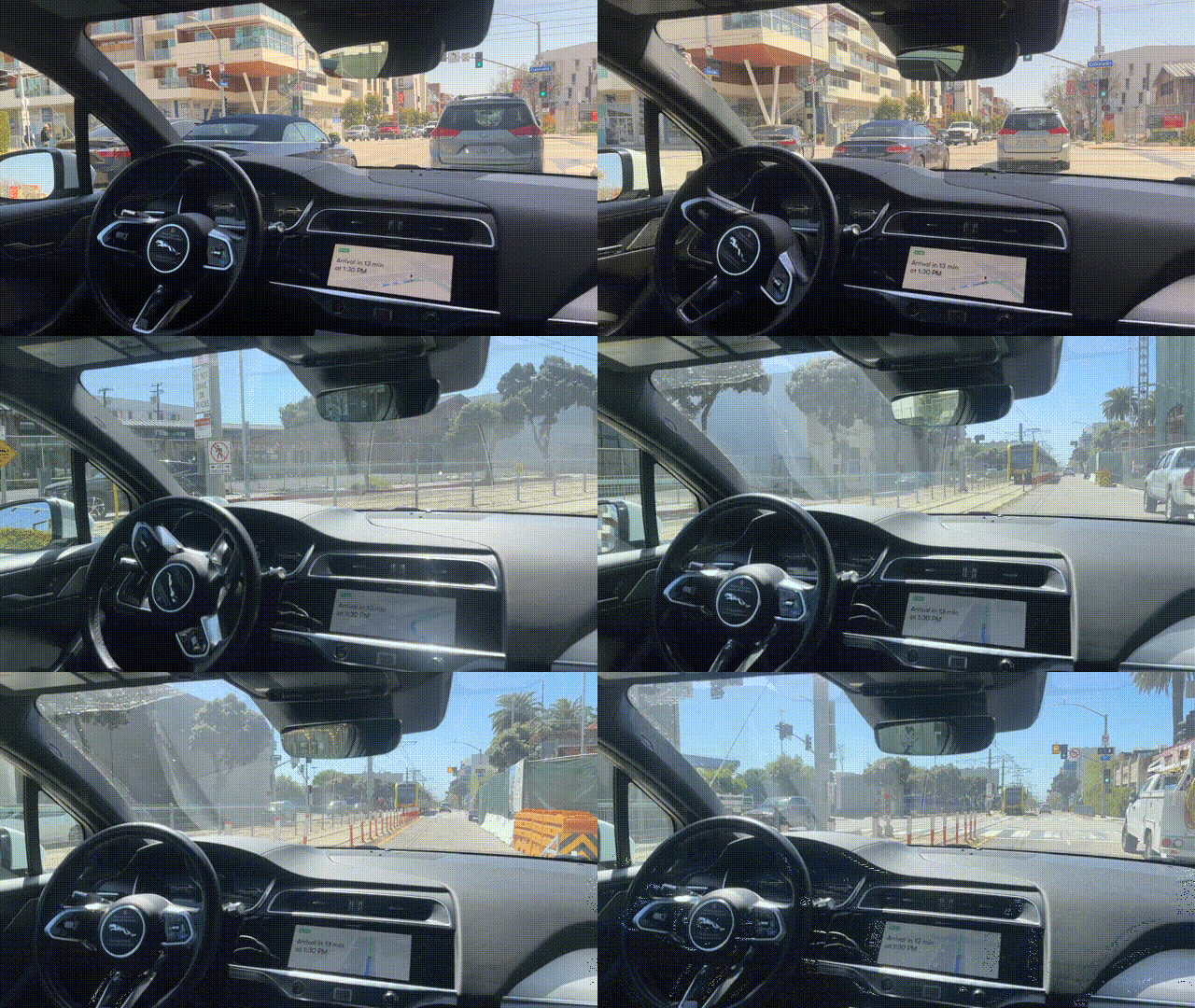
It’s Tesla vs. Google in the fight for self-driving supremacy. Trillions are at stake.
Two of the biggest companies on the planet are finally slamming the accelerator as they try to capture a potentially humongous market. But will it eventually turn into a race to the bottom?
If you want to see big numbers, look at analysts’ estimates for the total addressable market for self-driving taxis.
Depending on the parameters of the market or the whimsy of the analyst, they expect robotaxis to bring in anywhere from tens of billions to trillions in annual revenue by the end of the decade. Yes, this decade.
To put that in perspective, Uber’s revenue since 2016, in total, is about $179 billion.
The promises are huge: autonomous taxis will be so much safer than human drivers that traffic deaths will plummet. Robotaxis will make transportation so cheap, it could upend everything from car ownership to the land on which we formerly parked our cars. Rather than depreciating money pits, cars with robot drivers would become income-generating assets for their owners.
The future of autonomous driving has been a hot conversation for years, and it has long felt far off — Google first unveiled its self-driving car unit in 2010 and named it Waymo in 2016 — but even skeptics can’t deny that things are finally happening at a rapid clip in the industry.
It’s most apparent in the fight for autonomous driving supremacy that’s heating up between Google and Tesla. The two Silicon Valley tech giants — members of the Magnificent 7 and among the biggest, richest companies on Earth — have been trading more and more punches on self-driving lately.
In the past two weeks, Waymo said it has expanded its coverage area to include freeways and announced plans to move into many more cities. It also said it now has more than 2,500 vehicles in operation. Tesla CEO Elon Musk congratulated Waymo on the expansion, but also took a dig at its fleet size, saying they were “rookie numbers.”
At stake in the fight: many billions, and perhaps even trillions, of dollars, whether in revenue or stock market value.
So, who’s winning? Let us break it down for you.
Google’s Waymo currently operates its vehicles publicly in five American cities, with plans to more than quadruple that and spread across the Atlantic. Tesla finally launched its long-awaited Robotaxi service over the summer and has now promised to make it available in 8 to 10 cities by year-end.
Waymo’s cars have driven more than 100 million autonomous miles and completed more than 10 million paid trips as of this spring.
Tesla customers have used its supervised Full Self-Driving software to drive 6.5 billion miles. That’s, of course, not apples to apples because everyday drivers are in the seat watching over their Teslas as they roam. But we’ll get to why it’s important in a moment.
Tesla’s Austin ride-sharing service launched in March and included roughly 30 cars at last count. With a safety monitor in the passenger seat, the service has crossed 250,000 miles. The company also has a more typical ride-hailing service in the Bay Area, in which a driver uses supervised FSD tech. That service recently completed 1 million miles. Musk has named five cities for expansion: Miami, Houston, Dallas, Phoenix and Las Vegas. He’s also said the company would start eliminating safety monitors in Austin by year-end, when 1,500 vehicles would be in service across Austin and the Bay Area.
“ The approaches that they’re taking are very different,” Harry Campbell, founder of The Driverless Digest newsletter, told Sherwood News.
For now, though, he says it’s not really a competition, since Waymo is operating hundreds of thousands of paid autonomous trips per week, whereas Tesla is not truly autonomous because it’s using safety monitors.
“Tesla is coming with a bottom-up approach, and the big question mark in their business model when it comes to self-driving vehicles is if, or when, the technology will work,” Campbell said. “ That’s when I think things will really heat up and could be scary for Waymo. Because Tesla has so many vehicles already on the road.”
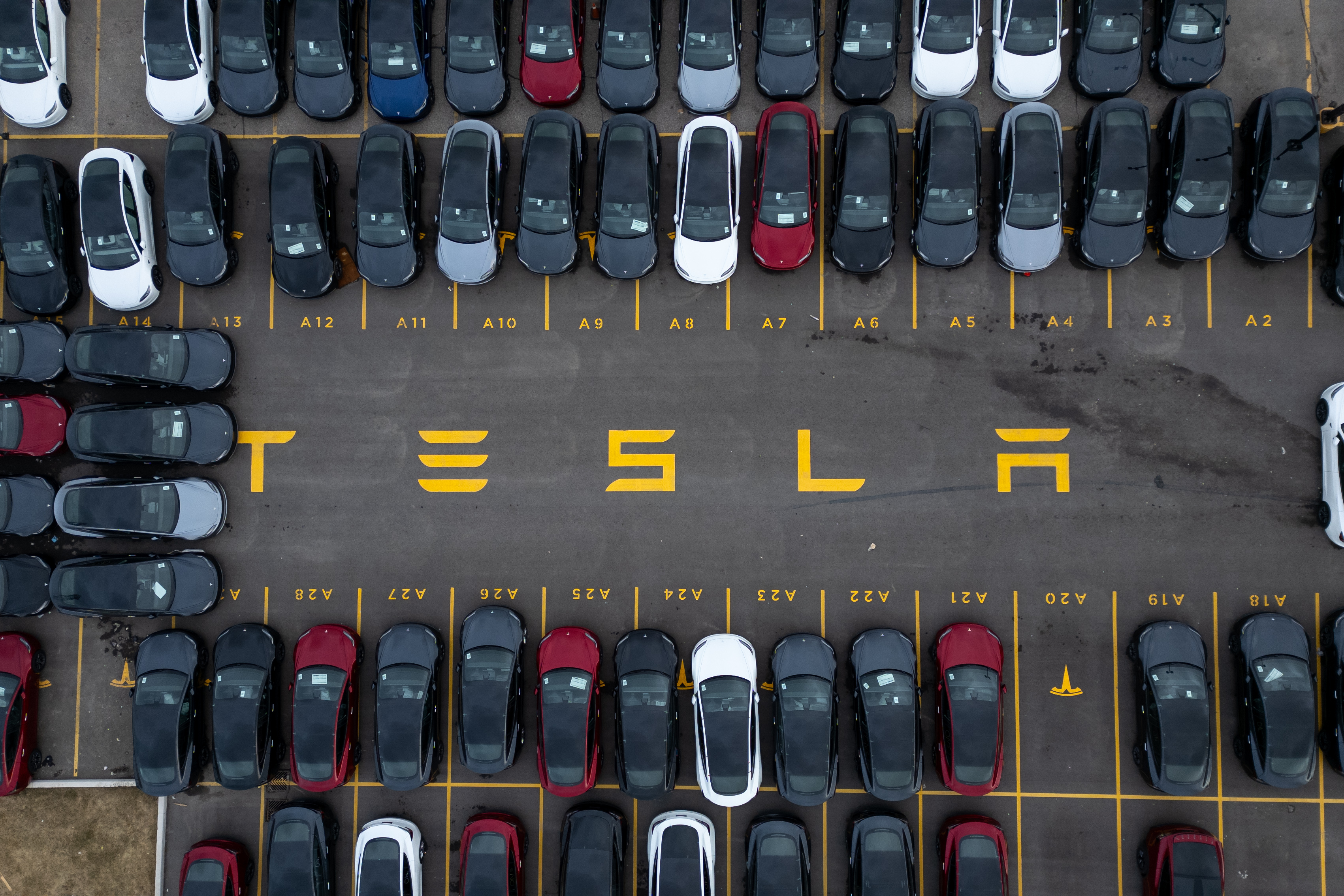
Musk has repeatedly said Tesla’s strength is in its existing fleet, which he says could be easily turned into self-driving robotaxis.
“There are millions of cars out there that, with a software update, become Full Self-Driving cars,” Musk said on the company’s recent earnings call.
Still, he might be minimizing the difficulty of scaling up.
As Phil Koopman, an autonomous vehicle expert and associate professor of electrical and computer engineering at Carnegie Mellon University, recently put it: “One way to look at scaling robotaxis (and robotrucks) is that for every factor of ten growth in fleet size, one should expect a fresh batch of challenges to graduate from quirks to problems.”
Here’s what we know about how the companies stack up:
Note: When talking about Tesla’s Robotaxi service for this analysis, we cited its Austin service only, since it has nobody in the driver’s seat. Tesla didn’t respond to requests for comment, so we went with figures Tesla has disclosed, analysts’ estimates, and our own best estimates based on available information.
Will this eventually become a race to the bottom?
One thing we don’t know yet is how the two companies’ services will compare on pricing once their offerings are mature — something that will ultimately matter a lot more for success than it does now.
“Pricing is the most important thing a ride-sharing company does besides managing supply,” Ashwini Anburajan, CEO of ride-share comparison app Obi, told Sherwood. “It is absolutely critical to everyone’s business, and margins are won by the difference of a dollar.”
“It’s a commodity,” she added.
But for now, autonomous rides still have a coolness factor that consumers are willing to pay more for.
Obi data has found that in San Francisco, Waymos cost notably more than Ubers and Lyfts, and passengers are willing to pay a premium for the novelty of riding with a robot instead of a human driver.
Obi doesn’t yet have enough data on Tesla to include it in the mix. Tesla’s pricing still seems very much in flux: it launched its Austin service with a flat rate of a jokey $4.20, then upped it to a jokier $6.90, and now has dynamic pricing.
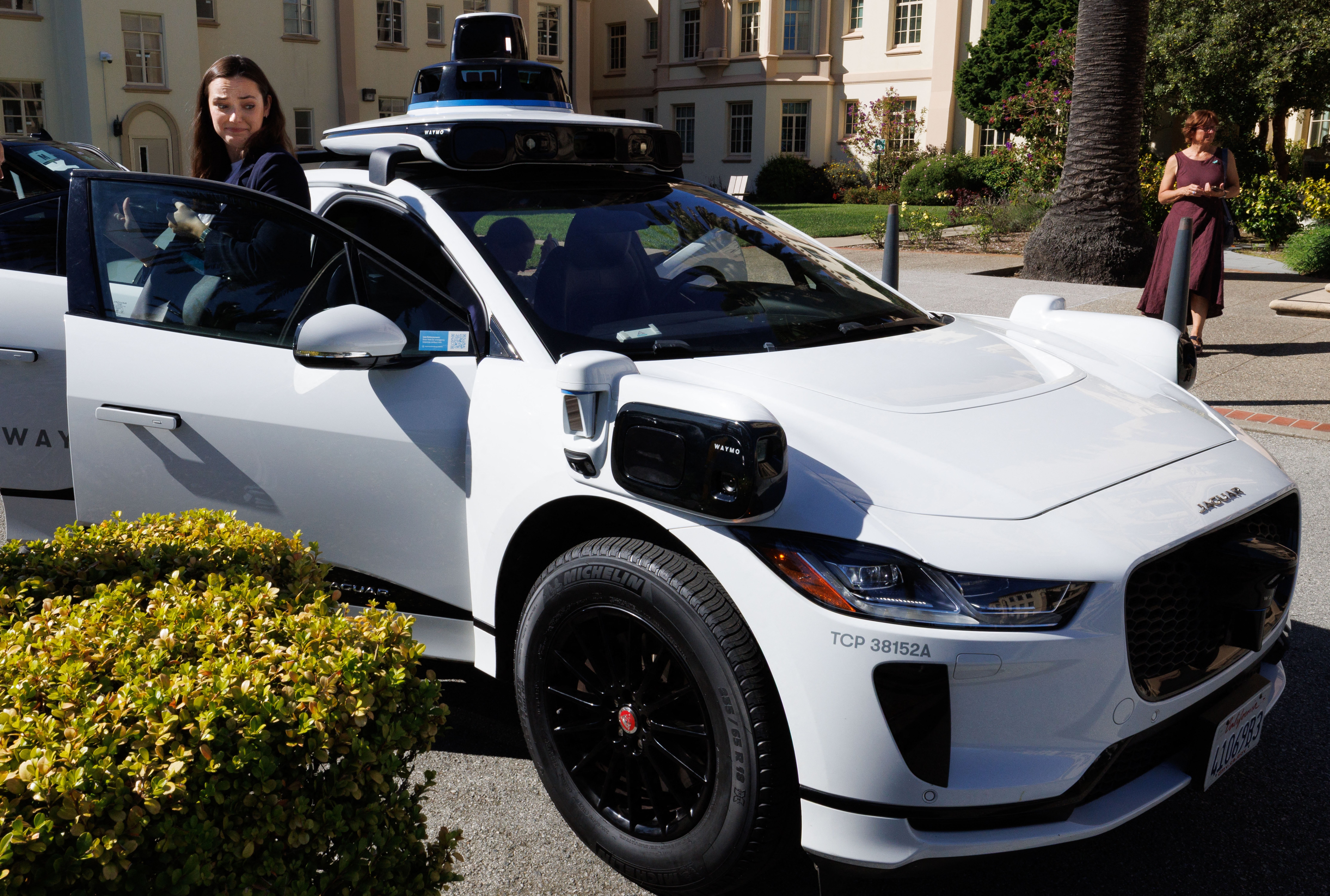
If and when autonomous cars become ubiquitous, Waymo and Tesla likely won’t be able to charge a premium anymore. Just like the human-driving ride-hailing that really took off in the mid-2010s, Tesla and Waymo could chase lower prices and wind up in a race to the bottom.
Of course, winning a robotaxi war likely isn’t the endgame for Tesla and Waymo. The services could be a proof of concept or advertising. Google already has numerous partnerships with vehicle manufacturers and other autonomous tech companies; it will likely want to sell the Waymo driving tech to others and let them do the dirty work of operating a robotaxi service.
The same goes for Tesla, which would probably prefer to keep the liability for its cars on outside fleet operators or individual owners.
But before autonomous taxi services can truly reach critical mass, the companies still have to convincingly prove one thing to the world: that autonomous driving truly works.



