
Tech
Megazord
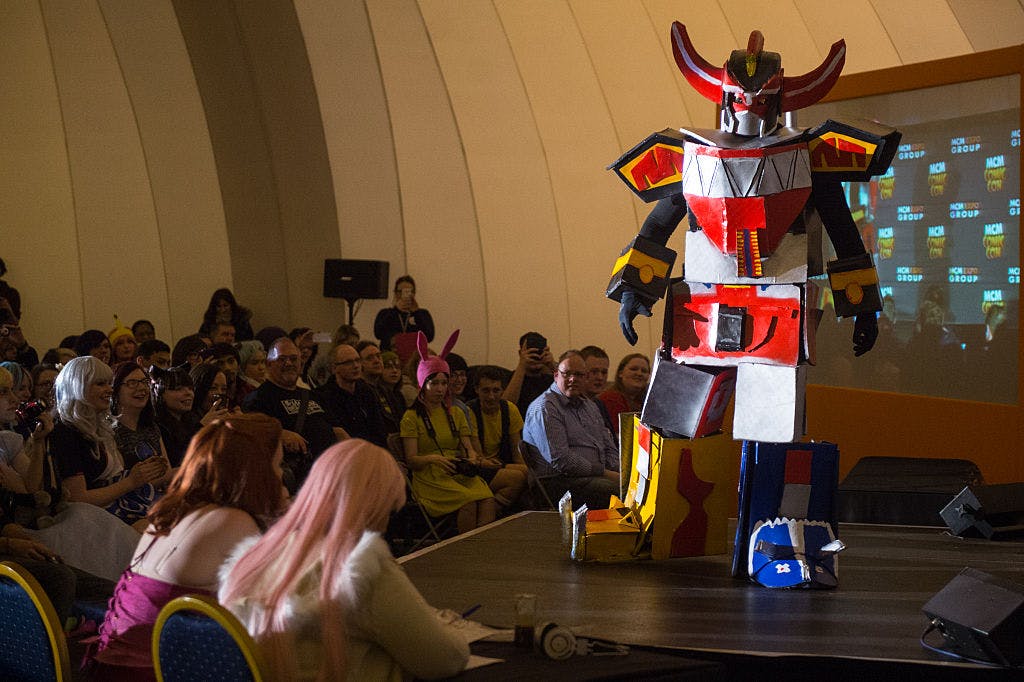
Will Oracle’s multiple high-powered execs come together like Megazord? Or will it just be an elaborate cosplay? (Ollie Millington/Getty Images)

If having multiple CEOs is better for stock market returns, Oracle is quadrupling down

But buyer beware: the last time Oracle had co-CEOs, shares underperformed.

Some studies have shown that having more top leaders means better stock market returns. If you’re a believer in that theory, wait until you get a load of what Oracle is doing. 

The behemoth hyperscaler just announced that its CEO for the past 11 years, Safra Catz, is stepping down and being replaced by two new co-CEOs. 

If that seems like a drastic change, let me stop you right there. For all intents and purposes, Oracle is run by its gazillionaire founder Larry Ellison, the second-richest person on the planet. Ellison, naturally, is not actually Oracle’s CEO — he is officially the chairman of the board and chief technology officer. But as a former Oracle exec said to me this morning: “Larry is the real boss. Nobody should think otherwise.”

Next up in the pecking order is likely Catz, who was Oracle’s CEO until today. She is now the executive vice chair of the board, but in the press release announcing the changes, Ellison said, “Safra and I will be able to continue our 26-year partnership — helping to guide Oracle’s direction, growth, and success.”

And then there are the guys who now have the actual title: Clay Magouyrk and Mike Sicilia, two heads of units within the company, have been announced as Oracle’s new co-CEOs. It’s not a stretch of the imagination to think that Oracle now has not one, not two, not even three, but four CEOs.

Some would say that’s a good thing. A Harvard Business Review analysis shows that public companies with co-CEOs have tended to outperform those with single CEOs. From the study:

“We recently took a careful look at the performance of 87 public companies whose leaders were identified as co-CEOs. We found that those firms tended to produce more value for shareholders than their peers did. While co-CEOs were in charge, they generated an average annual shareholder return of 9.5% — significantly better than the average of 6.9% for each company’s relevant index. This impressive result didn’t hinge on a few highfliers: Nearly 60% of the companies led by co-CEOs outperformed.”

Then again, there are also downsides. This “Freakonomics” podcast debated the pluses and minuses of having co-CEOs, including viewpoints from people who have actually been a co-CEO. And it’s not hard to imagine one downside: the bureaucracy in an organization with four people who hold the reins, especially when the top two — Ellison and Catz — seem to be highly engaged in corporate dealmaking and have well-known relationships with the president of the United States. 

For what it’s worth, this isn’t even the first time Oracle has had co-CEOs. In 2014, Ellison technically stepped down as CEO after more than three decades and named Catz and HP veteran Mark Hurd as co-CEOs. It stayed that way until Hurd passed away in 2019. 

If you’re wondering how Oracle did during that time, the stock appreciated 33% over a span of about five years, lagging the 49% return in the S&P 500.


More Tech

See all Tech
tech

SpaceX filings reportedly show no one can fire Elon Musk except Elon Musk

The only thing stopping Elon Musk from being chairman and CEO of SpaceX is Elon Musk, according to Reuters, which viewed an excerpt of the company’s IPO filing.

The document outlines a dual-class share structure giving Musk control via super-voting stock. The filing says he “can only be removed from our board or these positions by the vote of Class B holders” — shares he’ll control after the listing. It adds that if he keeps those shares, he could “continue to control the election and removal of a majority of our board.”

At a typical public company — even founder-led ones with dual-class structures — a CEO can be fired by the board of directors, which represents shareholders and can vote to remove them over issues such as corporate performance, strategy, or misconduct.

The unusual SpaceX setup means Musk is unlikely to face the kind of CEO succession pressure he’s dealt with at Tesla. Musk, of course, is not a typical CEO, and the value of his companies has long been closely tied to his presence.

To be sure, SpaceXs confidential IPO filing isnt in its final form yet — while the filing is still in the confidential phase, the company will be going back and forth with the SEC, which will review it and suggest or require changes.

At a typical public company — even founder-led ones with dual-class structures — a CEO can be fired by the board of directors, which represents shareholders and can vote to remove them over issues such as corporate performance, strategy, or misconduct.

The unusual SpaceX setup means Musk is unlikely to face the kind of CEO succession pressure he’s dealt with at Tesla. Musk, of course, is not a typical CEO, and the value of his companies has long been closely tied to his presence.

To be sure, SpaceXs confidential IPO filing isnt in its final form yet — while the filing is still in the confidential phase, the company will be going back and forth with the SEC, which will review it and suggest or require changes.

tech
Rani Molla

OpenAI’s models are officially coming to Amazon

Amazon is finally getting in on the hottest ticket in tech.

After Microsoft announced yesterday that it has agreed to give up its exclusive rights to sell OpenAI’s models, Amazon, as expected, will start offering them to customers — something Amazon Web Services CEO Matt Garman says users have been asking for “for a really long time.” Some models are available now in preview, and the most powerful GPT versions will show up “in the coming weeks.”

This is a big shift in the AI cloud wars. Microsoft’s early bet on OpenAI gave Azure an edge by locking up the most in-demand models. Now that exclusivity is gone, Amazon and other competitors can finally offer them too, closing a key gap and competing more directly for AI customers.

This is a big shift in the AI cloud wars. Microsoft’s early bet on OpenAI gave Azure an edge by locking up the most in-demand models. Now that exclusivity is gone, Amazon and other competitors can finally offer them too, closing a key gap and competing more directly for AI customers.

tech

Ship-tracking app surges as Iran war continues

As Middle East peace talks stretch on, with Tehran reportedly offering to reopen the Strait of Hormuz if the US lifts its blockade and the war ends, the owner of shipping intelligence platform MarineTraffic revealed that the app has gained millions of new users since the conflict began.

MarineTraffic’s user count jumped to 8.5 million this April, up from 3.5 million a year ago, the cofounder of its parent company, Kpler, said in an interview with the Financial Times. Paid subscribers, often workers within companies and governments looking for more data on supply chains and commodities trading, rose 11,000 in the same period.

Kpler, which also owns shipping intelligence platform FleetMon, draws its data from a range of sources, including the Automatic Identification System, satellites, and more than 500 people on-site, like port terminal operators.

Per Appfigures data, MarineTraffic is estimated to have raked in almost $1 million across March and April in app revenue (through April 27), more than double the ~$346,500 from the same months last year. Across the full year, Kpler expects to earn between $300 million and $400 million in annual recurring revenues.

Latest Stories

Sherwood Media, LLC produces fresh and unique perspectives on topical financial news and is a fully owned subsidiary of Robinhood Markets, Inc., and any views expressed here do not necessarily reflect the views of any other Robinhood affiliate, including Robinhood Markets, Inc., Robinhood Financial LLC, Robinhood Securities, LLC, Robinhood Crypto, LLC, Robinhood Derivatives, LLC, or Robinhood Money, LLC. Futures and event contracts are offered through Robinhood Derivatives, LLC.
