
Tech
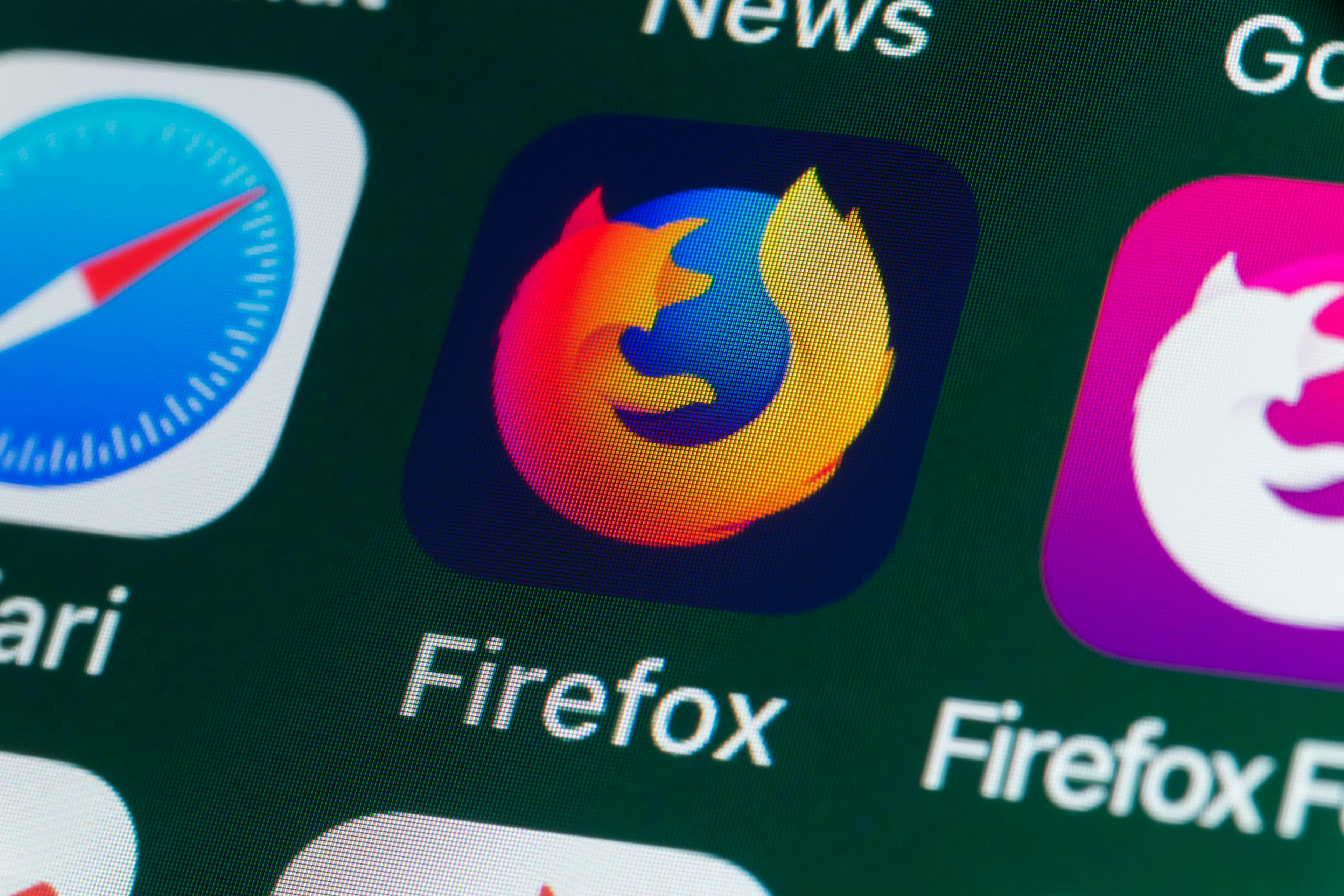
Firefox, Firefox Focus, Safari and other Apps on iPhone screen
The buttons of the internet browser app Firefox, surrounded by Safari and other apps on the screen of an iPhone (Getty Images)
FIREWALL

Firefox will soon let users block AI features in its browser

As Google Chrome and Microsoft Edge ramp up AI offerings, Firefox is betting people will want an off switch.

Millie Giles

When the nonprofit Mozilla Foundation launched Firefox back in 2004, its mission was to provide the online world with a secure, open-source alternative to the web’s then dominant browser, Microsoft’s Internet Explorer.

Cut to a little over two decades later, and Firefox is still trying to set itself apart in the crowded browser landscape. On Monday, Mozilla announced in a blog post that a new “AI control” update to Firefox will enable users to toggle individual AI features on and off, such as translations, enhanced tab grouping, and its built-in AI chatbot.

Bot-com bubble?

The preference settings will be available on Firefox 148, which launches on February 24, and will allow users to “block current and future generative AI features” and “review and manage” these at their discretion. The pivot toward opting in for AI comes at a time when leading browsers are increasingly building the tech into their products as the default.
Browser market share 2026 chart
Sherwood News

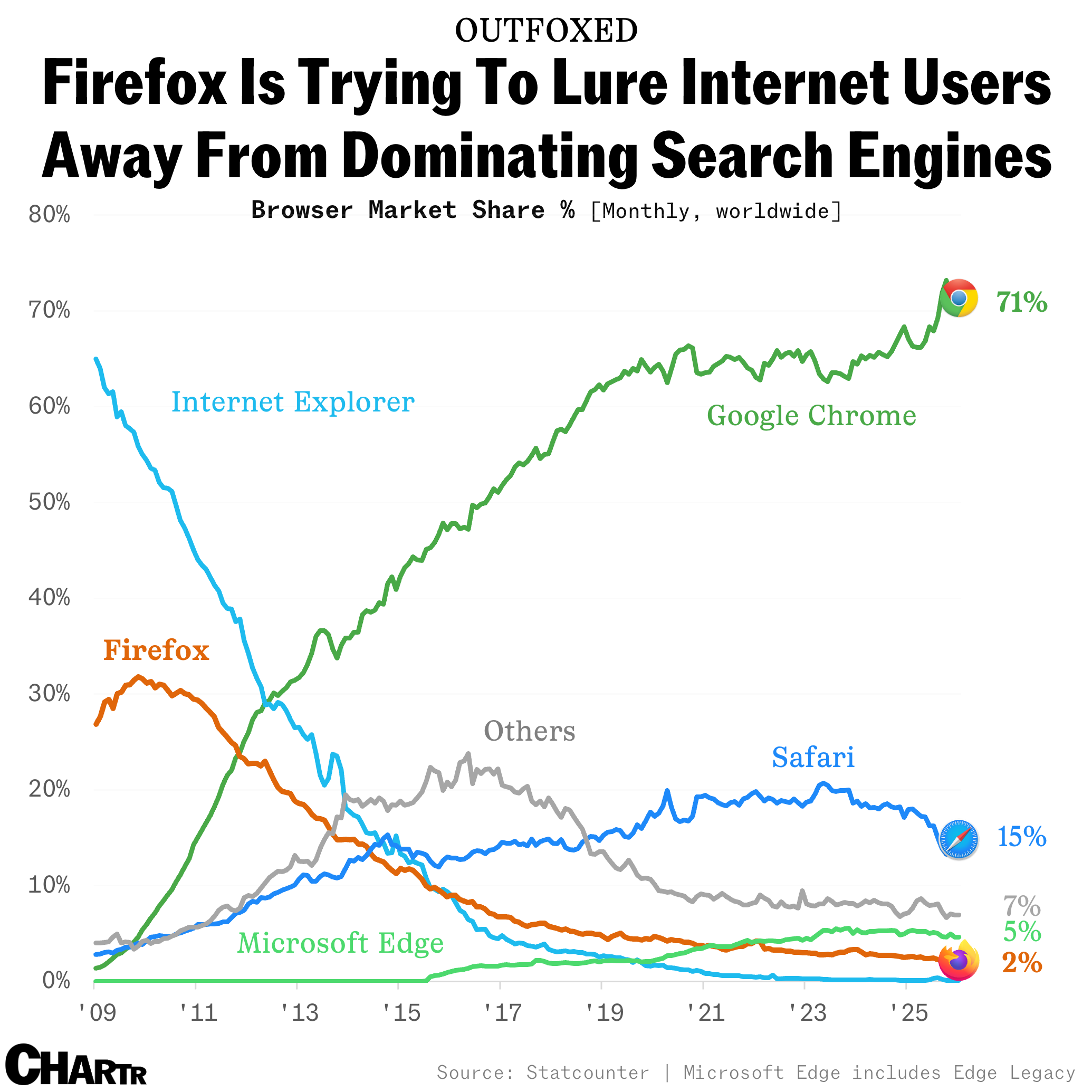
Just last week, Google unveiled plans to embed more Gemini-powered AI features into Chrome — the biggest web browser today by some way, commanding an almost monopolistic ~71% share of the market, per Statcounter. These features include image generator tool Nano Banana, an “Auto browse” ability, and a chatbot panel in its viewing window.

While Microsoft retired Internet Explorer in 2022 after a precipitous drop in usage, the company’s hoping that an experimental AI-powered Copilot Mode in its Edge browser will help it catch up with competitors. Apple’s Safari, the second-biggest web browser by market share at (a still much smaller) 15%, has also recently outlined plans to offer AI-powered searches.

Before this new announcement, even Firefox itself had spent the past year trying to draw consumers with newfangled AI tools, like its “shake to summarize” iPhone feature, released last September. Rather than fighting a losing battle against tech giants like Google, maybe Mozilla now thinks that appealing to the cohort that wants less to do with artificial intelligence might help it to win back at least some search engine purists.


More Tech

See all Tech
tech
Jon Keegan

Report: Google DeepMind builds “strike team” to catch up to Anthropic models

Anthropic’s recent momentum, powered by the success of its popular Claude Code tool, is turning up the heat among its AI competitors — not only for its AI startup peer OpenAI, but also with established Big Tech giants like Google.

The Information reports that within Google DeepMind, a “strike team” has been assembled to make a serious push to improve Gemini’s coding capabilities. According to the report, leaders within Google, including cofounder Sergey Brin, are sounding the alarm after determining that Anthropic’s Claude has superior coding skills. The new team’s goal is to create a AI system that can improve itself.

“To win the final sprint, we must urgently bridge the gap in agentic execution and turn our models into primary developers,” Brin wrote in a recent memo to DeepMind staff.

The Information reports that within Google DeepMind, a “strike team” has been assembled to make a serious push to improve Gemini’s coding capabilities. According to the report, leaders within Google, including cofounder Sergey Brin, are sounding the alarm after determining that Anthropic’s Claude has superior coding skills. The new team’s goal is to create a AI system that can improve itself.

“To win the final sprint, we must urgently bridge the gap in agentic execution and turn our models into primary developers,” Brin wrote in a recent memo to DeepMind staff.

$0
Rani Molla

Tesla’s federal tax bill last year was once again $0, Reuters reports. While past losses and green energy credits helped shrink the bill, Reuters found that Tesla also leaned on a classic corporate maneuver: offshore profit-shifting. By routing intellectual property rights through paper-only subsidiaries in the Netherlands and Singapore, Tesla effectively parked $18 billion in profits overseas between 2023 and early 2025. The entirely legal setup saved Tesla an estimated $400 million in US taxes. Not bad for a company whose CEO is not a fan of “shady” tax loopholes.

Latest Stories

Sherwood Media, LLC produces fresh and unique perspectives on topical financial news and is a fully owned subsidiary of Robinhood Markets, Inc., and any views expressed here do not necessarily reflect the views of any other Robinhood affiliate, including Robinhood Markets, Inc., Robinhood Financial LLC, Robinhood Securities, LLC, Robinhood Crypto, LLC, Robinhood Derivatives, LLC, or Robinhood Money, LLC. Futures and event contracts are offered through Robinhood Derivatives, LLC.
