

FINAL BOSS
SUBSCRIPTION TRUCKING

Einride and its autonomous electric trucks are speeding toward the public markets
Where they’re going and what happens if they get pulled over on the way.
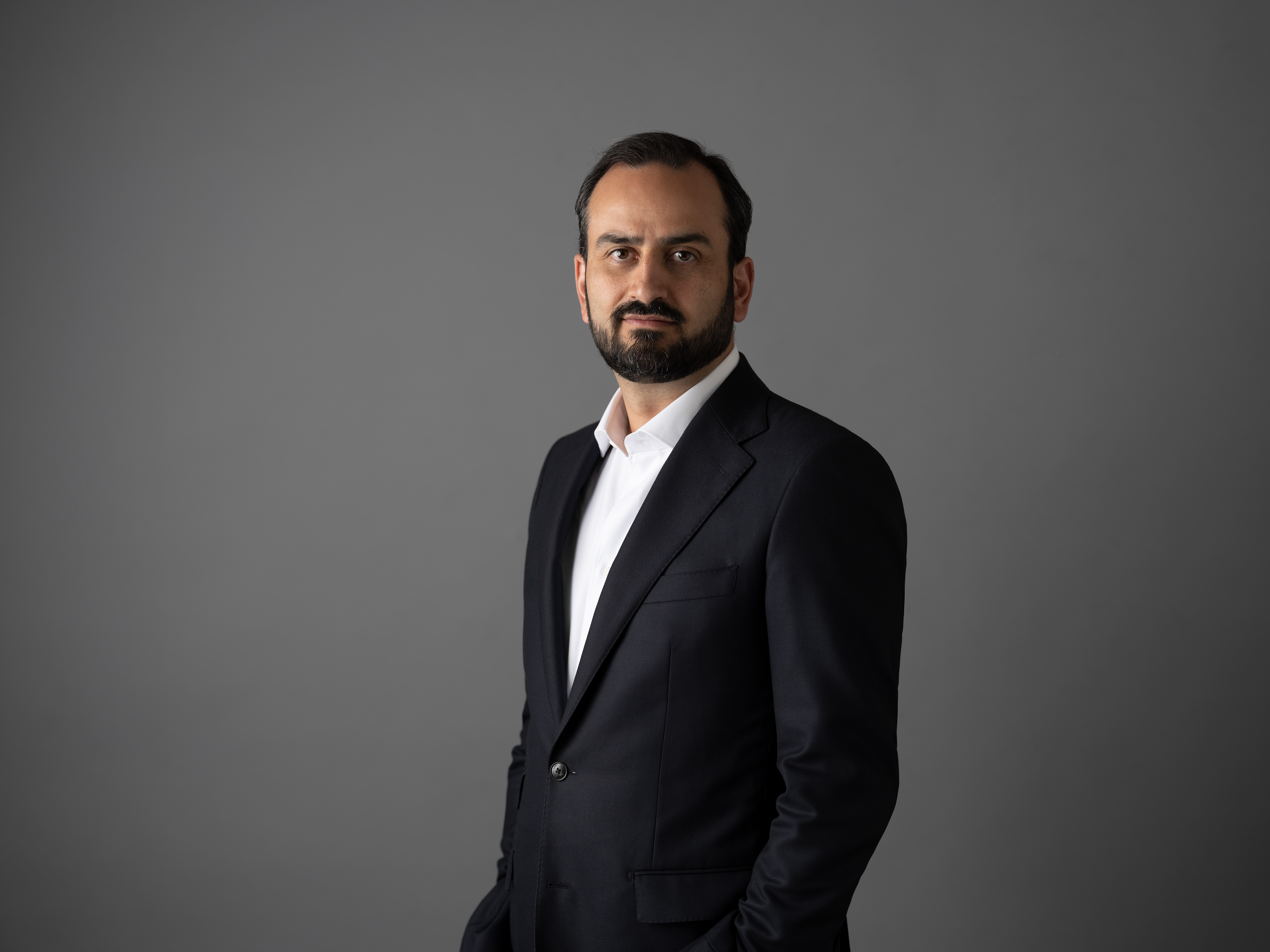
Roozbeh Charli is the CEO of Einride, a Swedish freight technology company that builds electric and autonomous trucking systems. The company, which is slated to go public via a SPAC by the end of June under the ticker ENRD, currently operates in seven countries, and has permission to operate autonomously in five states, including Arizona, Colorado, South Carolina, Tennessee, and Texas.
We talked with Charli about where autonomous trucking is, where it’s headed, and what happens if one of its vehicles gets pulled over.
This conversation has been edited for clarity and concision.
Rani Molla, Sherwood News: What’s the current scale of Einride’s operations?
Roozbeh Charli, CEO of Einride: We have about 200 electric trucks deployed today. We also have four autonomous vehicles in live operations with customers, and that’s going to grow to around the 20 mark by the end of the year.
Sherwood: You have three adjacent parts of the business: the autonomous trucks, the electric trucks, and the platform. How do those work together?
Charli: The way to think about it is as a single offering we call “Freight Capacity as a Service.” The core is our AI-powered software platform that sits in the middle and orchestrates the entire ecosystem required to transition our customers’ fleets from diesel and manual trucks to electric and autonomous.
The platform is the brain. That’s where we ingest customer data, do the planning, the optimization, and the actual execution plans. We can then do those operations with either our electric manual trucks or with the autonomous vehicles.
Sherwood: So that means you’re selling a subscription rather than trucks.
Charli: The absolute majority of our customers do not own the trucks or operate the transportation themselves. They go to the transport service market and purchase transportation. We take over and run those transport operations for them, and they pay for an installed transport capacity. They don’t buy the trucks or provide the drivers. We commit to a certain capacity, they commit to a minimum volume — the average contract today is about 4.5 years — and we take care of everything that has to do with running those transport operations for them.
Sherwood: What are the four autonomous vehicles in operation right now actually doing?
Charli: Take GE Appliances in Tennessee. We have two autonomous vehicles doing transportation from the production to a distribution center. It’s about two miles of road, a combination of private and public roads. We’re doing day-to-day operations moving goods: highly repetitive, high asset utilization, and a really boring type of flows to operate as a truck driver. We start with those use cases and gradually scale into more complex environments, longer distances, and higher speeds.
Sherwood: Since you are on public roads, what happens if an autonomous truck gets pulled over? How does that work without a driver or a cab?
Charli: It’s an interesting topic! The vehicle drives autonomously at all points in time, but we have a remote supervisor who sits at a distance and supervises. We started with a 1-to-1 ratio, but we’re now doing a 1-to-2 ratio for the GE operations. Our next milestone is to scale that to 1-to-10.
If a situation arises, the remote operator can put the vehicle in a safe state and interact with law enforcement. We’re doing testing with voice, being able to speak to the officer through the vehicle, and visual aids for interaction. In the controlled environments where we operate today, an operator can also physically come to the vehicle since it’s a short distance.
Sherwood: Who has that remote supervisor job? Former truck drivers? AI specialists?
Charli: Former truck drivers.
Sherwood: How does the permitting process work for these routes? Is it a one-and-done approval, or is the state-by-state landscape as challenging as it’s often described?
Charli: The way the regulation works is that you work mostly with the National Highway Traffic Safety Administration, but also with the state legislators, and you get permits for specific applications. So rather than having a blanket “you can drive the vehicles anywhere,” you get certain applications. We say, “This is what we’re going to do,” and then we show the safety case and demonstrate the safety case for the regulator, and that’s how we get the approvals to actually operate the customer flows.
Sherwood: If I’m a big company, why do I pick Einride? What does it cost me to have my regular diesel truck and a driver versus an electric or autonomous truck?
Charli: Ultimately, the transition is going to be about unit economics and cost. We start by analyzing a customer’s data and setting a joint five-year plan. We can electrify a certain percentage of their transportation, and important to that equation is that you reach cost parity — or a cost saving of a few percentage points — using electrification even before introducing autonomous tech.
We did a research paper showing a 13% reduction in the total cost of operations (TCO) of operating an electric versus a manual diesel truck. That is a huge number in the transportation industry. Then, of course, the big step change in the TCO comes as you transition to autonomous and take the driver out of the vehicle.
Sherwood: Your recent deal with Amazon involves 75 electric vehicles. Since those aren’t autonomous, who is actually driving them? And will they eventually transition to autonomous?
Charli: For those operations, it’s a combination of external carrier partners and our own hired drivers doing the actual driving of the vehicles. For Amazon, we are focusing right now on just the EVs.
Sherwood: Who are your biggest competitors, and how is your strategy different?
Charli: You’ve got players like Kodiak, Aurora, and PlusAI. We’re all aiming to automate freight, but we’re coming at it from a shipper (transport buyer) perspective. We’re selling the transport service directly to the PepsiCos and the Heinekens of the world. Others are coming at it from a carrier perspective, building vehicles to sell to carriers, or selling technology to the truck producers. We use our platform to accumulate transport demand and gradually scale autonomous tech into those networks.

Sherwood: Talk to me about your latest move into defense vehicle tech.
Charli: It’s an untapped opportunity where we’ve just started scratching the surface. About 12 months ago, we launched a vehicle-agnostic autonomous driver stack. We’ve developed autonomous software that can operate vehicles, and we can now take that “Einride Driver” and apply it to different forms of vehicles.
We recently did a pilot for the Swedish Resilience Initiative where we applied our stack to a “bandwagon” — a tracked vehicle that rolls on treads like a tank. In peace times, it can be used for supply and maintenance in rural parts of the country. We also recently recruited General Keith Alexander to our board of directors to help us in our continued expansion in the defense space. You’ll see more from us coming from within defense, including US and European partnerships.
Sherwood: Where will Einride’s autonomous trucking be in five years?
Charli: We’ve got about $800 million of potential annual recurring revenue in scaling plans that contain both EVs and AVs. For autonomous, we’ll hit about 20 trucks by the end of the year, going into the hundreds a few years down the line, and then toward the thousands as we get five years out.




