Apple’s new “AppleCare One” covers up to three devices for $20 per month
Apple has found a new way to squeeze some juice from its customers.
After forking over $800 for a shiny new iPhone 16, you might immediately start worrying about the inevitable phone drop that could crack or scratch the flawless glass and metal in your hand.
But when confronted with another hundred bucks to buy AppleCare to protect your device, you just might decide to throw caution into the wind and take your chances.
Apple has come up with a new offering in its increasingly crucial Services business that may change your mind at that pivotal moment.
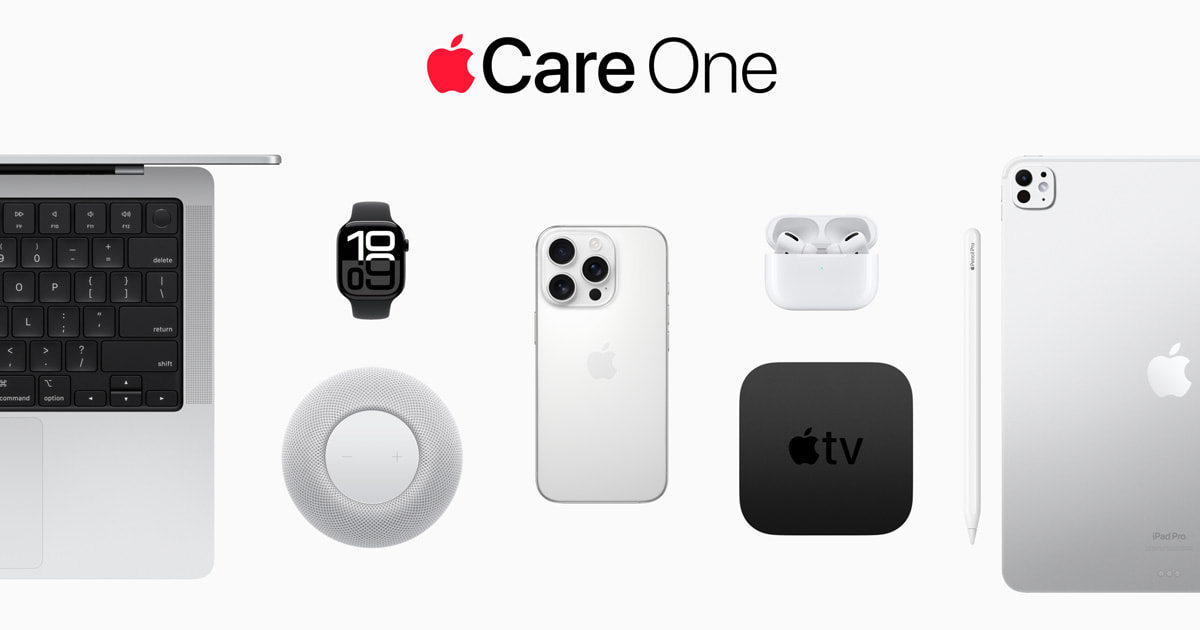
Instead of the $9.99 per month or $99 per year AppleCare+ plan to protect against accidental damage or theft for one device, now you can choose “AppleCare One,” which for $19.99 per month covers three of your shiny Apple devices, and you can add additional devices for $5.99 per month each. The plan appears to cover pretty much every category of product that Apple sells, from $129 AirPods to the $3,499 Apple Vision Pro headset.
The coverage offers unlimited repairs for accidents, priority support, battery replacement, and theft and loss protection.
The press release said:
“AppleCare One pricing is the same regardless of the products that are covered, meaning a customer can enroll their iPhone, iPad, and Apple Watch, and save up to $11 a month over enrolling in separate AppleCare+ plans for each device.”
That does provide a lower psychological barrier to signing up for the coverage after the sticker shock of paying the retail price of a new iPhone, and the overall yearly cost of AppleCare One at $239.88 is cheaper overall than paying $297 for AppleCare+ for three different devices (at $99 per year, per device). The simplicity and lower price point might also appeal to families with a growing number of devices to manage.
For the first time, Apple customers will be able to add products that they already own, even if they are past the traditional 60-day window that you previously had to purchase coverage in. The new rule comes with some limitations, though: devices can only be up to 4 years old and they need to be in “good condition,” which Apple may verify with a diagnostic check before adding them to the plan.
While this might be an easier and cheaper way to manage your growing hoard of Apple devices, that’s also one more monthly subscription you have to keep track of.
But when confronted with another hundred bucks to buy AppleCare to protect your device, you just might decide to throw caution into the wind and take your chances.
Apple has come up with a new offering in its increasingly crucial Services business that may change your mind at that pivotal moment.
Instead of the $9.99 per month or $99 per year AppleCare+ plan to protect against accidental damage or theft for one device, now you can choose “AppleCare One,” which for $19.99 per month covers three of your shiny Apple devices, and you can add additional devices for $5.99 per month each. The plan appears to cover pretty much every category of product that Apple sells, from $129 AirPods to the $3,499 Apple Vision Pro headset.
The coverage offers unlimited repairs for accidents, priority support, battery replacement, and theft and loss protection.
The press release said:
“AppleCare One pricing is the same regardless of the products that are covered, meaning a customer can enroll their iPhone, iPad, and Apple Watch, and save up to $11 a month over enrolling in separate AppleCare+ plans for each device.”
That does provide a lower psychological barrier to signing up for the coverage after the sticker shock of paying the retail price of a new iPhone, and the overall yearly cost of AppleCare One at $239.88 is cheaper overall than paying $297 for AppleCare+ for three different devices (at $99 per year, per device). The simplicity and lower price point might also appeal to families with a growing number of devices to manage.
For the first time, Apple customers will be able to add products that they already own, even if they are past the traditional 60-day window that you previously had to purchase coverage in. The new rule comes with some limitations, though: devices can only be up to 4 years old and they need to be in “good condition,” which Apple may verify with a diagnostic check before adding them to the plan.
While this might be an easier and cheaper way to manage your growing hoard of Apple devices, that’s also one more monthly subscription you have to keep track of.