
Power
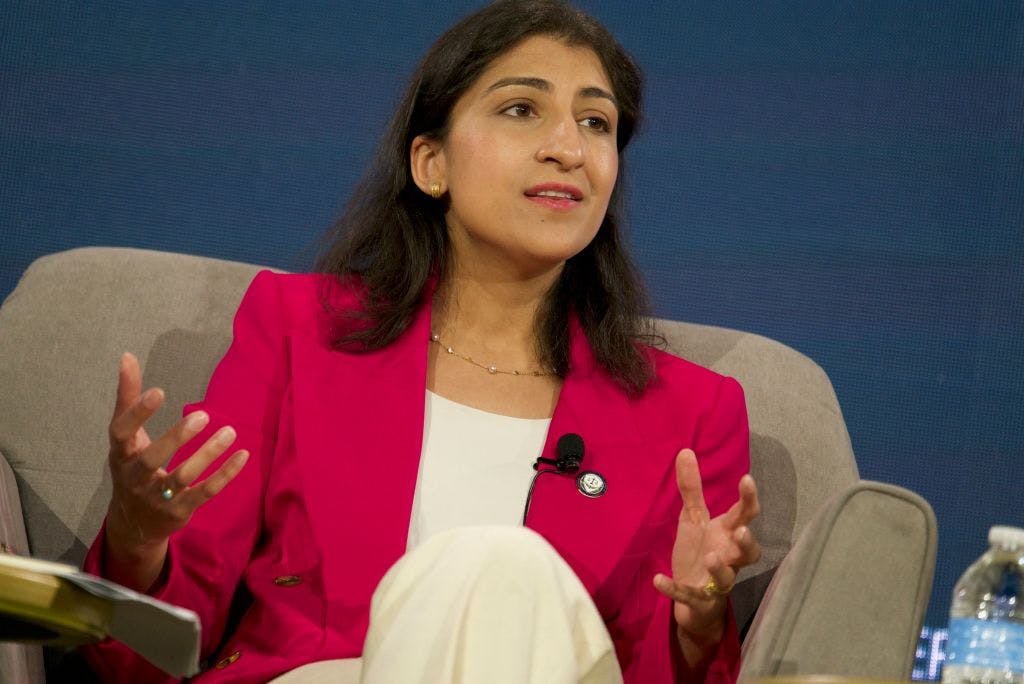
FTC Chair Lina Khan
FTC Chair Lina Khan (Bastien Inzaurralde/AFP via Getty Images)

FTC chair races to finish crackdown on creepy location-data brokers

The agency announced settlements with Mobilewalla and Gravy Analytics for selling sensitive consumer-location data without consent.

Jon Keegan

In a pair of statements today, the Federal Trade Commission announced settlements with two more data brokers over their sale of sensitive location data: Mobilewalla and Gravy Analytics (and its subsidiary Venntel). These latest settlements come after several FTC enforcement actions against location-data brokers including Kochava, X-Mode, and InMarket.

The FTC crackdown on location data has focused on companies that collect or aggregate consumers’ location data without explicit consent from sensitive locations, including medical providers’ offices, houses of worship, military installations, and schools.

Time is running out for FTC Chair Lina Khan to wrap up the agency’s pending work, as her term is coming to an end. President-elect Trump will likely place a more business-friendly leader for the agency, as he moves to roll back regulations across many industries.

Shortly after Election Day, Senator Ted Cruz, the Republican ranking member of the Senate Committee on Commerce, Science, and Transportation, sent a letter to Lina Khan warning her that “any controversial FTC action taken up or continued after November 5th will receive particular scrutiny.”

Gravy Analytics and Venntel

In today’s proposed order, Gravy Analytics and Venntel are prohibited from “selling, disclosing, or using sensitive location data in any product or service, and must establish a sensitive data location program,” according to the FTC’s press release. The companies were sued by the FTC for collecting location data via “geofences,” which are virtual lines drawn around buildings “to identify and sell lists of consumers who attended certain events related to medical conditions and places of worship,” as well as additional lists associating people through other sensitive information.

Samuel Levine, director of the FTC’s Bureau of Consumer Protection, said in a press release:

“Surreptitious surveillance by data brokers undermines our civil liberties and puts servicemembers, union workers, religious minorities, and others at risk. This is the FTC’s fourth action taken this year challenging the sale of sensitive location data, and it’s past time for the industry to get serious about protecting Americans’ privacy.”

Sherwood reached out to Gravy Analytics and Unacast (the parent company), but the email bounced back.

Mobilewalla

Mobilewalla will be banned from selling sensitive location data and will be required to only use consumer data for online auctions, according to the proposed order. Mobilewalla does not collect this data directly from consumers, but rather aggregates and “enriches” consumer data with data collected from advertising real-time bidding exchanges, which often include a phone’s precise location.

Real-time bidding data is only supposed to be used for placing mobile ads via split-second auctions, but because there aren’t any rules covering the misuse of this data, many location-data companies harvest this fire hose of data for peoples’ movements. Importantly, this location data is not controlled by your phones’ location settings, but rather inferred from your IP address, which is tied to the network youre connected to. The FTC notes that this is the first time the agency has flagged this practice as illegal under the law.

“Mobilewalla exploited vulnerabilities in digital ad markets to harvest this data at a stunning scale. The FTC is cracking down on firms that unlawfully exploit people’s sensitive location data and ensuring that we protect Americans from unchecked surveillance,” FTC Chair Lina Khan said in the press release.

Laurie Hood, a spokesperson for Mobilewalla, said in an email:

Mobilewalla respects consumer privacy and has been evolving our privacy protections throughout our history as a company. While we disagree with many of the FTC’s allegations and implications that Mobilewalla tracks and targets individuals based on sensitive categories, we are satisfied that the resolution will allow us to continue providing valuable insights to businesses in a manner that respects and protects consumer privacy.”

Aside from these enforcement actions, the location data industry — estimated to be a $12 billion market — has operated with little oversight and few restrictions on who can purchase this data, which in many cases can easily be used to identify individuals’ precise movements. The Supreme Court’s 2022 Dobbs v. Jackson decision, which overturned Roe v. Wade, set off alarms in the privacy world, as readily available location data could be used to prosecute people seeking reproductive healthcare. The decision also spurred Congress to investigate the data-collection practices of the industry.

US law-enforcement agencies have repeatedly purchased this data, effectively bypassing the approval of the courts and the need to obtain search warrants, which traditionally would be required.

More Power

See all Power
power
Saleah Blancaflor

Prediction markets show a tight (and tightening) Illinois Democratic Senate primary

It’s primary election time in Illinois, and as voters in the state head to the polls on March 17, there are a few races to watch closely across both parties.

While polls show that Darren Bailey is leading in the Republican race for governor, the primary election for a rare seat in the Democratic Senate to replace Sen. Dick Durbin is proving to be a tight one.

Loading...
 

At the top of the 10-candidate race are Raja Krishnamoorthi, Lt. Gov. Juliana Stratton, and Robin Kelly. Krishnamoorthi, a lawmaker from Chicago’s 8th Congressional District, was an early front-runner, received funding and support from several Congress members for the seat. Kelly, who represented the South Side’s 2nd Congressional District, has support from the Congressional Black Caucus and South Carolina Rep. Jim Clyburn. Meanwhile, Stratton has been endorsed by Gov. JB Pritzker, whose administration she used to work for, as well as Sen. Elizabeth Warren.

While polls suggested that Krishnamoorthi was favored to win, Stratton has seen a boost and late surge, though Krishnamoorthi still remains close behind. Capitol News Illinois reports that Illinois Future PAC, funded by Pritzker, has spent more than $10 million on ads elevating Stratton. Meanwhile, two PACs affiliated with the crypto industry have attempted to attack Stratton and promote Kelly. Indian American Impact, which endorsed Krishnamoorthi, reportedly employed similar tactics against Stratton.

Political insiders tell Capitol News Illinois the race could go either way, but they still expect Krishnamoorthi to come out on top. Prediction markets currently show that Stratton narrowly leading Krishnamoorthi.

(Event contracts are offered through Robinhood Derivatives, LLC — probabilities referenced or sourced from KalshiEx LLC or ForecastEx LLC.)

Loading...
 

At the top of the 10-candidate race are Raja Krishnamoorthi, Lt. Gov. Juliana Stratton, and Robin Kelly. Krishnamoorthi, a lawmaker from Chicago’s 8th Congressional District, was an early front-runner, received funding and support from several Congress members for the seat. Kelly, who represented the South Side’s 2nd Congressional District, has support from the Congressional Black Caucus and South Carolina Rep. Jim Clyburn. Meanwhile, Stratton has been endorsed by Gov. JB Pritzker, whose administration she used to work for, as well as Sen. Elizabeth Warren.

While polls suggested that Krishnamoorthi was favored to win, Stratton has seen a boost and late surge, though Krishnamoorthi still remains close behind. Capitol News Illinois reports that Illinois Future PAC, funded by Pritzker, has spent more than $10 million on ads elevating Stratton. Meanwhile, two PACs affiliated with the crypto industry have attempted to attack Stratton and promote Kelly. Indian American Impact, which endorsed Krishnamoorthi, reportedly employed similar tactics against Stratton.

Political insiders tell Capitol News Illinois the race could go either way, but they still expect Krishnamoorthi to come out on top. Prediction markets currently show that Stratton narrowly leading Krishnamoorthi.

(Event contracts are offered through Robinhood Derivatives, LLC — probabilities referenced or sourced from KalshiEx LLC or ForecastEx LLC.)

US-POLITICS-CONGRESS-AI

Anthropic sues the US government

In response to the Pentagon’s unprecedented, punitive determination that Anthropic is a national security supply chain risk, the AI startup has sued the US government.

power

OpenAI is reportedly working with Pentagon to hash out guardrails amid Anthropic standoff over AI safety

OpenAI CEO Sam Altman said the company is working with the Pentagon to negotiate safety guardrails for AI models used in the battlefield, which comes as one of its top competitors, Anthropic, is at a standoff with the government.

According to a memo obtained by several media outlets, Altman told staff OpenAI believes “that AI should not be used for mass surveillance or autonomous lethal weapons, and that humans should remain in the loop for high-stakes automated decisions. These are our main red lines.”

Anthropic, the company behind the AI chatbot Claude, was one of several firms that received a $200 million contract from the Department of Defense for “agentic workflows.”

Since then, tensions between Anthropic and the Pentagon have reportedly risen as the startup insists on surveillance restrictions. The government’s attack on Venezuela last month that led to the capture of President Nicolás Maduro reportedly involved the use of Anthropic’s Claude AI models for planning, which caused the startup to push back on the alleged violation of its terms of use.

Anthropic has until 5:01 p.m. ET on Friday to reach a deal with the Pentagon, which has threatened consequences against the company if it doesn’t allow the government unrestricted use.

Altman’s comments come as the Financial Times reports that executives at Amazon, Google, and Microsoft are being pushed by workers to support Anthropic in its dispute with the Pentagon and adopt similar guardrails as the Claude company in any work they undertake with the US military.

According to a memo obtained by several media outlets, Altman told staff OpenAI believes “that AI should not be used for mass surveillance or autonomous lethal weapons, and that humans should remain in the loop for high-stakes automated decisions. These are our main red lines.”

Anthropic, the company behind the AI chatbot Claude, was one of several firms that received a $200 million contract from the Department of Defense for “agentic workflows.”

Since then, tensions between Anthropic and the Pentagon have reportedly risen as the startup insists on surveillance restrictions. The government’s attack on Venezuela last month that led to the capture of President Nicolás Maduro reportedly involved the use of Anthropic’s Claude AI models for planning, which caused the startup to push back on the alleged violation of its terms of use.

Anthropic has until 5:01 p.m. ET on Friday to reach a deal with the Pentagon, which has threatened consequences against the company if it doesn’t allow the government unrestricted use.

Altman’s comments come as the Financial Times reports that executives at Amazon, Google, and Microsoft are being pushed by workers to support Anthropic in its dispute with the Pentagon and adopt similar guardrails as the Claude company in any work they undertake with the US military.

power
Jon Keegan

Report: Anthropic CEO Amodei meeting with Hegseth at the Pentagon as tensions mount

Anthropic CEO Dario Amodei has been summoned to meet with Defense Secretary Pete Hegseth at the Pentagon on Tuesday, according to a report from Axios. Tensions are running high between the Trump administration and Anthropic, as the startup’s surveillance restrictions on the use of its AI are reportedly causing outrage within the Pentagon.

Last month’s attack on Venezuela that led to the capture of Maduro reportedly involved the use of Anthropic’s Claude AI models for planning, which caused the startup to push back on the alleged violation of its terms of use.

Per the report, the Pentagon is considering effectively blacklisting Anthropic’s AI from government work if it doesn’t capitulate to the administration’s terms.

Antagonizing the Trump administration could cause Anthropic to face potential regulatory hurdles as it races toward an IPO this year. The company recently hired former Microsoft CFO Chris Liddel to its board, who formerly served as deputy White House chief of staff in the first Trump administration.

Last month’s attack on Venezuela that led to the capture of Maduro reportedly involved the use of Anthropic’s Claude AI models for planning, which caused the startup to push back on the alleged violation of its terms of use.

Per the report, the Pentagon is considering effectively blacklisting Anthropic’s AI from government work if it doesn’t capitulate to the administration’s terms.

Antagonizing the Trump administration could cause Anthropic to face potential regulatory hurdles as it races toward an IPO this year. The company recently hired former Microsoft CFO Chris Liddel to its board, who formerly served as deputy White House chief of staff in the first Trump administration.

Latest Stories

Sherwood Media, LLC produces fresh and unique perspectives on topical financial news and is a fully owned subsidiary of Robinhood Markets, Inc., and any views expressed here do not necessarily reflect the views of any other Robinhood affiliate, including Robinhood Markets, Inc., Robinhood Financial LLC, Robinhood Securities, LLC, Robinhood Crypto, LLC, Robinhood Derivatives, LLC, or Robinhood Money, LLC. Futures and event contracts are offered through Robinhood Derivatives, LLC.