Power
(Official White House Photo by Molly Riley)
(The White House/Molly Riley)

Here’s what Musk stands to lose from the US government

Tesla, SpaceX, and xAI all could face serious trouble if Trump turns the government on Musk.

Elon Musk’s messy public breakup with President Trump appears to be causing damage to both men’s fortunes, but Musk has more to lose thanks to his companies’ many entanglements with the US government.

Trump has shown that he’s willing to turn the mighty power of the US government against his enemies to settle personal beefs, including law firms, individual cybersecurity experts, and the paper straw industry. Let’s take a look at what Musk and his businesses face to lose if the rift worsens.

SpaceX

SpaceX receives a huge amount of money from the US government. In February, Reuters reported that SpaceX CEO Gwynne Shotwell said the company has about $22 billion in government contracts. Sherwood News’ reporting found that between contracts for launching military satellites for the Department of Defense and ferrying astronauts and supplies to the International Space Station for NASA, the US government had paid SpaceX over $18.5 billion through September 2024.

The government is also a big customer for SpaceX’s Starlink satellite service. The Department of Defense signed a contract for Starlink terminals, which it supplied to Ukrainian forces to defend itself from the Russian troops.

Musk’s long-term goal is to get humans to Mars to make humans an multi-planetary species. SpaceX’s Starship is essential to making that sci-fi dream come true (if they can keep the gleaming rockets from exploding). Musk’s plans involve increasing the frequency of Starship flights from the newly minted town of Starbase, Texas.

The spectacular failures of the rockets have affected US commercial airspace, and the Federal Aviation Administration has the authority to approve or cancel these launches.

A SpaceX Starship rocket launches from Starbase, Texas on May 27, 2025. (Sergio Flores/AFP via Getty Images)
A SpaceX Starship rocket launches from Starbase, Texas, on May 27, 2025 (Sergio Flores/Getty Images)

Tesla

One of Tesla’s key risks stems from the crucial role that federal regulation plays in the company’s immediate plans: self-driving cars. Musk is betting the business on the yet to be released Cybercab, which could be derailed if the National Highway Traffic Safety Administration decides to take action following alarming videos of fatal crashes using Tesla’s long-promised “full self-driving mode.”

101st Brussels Motor Show 2025
Cybercab (Sjoerd van der Wal/Getty Images)

One of the biggest consumer incentives driving EV sales is the $7,500 rebate available for new EV vehicles. (It’s up to $4,000 for used EVs.) If the Trump administration succeeds in killing these Biden incentives in their “big, beautiful bill,” that would amount to a significant price hike for Teslas at a time when its US sales are down 5%, while EV sales overall are up 17%.

That legislation, which is currently being negotiated in Congress, also includes a provision that charges EV drivers an annual $250 fee for contributions to the Highway Trust Fund, which gas-powered car drivers pay into via gas taxes (though gas car drivers pay far less than that annually).

Tesla’s business is also propped up by regulatory tax credits, which accounted for $595 million last quarter. The credits are sold to automakers that aren’t meeting emissions regulations. If you take away those credits sales, Tesla’s last quarterly profit would have turned into a loss.

While not directly under Trump’s control, state governments also have a lot of say over the tax breaks that Musk’s businesses get, like the $1.3 billion worth of incentives that Nevada offered Tesla for its Nevada Gigafactory.

Investors seem to realize what Tesla could lose as a result of this beef, evidenced by yesterday’s historic drop in Tesla’s stock, wiping out $152 billion in a matter of hours.

xAI and X

There are a lot of X’s flying around here. xAI is Musk’s AI business that created the Grok LLM forged in the heart of the Colossus supercluster’s 100,000 Nvidia GPUs.
colossus xAI data center
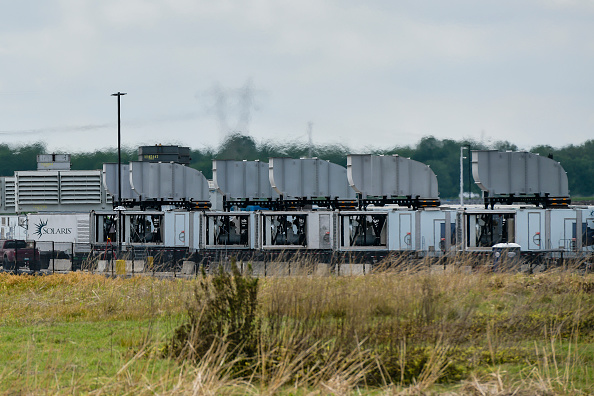
Gas turbines are visible at an xAI data center on Riverport Road in Memphis, Tennessee, on April 25, 2025 (Brandon Dill/Getty Images)

A few months ago, xAI bought X, the social media network formerly known as Twitter. That massive data center near South Memphis, Tennessee, has been spewing methane emissions into the air via unlicensed gas turbines needed to boost the power for the data center, watchdog reports have found.

Federal agencies could give Musk some headaches here, if they suddenly decided clean air was a priority.

Neuralink

When your business is installing hardware in people’s brains, government regulation could make or break you. One call to the Food and Drug Administration and Trump could kill human trials for Neuralink implants currently underway, which are regulated by the agency.

Tariffs touch everything

From the microprocessors in Tesla’s cars to the steel shell of the Starship, all of Musk’s businesses are affected by tariffs on imported materials. The whipsaw back-and-forth on tariffs could continue to cause problems for Musk’s companies. If Trump were to reach for one of his favorite tools to cause pain for Musk, he could target crucial components that Tesla, SpaceX, or xAI needs to grow.

More Power

See all Power
power
Jon Keegan

FTC will appeal Meta antitrust case

Only a few months after successfully defending itself from an FTC antitrust lawsuit, Meta may be heading back to court. Today, the FTC announced that it would appeal the decision, reopening a yearslong suit.

The FTC called Meta’s acquisition of Instagram and WhatsApp an illegal monopoly. The judge in the case found that in the years since the suit was first brought, the competitive landscape had changed dramatically, with Meta facing fierce competition from TikTok.

power

Netflix goes all-cash in bid for Warner Bros., boosting its odds

Netflix on Tuesday applied more pressure to Paramount Skydance in the ongoing bidding war for Warner Bros. Discovery, amending its offer to an all-cash proposal.

Netflix shares ticked up in premarket trading, while Paramount and Warner Bros. were down less than 1%.

The move, which was expected, does not increase the value of Netflix’s $82.7 billion offer for WBD. Netflix said shareholders will be able to vote on the deal in April.

In a Tuesday filing, Warner Bros. said that it values Discovery Global, the spin-off of its cable assets, at between $1.33 and $6.86 per share. Earlier this month, Paramount said it valued the cable TV business at $0 per share.

With Tuesday’s update, event contracts have swung even further in Netflix’s favor, with Paramount’s odds to end up in control of Warner Bros. falling to 14%. That’s below the odds for “none.”

(Event contracts are offered through Robinhood Derivatives, LLC — probabilities referenced or sourced from KalshiEx LLC or ForecastEx LLC.)

The move, which was expected, does not increase the value of Netflix’s $82.7 billion offer for WBD. Netflix said shareholders will be able to vote on the deal in April.

In a Tuesday filing, Warner Bros. said that it values Discovery Global, the spin-off of its cable assets, at between $1.33 and $6.86 per share. Earlier this month, Paramount said it valued the cable TV business at $0 per share.

With Tuesday’s update, event contracts have swung even further in Netflix’s favor, with Paramount’s odds to end up in control of Warner Bros. falling to 14%. That’s below the odds for “none.”

(Event contracts are offered through Robinhood Derivatives, LLC — probabilities referenced or sourced from KalshiEx LLC or ForecastEx LLC.)

power

Paramount doesn’t improve its offer for Warner Bros., leaving its fate to a long-shot shareholder appeal

Paramount Skydance on Thursday reaffirmed its $30-per-share offer to buy Warner Bros. Discovery, again stating that it believes the offer to be superior to rival Netflix’s.

In a press release, Paramount said its last amendment to the offer — which included a $40.4 billion personal guarantee from Larry Ellison, the father of Paramount CEO David Ellison — “cured every issue raised by WBD.”

The problem: Warner Bros.’ board on Wednesday unanimously voted to reject that offer, its sixth rejection of a Paramount takeover and second rejection of this specific $30-per-share bid. Warner’s board stated that it believes Paramount’s offer to be inferior to Netflix’s due in part to an “extraordinary amount of debt financing” and lower effective termination fees should the deal not clear the regulatory process.

By not improving the bid, Paramount is effectively leaving the deal in the hands of Warner Bros.’ shareholders, who will have to weigh the bids and the multiple rejections. Event contracts show a moderate boost in Parmount’s odds to end up in control of WBD on Thursday morning, jumping to 31% as of 9:30 a.m. ET, up from 27% at 9:00 a.m. ET.

(Event contracts are offered through Robinhood Derivatives, LLC — probabilities referenced or sourced from KalshiEx LLC or ForecastEx LLC.)

power

Warner Bros. Discovery’s board tells shareholders to turn down Paramount’s “inadequate” hostile bid

Warner Bros. Discovery has told shareholders to reject Paramount’s hostile takeover bid, with the company releasing a statement early Wednesday urging shareholders to take the Netflix offer on the table. WBD’s board of directors said the outcome of the Netflix deal is “extraordinary by any measure.”

Paramount’s offer, in contrast, was described in the letter as “illusory,” providing “inadequate value,” and likely to impose “numerous, significant risks and costs on WBD.” The board said Paramount has “misled WBD shareholders that its proposed transaction has a ‘full backstop’ from the Ellison family,” and the board also outlined that it doesn’t believe there is a “material difference in regulatory risk between the PSKY offer and the Netflix merger.”

WBD shares dipped in the minutes leading up to the market close on Tuesday after news leaked that its management was preparing to encourage shareholders to reject Paramounts bid, and shares of the HBO parent were down at $28.66, off 0.83% from yesterday’s close, as of 7:56 a.m. ET on Wednesday. Netflix was ticking higher, up around 1.7%, and Paramount Skydance was modestly in the red, down 1%.

Several outlets have reported that Jared Kushners firm would back out of the group that had been assembled to help finance the Paramount bid. Confirming this withdrawal, a spokesperson for the firm helmed by the president’s son-in-law told NBC News that “the dynamics ​of the investment have changed significantly ​since we initially became ​involved ​in October.”

Analysts this month have said that a renewed bidding war for Warner Bros. seems “inevitable” given the antitrust concerns surrounding Netflix’s potential acquisition. President Trump on Tuesday appeared to distance himself from speculation around his closeness to Paramount’s owners, posting on Truth Social, “If they are friends, I’d hate to see my enemies!”

Warner’s attempt to influence its shareholders could fuel a higher bid from Paramount in the coming weeks — shareholders currently have until January 8 to decide whether to accept the current offer.

Paramount’s offer, in contrast, was described in the letter as “illusory,” providing “inadequate value,” and likely to impose “numerous, significant risks and costs on WBD.” The board said Paramount has “misled WBD shareholders that its proposed transaction has a ‘full backstop’ from the Ellison family,” and the board also outlined that it doesn’t believe there is a “material difference in regulatory risk between the PSKY offer and the Netflix merger.”

WBD shares dipped in the minutes leading up to the market close on Tuesday after news leaked that its management was preparing to encourage shareholders to reject Paramounts bid, and shares of the HBO parent were down at $28.66, off 0.83% from yesterday’s close, as of 7:56 a.m. ET on Wednesday. Netflix was ticking higher, up around 1.7%, and Paramount Skydance was modestly in the red, down 1%.

Several outlets have reported that Jared Kushners firm would back out of the group that had been assembled to help finance the Paramount bid. Confirming this withdrawal, a spokesperson for the firm helmed by the president’s son-in-law told NBC News that “the dynamics ​of the investment have changed significantly ​since we initially became ​involved ​in October.”

Analysts this month have said that a renewed bidding war for Warner Bros. seems “inevitable” given the antitrust concerns surrounding Netflix’s potential acquisition. President Trump on Tuesday appeared to distance himself from speculation around his closeness to Paramount’s owners, posting on Truth Social, “If they are friends, I’d hate to see my enemies!”

Warner’s attempt to influence its shareholders could fuel a higher bid from Paramount in the coming weeks — shareholders currently have until January 8 to decide whether to accept the current offer.

power
Jon Keegan

Senators open investigation into data centers’ effect on consumer utility bills

As Big Tech builds more and more massive data centers in small towns around the country, the public is starting to ask questions about whether they are to blame for rising utility bills.

Today Sens. Elizabeth Warren (D-MA), Chris Van Hollen (D-MD), and Richard Blumenthal (D-CT) sent letters to the CEOs of some of the biggest builders of data centers: Meta, Microsoft, Amazon, Google, CoreWeave, Digital Realty, and Equinix.

The senators wrote:

“Utility companies have spent billions of dollars updating the electrical grid to accommodate the unprecedented energy demands of AI data centers and appear to recoup the costs by raising residential utility bills. Through these utility price increases, American families bankroll the electricity costs of trillion-dollar tech companies.”

Electricity prices in the US are indeed up, rising 6.2% since last year. A recent Bloomberg analysis found that ratepayers within 50 miles of data centers saw rates increase up to 276% over the past five years.

The companies have until January 12, 2026, to respond to the senators.

The senators wrote:

“Utility companies have spent billions of dollars updating the electrical grid to accommodate the unprecedented energy demands of AI data centers and appear to recoup the costs by raising residential utility bills. Through these utility price increases, American families bankroll the electricity costs of trillion-dollar tech companies.”

Electricity prices in the US are indeed up, rising 6.2% since last year. A recent Bloomberg analysis found that ratepayers within 50 miles of data centers saw rates increase up to 276% over the past five years.

The companies have until January 12, 2026, to respond to the senators.

Latest Stories

Sherwood Media, LLC produces fresh and unique perspectives on topical financial news and is a fully owned subsidiary of Robinhood Markets, Inc., and any views expressed here do not necessarily reflect the views of any other Robinhood affiliate, including Robinhood Markets, Inc., Robinhood Financial LLC, Robinhood Securities, LLC, Robinhood Crypto, LLC, or Robinhood Money, LLC.