

Group of retired senior military officers and Microsoft file briefs supporting Anthropic in lawsuit
Microsoft and a group of 22 retired senior military officers have filed amicus briefs in support of Anthropic in its lawsuit against the US government.
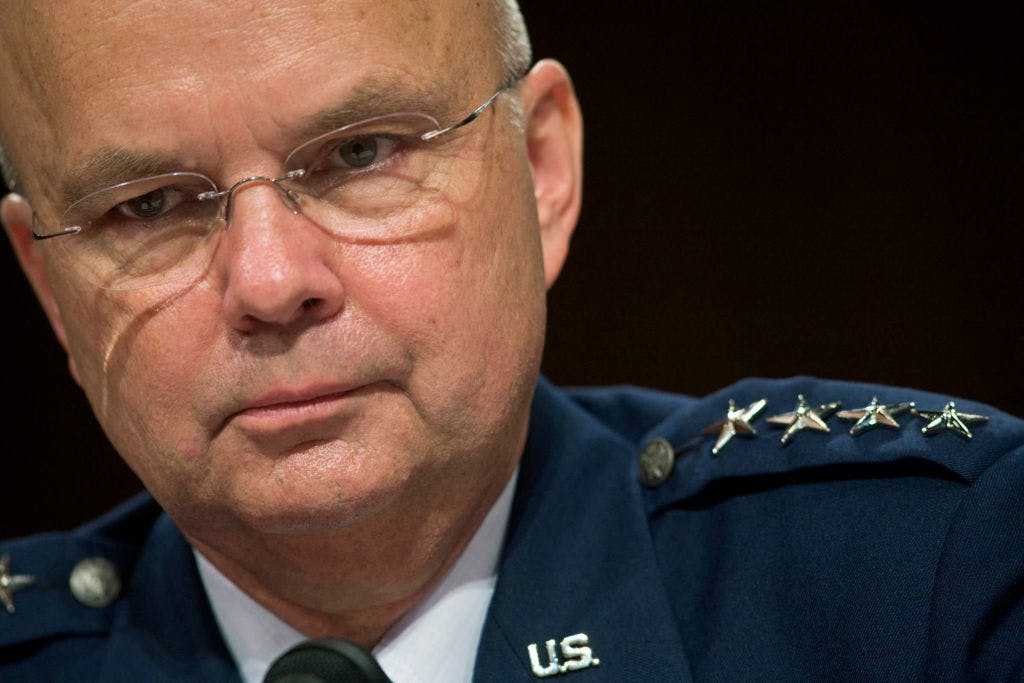
The group of military officers includes two former secretaries of the Navy, two former secretaries of the Air Force, and a former secretary of the Army. Michael Hayden, a retired four-star general in the Air Force and former director of the CIA, NSA, and DNI, also signed on to the brief. The document reads:
“Designating an American company a security risk, and warning other companies not to do business with it for reasons other than national security, is an extraordinary and unprecedented step for the military’s civilian leadership to take. Taking such a step without firm grounding in law is dangerous.”
The officers’ brief puts aside the entire substance of the disagreement between Anthropic and the Pentagon, and focuses on what the group sees as a misuse of the government’s power:
“Something more basic is at stake: the misuse of powerful national security authorities by civilian political leadership, not to address the serious concerns that led Congress to delegate the authority in question, but as retribution against a private company that has displeased the leadership. On that foundational democratic principle, amici are uniquely positioned to speak, having devoted their careers to ensuring the military’s fidelity to the rule of law.”
The list of officers listed on the amicus brief:
Admiral C. Steve Abbot, US Navy (Ret.)
Admiral Thad W. Allen, US Coast Guard (Ret.)
Vice Admiral Donald C. Arthur, US Navy (Ret.)
Rear Admiral (Upper Half) William D. Baumgartner, US Coast Guard (Ret.)
The Honorable Richard Danzig, former secretary of the Navy
The Honorable Carlos Del Toro, former secretary of the Navy
Rear Admiral (Upper Half) F. Stephen Glass, US Navy (Ret.)
Rear Admiral (Upper Half) Donald J. Guter, US Navy (Ret.)
Major General Richard S. Haddad, US Air Force (Ret.)
Major General Irving L. Halter Jr., US Air Force (Ret.)
Rear Admiral (Upper Half) Janice Hamby, US Navy (Ret.)
Rear Admiral (Lower Half) Charles D. Harr, US Navy (Ret.)
General Michael V. Hayden, US Air Force (Ret.)
The Honorable Frank Kendall, former secretary of the Air Force
Rear Admiral (Upper Half) James E. McPherson, JAGC, US Navy (Ret.)
Brigadier General Mark A. Montjar, US Army (Ret.)
Admiral William A. Owens, US Navy (Ret.)
The Honorable F. Whitten Peters, former secretary of the Air Force
Major General Gale S. Pollock (Ret.)
Rear Admiral Michael E. Smith, US Navy (Ret.)
Major General F. Andrew Turley, US Air Force (Ret.)
The Honorable Christine Wormuth, former secretary of the Army
Yesterday, Microsoft also filed an amicus brief supporting its partner Anthropic, calling on the court to issue a temporary restraining order blocking the Pentagon’s designation, warning of “broad negative ramifications.”
Microsoft’s brief said that such an order would “enable a more orderly transition and avoid disrupting the American military’s ongoing use of advanced AI. Otherwise, Microsoft and other technology companies must act immediately to alter existing product and contract configurations used by DoW. This could potentially hamper U.S. warfighters at a critical point in time.”
The company called for cooler heads to prevail, and said blocking the designation would allow the parties to come together and reach an understanding that would help the whole tech industry:
“In sum, the current disagreement arises despite substantial common ground between the government and Anthropic. These essential interests are also shared by Microsoft and, it believes, the technology industry and business community as a whole. Ultimately, the parties, the other technology companies supporting DoW, and the country need to pursue an outcome that will win the confidence of the U.S. military, AI developers, and the American public. This outcome can only be achieved if the parties and the technology sector engage in reasoned discussion, which a temporary restraining order would permit.”