
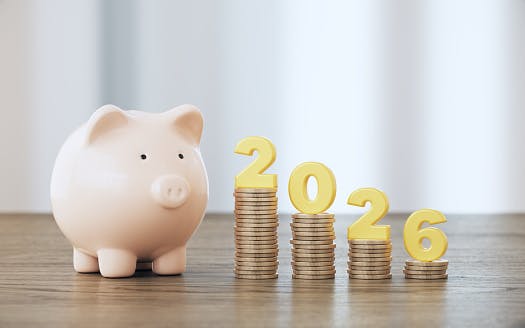
More Americans are trying “No Spend January” as savings rate hits three-year low
Google searches for the spending freeze hit a new high, as nearly half of Americans say life feels “really expensive.”
January can be a hard enough month as it is. For many Americans, a new calendar brings with it freezing weather — like the snowstorms that hit the East Coast over the weekend — a return to work from the festive season, and a mental reset. And some people make it even harder by piling on an extra challenge for the month, swearing off things like alcohol, sugar, or meat. This year, that list has a prominent addition: shopping.
According to a new survey by NerdWallet, more than a quarter of Americans have tried “No Spend January” at least once, pausing all discretionary spending and limiting purchases to essentials like bills and groceries for 31 days. 12% said they started one in 2026, with 44% of respondents saying that “life feels really expensive” right now.
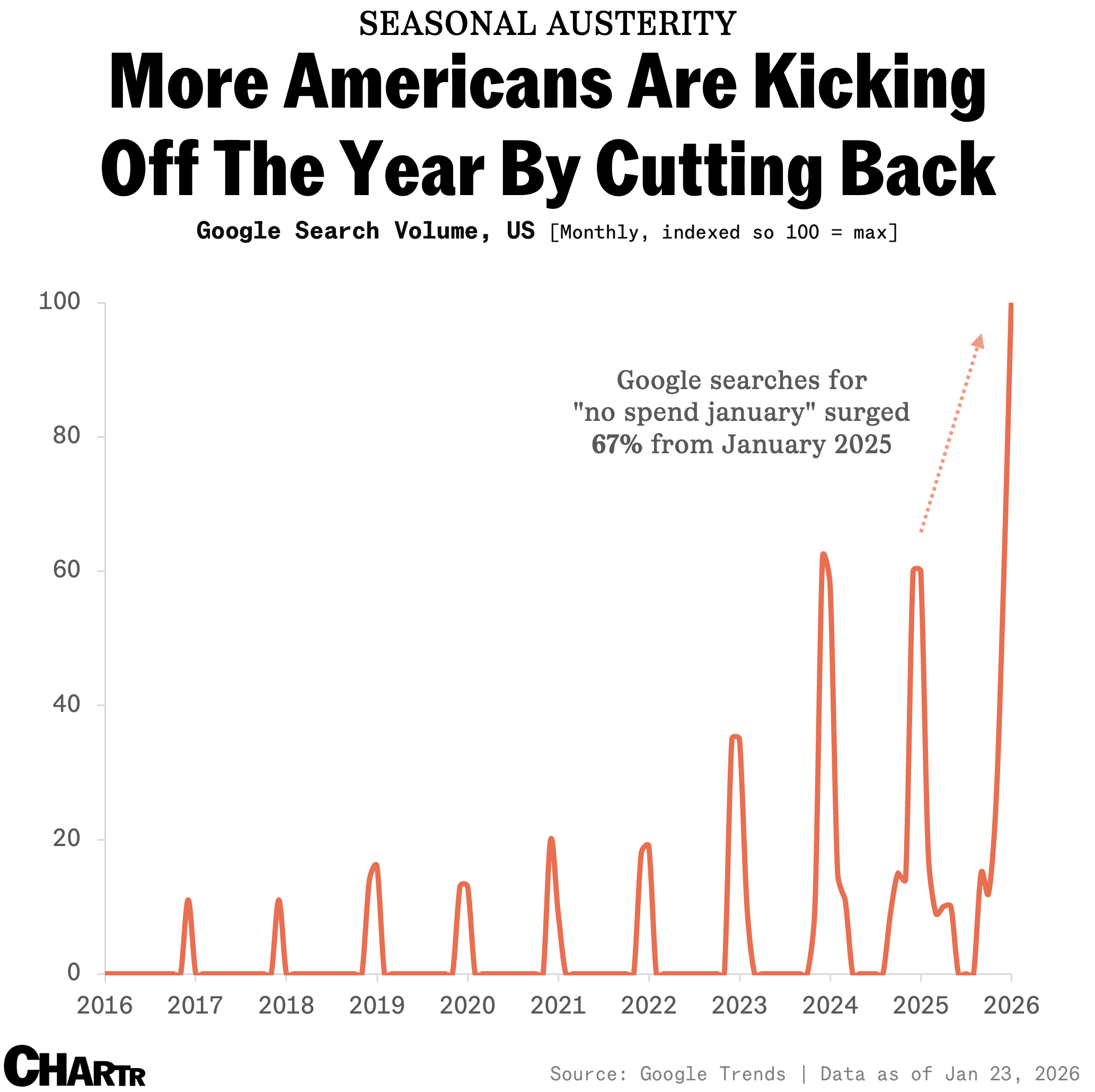
The trend, different from other January resets centered on drinking and dietary changes, has recently gained traction on social media, as Gen Z and millennials increasingly take part in the thrifty challenge. Though not as well known as its alcohol- and meat-free peers, Google search interest for “no spend january” in the US just hit an all-time high, up 67% year on year — growing faster than the 47% increase for “dry january” and the declining search volume for “veganuary.”
And this might be more than just a performative frugality. Inflation remains elevated, especially for everyday essentials, while hiring has slowed, leaving more consumers financially squeezed. The personal saving rate fell sharply to a three-year low in November, per last week’s data from the Bureau of Economic Analysis — hovering near 2008 levels, aside from the pandemic period.
Spending has held up in aggregate, but largely due to wealthier households, while lower- and middle-income consumers are increasingly drawing down savings or leaning more on debt as income growth slows — the so-called K-shaped economy.