

Markets
markets

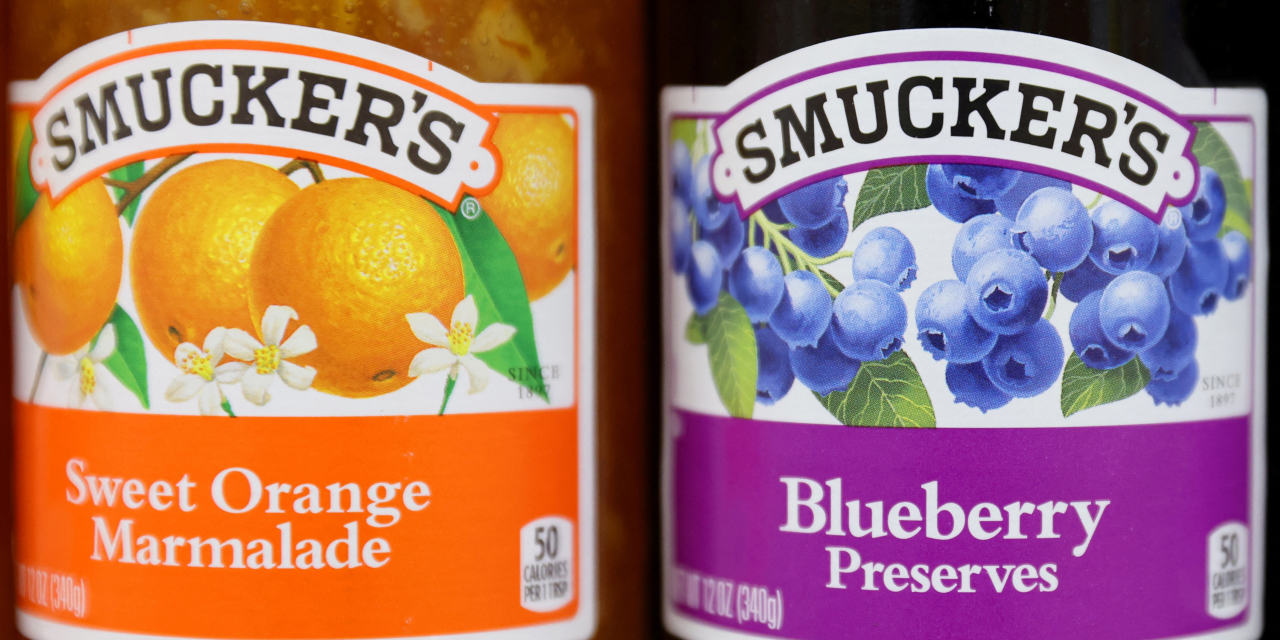
Tariffs push prices up and profits down at Smucker

JM Smucker fell in premarket trading after its fiscal Q1 results undershot Wall Street expectations.

The impact of Trump administration tariffs on the company’s retail coffee business — which includes brands like Folgers, Dunkin’, and Cafe Bustelo and is its largest revenue producer — was the issue.

Smucker was able to pass some of the tariffs on imports from coffee-producing countries like Vietnam and Brazil along to shoppers in the form of higher prices. In fact, the coffee unit’s sales of $717.2 million, up 15%, were better than Wall Street expected.

But price hikes didn’t cover all of the tariff bill, and the company swallowing a portion of those higher costs contributed to a 22% tumble in the coffee segment’s profits.

Smucker was able to pass some of the tariffs on imports from coffee-producing countries like Vietnam and Brazil along to shoppers in the form of higher prices. In fact, the coffee unit’s sales of $717.2 million, up 15%, were better than Wall Street expected.

But price hikes didn’t cover all of the tariff bill, and the company swallowing a portion of those higher costs contributed to a 22% tumble in the coffee segment’s profits.

More Markets

See all Markets
markets

Intel crushes Q1 earnings expectations, shares soar

Intel shares surged in after-hours trading Thursday after the semiconductor giant reported much-better-than-expected Q1 earnings and sales numbers.

Intel reported:

  • Q1 revenue of $13.6 billion vs. a consensus expectation for $12.42 billion.

  • Adjusted earnings per share of $0.29 vs. the $0.02 consensus estimate from FactSet.

Shares were up 15% shortly after the report in after-hours trading.

The numbers are a significant coda to what has been one of the best periods of share price performance for the company in decades. In April alone, Intel was up roughly 50% ahead of its earnings release, and the stock had more than tripled over the last 12 months.

That run-up, however, had far outpaced Intel’s actual business results, resulting in a nosebleed-inducing forward price-to-earnings valuation of nearly 100x expected earnings over the next 12 months, dwarfing even the valuations the company was receiving during the peak of the dot-com boom of the 1990s.

markets
Saleah Blancaflor

The national average of US gas prices drops to $4.03

Drivers can breath a small sigh of relief... for now. The national average of gas prices has gone down 6 cents since last week to $4.03 per gallon, according to the American Automobile Association.

The national average was at $4.09 per gallon a week ago.

Meanwhile, US crude oil prices have gone under $100 per barrel, which has played a part in helping drive down the cost of gas for customers. But the duration of how long the downward trend will continue remains uncertain due to instability along the Strait of Hormuz.

Loading...
 

(Event contracts are offered through Robinhood Derivatives, LLC — probabilities referenced or sourced from KalshiEx LLC or ForecastEx LLC.)

Gas prices are currently the highest they've ever been this time of the year since 2022, when the national average was $4.11 on April 23.

As we head into the end of April, prediction markets currently show traders pricing in an 81% chance the price of gas could still rise above $4.10 by the end of the month.

Meanwhile, US crude oil prices have gone under $100 per barrel, which has played a part in helping drive down the cost of gas for customers. But the duration of how long the downward trend will continue remains uncertain due to instability along the Strait of Hormuz.

Loading...
 

(Event contracts are offered through Robinhood Derivatives, LLC — probabilities referenced or sourced from KalshiEx LLC or ForecastEx LLC.)

Gas prices are currently the highest they've ever been this time of the year since 2022, when the national average was $4.11 on April 23.

As we head into the end of April, prediction markets currently show traders pricing in an 81% chance the price of gas could still rise above $4.10 by the end of the month.

markets

This chart shows how Donald Trump is the king of stock market volatility

Well, here is an absolute banger of a chart from Fundstrat that is sure to simultaneously please and annoy everyone:

Macro data scientist Alex Wang’s chart on the causes of the five best and worst market days during different presidencies demonstrates how much the Oval Office drives US stock market volatility during Trump’s second term in office.

Fundstrat up and down days by presidency

My very loose, abstract description of what policymakers do is “try to make things better.” (As for what constitutes “things” and “better,” well, tens of millions of Americans will have to agree to disagree.)

Most of the time, these things the president and Congress pursue are not a massive shock to the financial system, though there’s always a doomsayer warning that something like Obamacare will spell the end for US stocks. And that means most of the time you can probably expect a positive skew: policymakers will be coming in with stimulus to support the economy and markets in the face of unexpected downside.

Per Fundstrat’s analysis, that clearly hasn’t been the case in the past 15 months. You can look at this one of two ways. Perhaps this period has been a time of such economic stability and impressive earnings growth that some of those other catalysts for massive one-day drops haven’t materialized. We’re blessed to have gotten to enjoy such a solid backdrop! Or you could suggest this is indicative of a fundamentally more activist presidency and more frequent policy decisions that have carry higher macroeconomic consequences compared to previous presidencies. We’re doomed to swing wildly based on what we see next on Truth Social!

There’ve been a lot of wonderful studies released by asset managers on the importance of not missing the 10 best days in the market in any given year. (It’s less often mentioned by folks who have a vested interest in you investing your money about how much better returns would be if you miss the 10 worst days of the year!) The problem is these sessions are typically clustered so close together that it’s an impossible task to navigate twisted, volatile waters so cleanly.

The upshot: Trump-induced volatility has been noise, with the biggest five losses nearly perfectly canceling out the biggest gains. There’s an underlying non-Trump, mainly-AI trend that’s mattered, and that’s probably the main reason the US stock market is where it is.

$1B ⛽

Rising fuel prices are set to cost Southwest Airlines $1 billion in the second quarter, the carrier said in its investor call on Thursday morning. The airline, which stopped fuel hedging last year, has been rocked by higher prices amid the war in Iran along with the rest of the industry.

“Clearly revenues, and therefore fares, are underneath the increase in fuel. So we’ve not caught the increase in fuel by any any stretch of the imagination,” CEO Bob Jordan said.

Despite its fuel expense, Southwest said its earlier forecast of full-year earnings of $4 per share — which would be more than 4x its 2025 profit — could still happen. When it reported earnings after the bell on Wednesday, the airline declined to update the forecast given “ongoing macroeconomic uncertainty.”

“There are scenarios where absolutely we could still hit the $4. It depends on, you know, fuel and revenue trends from here. We just felt like it was not productive to introduce a new guide or a range, given how volatile fuel is,” Jordan said.

Latest Stories

Sherwood Media, LLC produces fresh and unique perspectives on topical financial news and is a fully owned subsidiary of Robinhood Markets, Inc., and any views expressed here do not necessarily reflect the views of any other Robinhood affiliate, including Robinhood Markets, Inc., Robinhood Financial LLC, Robinhood Securities, LLC, Robinhood Crypto, LLC, Robinhood Derivatives, LLC, or Robinhood Money, LLC. Futures and event contracts are offered through Robinhood Derivatives, LLC.
