

Oil tycoon calls OPEC collusion allegations a ‘baseless attack’
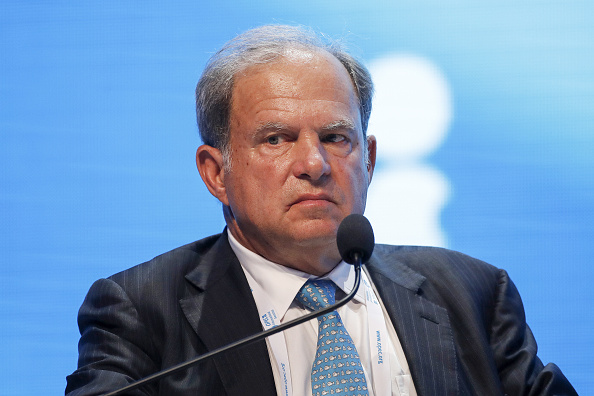
Scott D. Sheffield, the former head of Pioneer Natural Resources, is publicly disputing claims made by the Federal Trade Commission that he “attempted to collude” with the global oil cartel OPEC+.
The oil tycoon filed a 23-page comment letter that takes issue with facts at the heart of the accusations and blasted the allegations as “baseless.”
"The FTC has wrongly attacked me," said Sheffield, chairman of the former shale drilling giant that Exxon Mobil acquired in a $60 billion deal earlier this month, in an interview. "No American citizen should be subject to this sort of baseless attack.”
Typically, the conditions the FTC requires to clear a merger are fairly mundane. Maybe divest a few product lines. Spin off a business or two to preserve some competition in particular geographies. Stuff like that.
But when the regulator announced its tentative approval of Exxon Mobil’s deal for Pioneer Natural Resources earlier this month, the FTC’s stipulations were highly unusual.
The commission insisted — and Exxon Mobil agreed — that Sheffield be barred from holding a seat on the company’s board of directors or even advising the company, with the FTC saying that the ex-Pioneer chief “attempted to collude” with the global oil cartel OPEC+. (Separately, it said he should be barred because he is on the board of directors of the Williams Cos., a pipeline company that competes with ExxonMobil in some areas.)
The agency said Sheffield “exchanged hundreds of text messages with OPEC representatives and officials discussing crude oil market dynamics, pricing and output,” and filed a heavily redacted complaint alleging it had “voluminous evidence” of efforts by Sheffield to coordinate oil production among both US producers and OPEC officials.
A comment filed Tuesday with the FTC on behalf of Sheffield, disputes those facts.
“The FTC grossly mischaracterizes Mr. Sheffield’s interactions with OPEC and ministers of foreign governments,” it reads.
For its part, the FTC says it is standing by its allegations.
“There is no question that Mr. Sheffield publicly urged Texas oil producers to limit production, all while having regular, private back-and-forth communications with senior OPEC representatives over a period of years." said Douglas Farrar, FTC spokesperson.
Assessing the claims of the FTC — an important regulator in approving mergers and acquisitions — is difficult, as the complaint that lays them out has been heavily redacted, with the quotations from messages that would ostensibly make the governments case — obscured by thick black bars. For instance:

The submission on Sheffield’s behalf gives his version of some of those events, however.
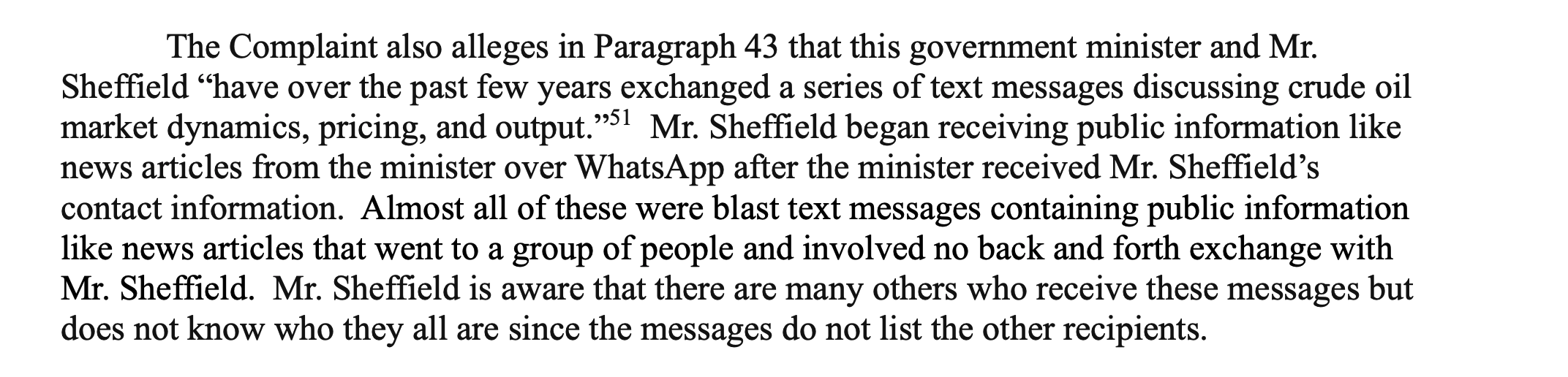
For what it’s worth, the filing does acknowledge some contact between the former Pioneer executive and officials at the global oil cartel, while arguing that those contacts have been misconstrued. It reads:
“The narrative in the complaint is simply untrue. Mr. Sheffield had only sporadic interaction with OPEC or ministers of foreign governments, did not exchange confidential or non-public information, and did not attempt to coordinate competitive decisions with them. He simply took the opportunity to learn from foreign ministers about government actions that might impact the global market.”
The filing asks the FTC to reconsider the consent decree accepted by Exxon Mobil, which bans Sheffield from occupying a seat on the board of directors at the oil giant. But Sheffield says it is really intended to set the record straight about his actions.
"I was so shocked by their allegations that I almost laughed initially," he said in an interview. "There's nothing I did that is wrong.”




