
Markets
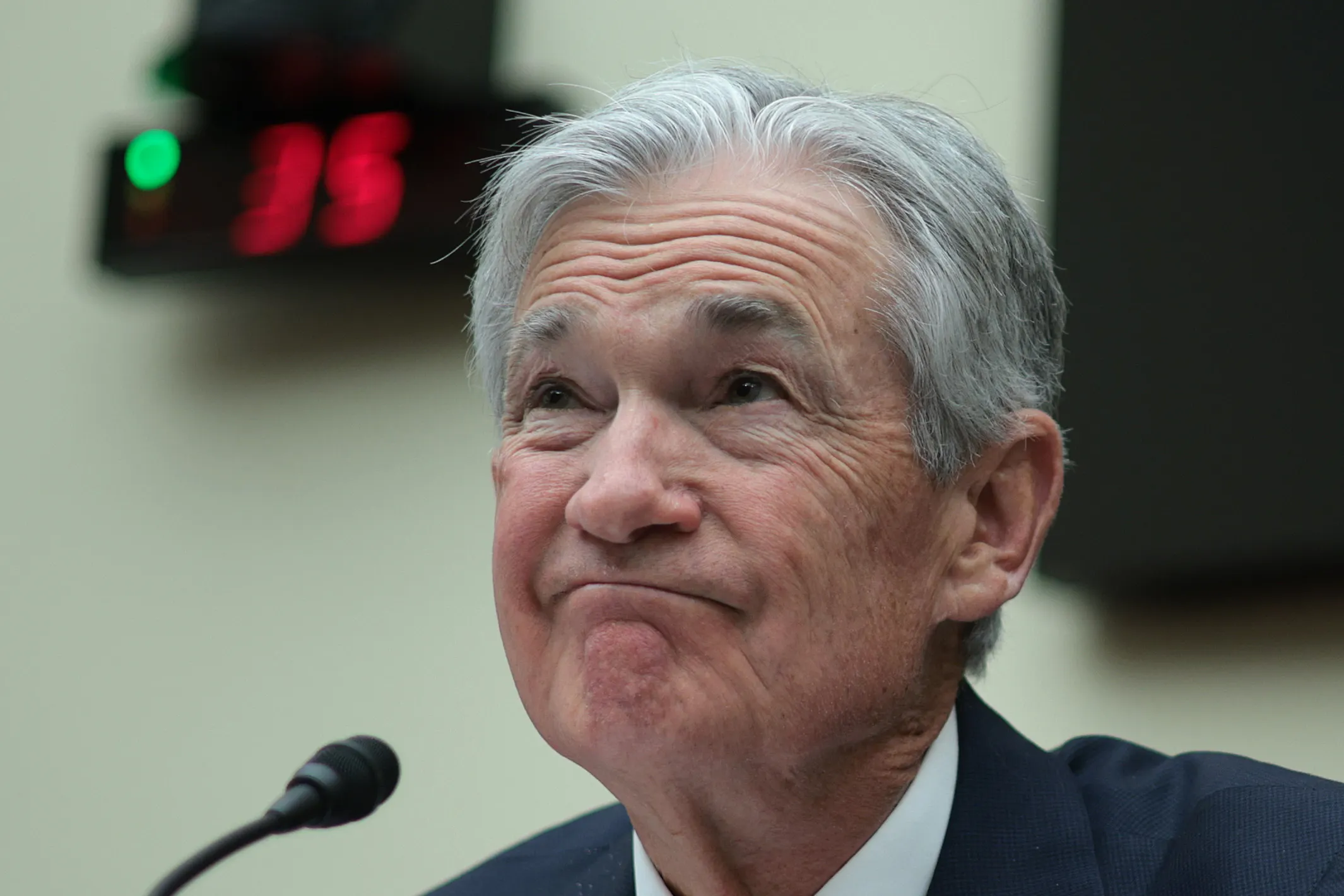
Federal Reserve Chairman Jerome H. Powell
(Alex Wong/Getty Images)

Rate cuts have entered the chat

Investor expectations, or maybe just their hopes, for a rate cut by June have risen since mid-February.

Well here we are again.

The stock market is negative for the year and has now erased all of its gains since the presidential election, with the SPDR S&P 500 Trust down 0.8% since President Trump’s victory on November 5.

But America’s flagship index did pare its losses yesterday, from as much as 2% down to a slightly more palatable decline of 1.2% on the day.

Much of that snap back can be attributed to what looked like a pretty substantial short-covering scramble spotlighted yesterday.

There were also signs of life in the AI energy trade, with some of those names — Broadcom, Palantir, Vistra, and Constellation Energy — cutting big early losses on the day to help buttress the market.

Where has this resurgence in optimism about AI come from? It’s tough to say for sure. It could just be that the momentum of the sell-off played itself out.

But I would note that some of these same stocks have tended to be great performers over the last year when the market was pricing in and absorbing rate cuts from the Federal Reserve — and, with stocks retreating, the path of the Fed’s base rate will be scrutinized even more intensely by the president, and the market.

Indeed, rate cuts are starting to return to some market conversations, as the sell-off over the last two weeks has coincided with expectations that the Fed — currently on pause due to still elevated inflation — will swing into action over the next few months. Probabilities derived from the market for Fed funds futures reveal that on February 12, the market was pricing that the odds of the Fed cutting by June was just 34% — a figure that’s now at 85%.

“Markets are now putting more weight on scenarios with deteriorating demand that warrant multiple rate cuts and less on those involving an extended hold or even hikes,” analysts with Barclays wrote in a note out Tuesday, a sentiment echoed by researchers at Citi Group who wrote that tariffs could hasten rate cuts.

Deutsche Bank analysts spotlighted a similar dynamic in a Tuesday note:

“The market is now split between pricing two-to-three, 25-basis point rate cuts for the year, a significant change compared to where market pricing was in mid-February with only 1 rate cut then being priced. The first rate cut is projected at the June meeting.”

Of course, inflation is still annoyingly high. (Eggs!) That might make the Fed less likely to cut. And it’s unclear how shouting from Trump, who doesn’t think much of old-fashioned notions like central bank independence, may make the Fed more or less likely to cut.

Still, it’s an interesting dynamic to watch, especially given what we’ve called the first commandment of the stock market.

More Markets

See all Markets
markets

SpaceX gets a wave of bullish ratings from Wall Street analysts

SpaceX received more than a dozen positive analyst calls on Tuesday — including from major Wall Street banks — as they initiate coverage on Elon Musk’s space and AI company.

SpaceX went public on June 12 at a $2.2 trillion valuation, the largest debut in history. While the company hasn’t yet posted a profit, it seems to have convinced Wall Street that it will get there and grow its valuation on the way.

Of the at least 17 analysts that gave a rating on Tuesday, all but one gave it a “buy” or “outperform” rating. MoffettNathanson was "neutral."

The ratings come as SpaceX joined the Nasdaq 100 index, a benchmark tech-heavy basket of companies that underpins millions of portfolios. The inclusion adds built-in demand for the stock from index funds and ETFs.

Still, SpaceX fell more than 5% on Tuesday amid a broader sell-off, and is currently effectively flat from its opening price of $150 a share.

markets

Nike sinks to lowest level since 2014 after warning of “challenged” sales environment in Q4 report

Did Nike do it?

Investors had a mixed reaction after the global sports apparel company reported its fourth quarter earnings on Tuesday after the bell. Shares initially rose 5% as Nike beat out Wall Street expectations amid a hefty tariff refund bonus. However, the stock then sank to its lowest level since August 2014 in postmarket trading.

Here are the Q4 numbers:

  • Revenue of $11.0 billion (estimate: $10.8 billion).

  • Adjusted earnings per share of $0.20 (estimate: $0.12).

Ahead of this report, Nike warned that results would be flattered by a one-time tariff refund (now estimated at roughly $0.52 per share for the bottom line). That gave the company an extra cushion in snapping its streak of seven quarters of year-over-year profit declines.

Over the past year, the company had been punished by tariffs on imported goods, stagnant consumer spending, and increasing competition from other footwear brands like New Balance, Adidas, and Hoka.

Outgoing CFO Matthew Friend deemed it an “increasingly challenging operating environment, where sell-through remains challenged.”

Latest Stories

Sherwood Media, LLC and Chartr Limited produce fresh and unique perspectives on topical financial news and are fully owned subsidiaries of Robinhood Markets, Inc., and any views expressed here do not necessarily reflect the views of any other Robinhood affiliate, including Robinhood Markets, Inc., Robinhood Financial LLC, Robinhood Securities, LLC, Robinhood Crypto, LLC, Robinhood Money, LLC, Robinhood U.K. Ltd, Robinhood Derivatives, LLC, Robinhood Gold, LLC, Robinhood Asset Management, LLC, Robinhood Credit, Inc., Robinhood Ventures DE, LLC and, where applicable, its managed investment vehicles.

