
Markets
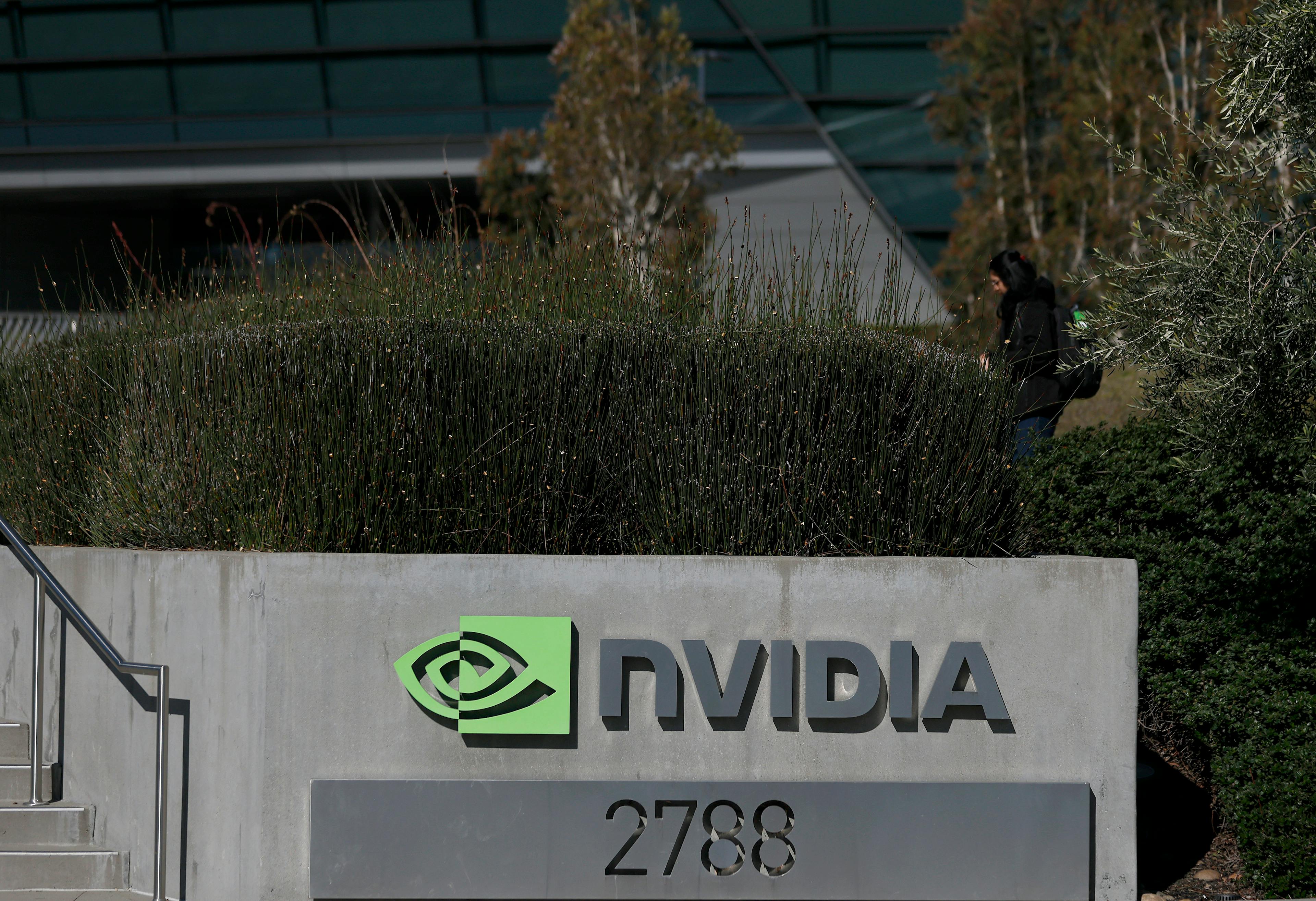
Nvidia Headquarters California
(Justin Sullivan/Getty Images)

One “glaring downside” in Nvidia’s earnings

Just something to be aware of with Nvidia.

With more than 90% of the nearly 70 analysts covering Nvidia rating the stock a buy, sometimes one gets the sense that Jensen Huang’s AI chip behemoth can do no wrong.

But it’s always worth pointing out the odd pimple on the fairly pristine earnings report the company issued on Wednesday. In a report published after Nvidia’s numbers, Barclays analyst Tom O’Malley, who also maintains an overweight rating on Nvidia shares, highlighted one of the few slightly off notes in the company’s strong results. He wrote:

“It sounds like the early Blackwell transition saw more discrete B200 sales than systems, which accounts for the Networking miss that was probably the only glaring downside to the print. NVL systems are expected to see higher networking content due to the NVSwitch trays being classified in the Networking bucket, which should help re-accelerate the business as Blackwell continues to ramp. Another point here is the GM step down, which the company had called out in prior quarters and the Street largely didn’t believe. That metric will stay in the lower 70% for April/July with a material step up later in the year.”

Translation? Nvidia is in the midst of ramping up its new class of AI graphics processing units, the specialized processors that do the math needed to train and run AI systems. The new series is known as Blackwell, and over time it will overtake Nvidia’s wildly popular Hopper GPUs.

Nvidia GPUs can be sold individually, or as part of larger systems, which are essentially GPUs that are linked together with specialized wires, switches, and cooling equipment. These are the racks used in data centers.

During the company’s most recent quarter, sales of the individual Blackwell GPUs predominated, meaning the company didn’t sell as much of the networking equipment needed to link up the larger systems, known as NVLs.

Sales of those networking products dropped 3% during the quarter. But the company suggested that as buyers start to embrace its new Blackwell GPUs and buy the bigger racks, sales of the specialized networking equipment would rebound.

The transition to the new Blackwell product line is also expected to momentarily weigh on the company’s gross profit margins. (That’s the “GM” the analyst mentions above.)

But these, like the networking sales numbers, are expected to bounce back as the Blackwell system starts to be more widely adopted by the end of the year.

More Markets

See all Markets
markets

SpaceX gets a wave of bullish ratings from Wall Street analysts

SpaceX received more than a dozen positive analyst calls on Tuesday — including from major Wall Street banks — as they initiate coverage on Elon Musk’s space and AI company.

SpaceX went public on June 12 at a $2.2 trillion valuation, the largest debut in history. While the company hasn’t yet posted a profit, it seems to have convinced Wall Street that it will get there and grow its valuation on the way.

Of the at least 17 analysts that gave a rating on Tuesday, all but one gave it a “buy” or “outperform” rating. MoffettNathanson was "neutral."

The ratings come as SpaceX joined the Nasdaq 100 index, a benchmark tech-heavy basket of companies that underpins millions of portfolios. The inclusion adds built-in demand for the stock from index funds and ETFs.

Still, SpaceX fell more than 5% on Tuesday amid a broader sell-off, and is currently effectively flat from its opening price of $150 a share.

markets

Nike sinks to lowest level since 2014 after warning of “challenged” sales environment in Q4 report

Did Nike do it?

Investors had a mixed reaction after the global sports apparel company reported its fourth quarter earnings on Tuesday after the bell. Shares initially rose 5% as Nike beat out Wall Street expectations amid a hefty tariff refund bonus. However, the stock then sank to its lowest level since August 2014 in postmarket trading.

Here are the Q4 numbers:

  • Revenue of $11.0 billion (estimate: $10.8 billion).

  • Adjusted earnings per share of $0.20 (estimate: $0.12).

Ahead of this report, Nike warned that results would be flattered by a one-time tariff refund (now estimated at roughly $0.52 per share for the bottom line). That gave the company an extra cushion in snapping its streak of seven quarters of year-over-year profit declines.

Over the past year, the company had been punished by tariffs on imported goods, stagnant consumer spending, and increasing competition from other footwear brands like New Balance, Adidas, and Hoka.

Outgoing CFO Matthew Friend deemed it an “increasingly challenging operating environment, where sell-through remains challenged.”

Latest Stories

Sherwood Media, LLC and Chartr Limited produce fresh and unique perspectives on topical financial news and are fully owned subsidiaries of Robinhood Markets, Inc., and any views expressed here do not necessarily reflect the views of any other Robinhood affiliate, including Robinhood Markets, Inc., Robinhood Financial LLC, Robinhood Securities, LLC, Robinhood Crypto, LLC, Robinhood Money, LLC, Robinhood U.K. Ltd, Robinhood Derivatives, LLC, Robinhood Gold, LLC, Robinhood Asset Management, LLC, Robinhood Credit, Inc., Robinhood Ventures DE, LLC and, where applicable, its managed investment vehicles.

