Markets
Nvidia developer conference GTC
Jensen Huang (Andrej Sokolow/Getty Images)

Nvidia’s not investing $100 billion in OpenAI because the chip designer doesn’t want to pay the OpenAI valuation tax

The upshot of the WSJ report on Nvidia’s relationship with OpenAI is that the former wants you to know they’re not going to be dependent on the latter.

The Wall Street Journal dropped a bombshell on Friday evening, reporting that Nvidia’s plan to invest up to $100 billion in OpenAI “has stalled after some inside the chip giant expressed doubts about the deal, people familiar with the matter said.”

In September, the two sides announced a non-binding letter of intent which would see OpenAI lease chips from Nvidia as the parties built out 10 gigawatts of computing power, with the chip designer investing in the ChatGPT maker “progressively as each gigawatt is deployed.”

This weekend, Nvidia CEO Jensen Huang told the press that the $100 billion OpenAI investment was “never a commitment,” effectively confirming this report.

The WSJ indicated that Huang “has also privately criticized what he has described as a lack of discipline in OpenAI’s business approach and expressed concern about the competition it faces from the likes of Google and Anthropic, some of the people said.”

The simple takeaway here: Nvidia wants the world to know that they are not going to be over-reliant on OpenAI.

Nvidia does not want to pay the OpenAI valuation tax.

Jensen Huang can take the market’s pulse. He definitely keeps up with the memes, at least. Companies whose future revenues are seen as too dependent on the ChatGPT maker get punished for that.

This was a contributing factor to one of Microsoft’s biggest one-day drops on record and the reason why Oracle’s credit default swap spreads are something we talk about once every couple weeks.

That being said, Nvidia will “absolutely be involved” in OpenAI’s current funding round, per Huang, who said it would be “probably the largest investment we’ve ever made.”

(For reference, Nvidia has invested $5 billion in Intel.)

And why not? Nvidia continues to generate more and more cash flows despite both buybacks and capex running at records. The chip designer has a vested interest in supporting different parts of the AI supply chain, and the easy ability to do so.

But management also has a vested interest in making sure that the company continues to be viewed as the AI winner whose coattails other tech firms look to ride, rather than a giant whose dominant position may be threatened by the company they keep.

Zooming out, the very ambitious partnership between Nvidia and OpenAI had clearly stalled by the simple fact that there was no progress. In their September announcement, the companies said they were looking to finalizing the details “in the coming weeks.” It’s February.

And the $100 billion figure is something Nvidia had been shying away from in particular. Both the Q3 10-Q filing and CFO Colette Kress on the earnings call referenced an “opportunity” to invest in OpenAI; neither used the $100 billion figure, in stark contrast to the more formalized agreement to pour $10 billion into Anthropic.

The filing, in particular, noted that “There is no assurance that we will enter into definitive agreements with respect to the OpenAI opportunity or other potential investments, or that any investment will be completed on expected terms, if at all.”

More Markets

See all Markets
markets

Oracle plans to raise up to $50 billion in debt and equity this year to fund its AI ambitions

On Sunday evening, Oracle told investors just how much money it’s going to need to from them to fund its data center expansion efforts.

Management said it plans to raise $45 billion to $50 billion this calendar year, split roughly equally between debt and equity in a bid to maintain its investment grade rating.

The lion’s share of the equity raise ($20 billion) will come from at at-the-money offering that enables the firm to opportunistically issue shares. This year’s debt issuance will come in one fell swoop, per the company, and happen early in the year.

Carl Quintanilla Vital Knowledge ORCL
Source: Bluesky

On the bright side, at least this is an answer. During the conference call that followed Q2 results in December, Oracle said that capex for the fiscal year would be $15 billion higher than previously anticipated. When asked how much money the company would need to raise, CEO Clay Magouyrk said “it’s hard to answer that question exactly,” before saying he thought it would be “less, if not substantially less” than $100 billion in order to complete its multi-year AI buildout.

“Oracle is raising money in order to build additional capacity to meet the contracted demand from our largest Oracle Cloud Infrastructure customers, including AMD, Meta, NVIDIA, OpenAI, TikTok, xAI and others,” per the press release.

Put it in alphabetical order all you want, we all know who your biggest customer is!

Oracle’s (over)reliance on OpenAI as a source of future revenues has prompted markets to view the firm as less creditworthy.

Gold and silver plunge, suffering their worst losses since the 1980s

Gold and silver suffered their worst losses in decades on Friday, with the iShares Silver Trust falling more than 30% at one point during afternoon trading before recovering slightly.

After recently crossing $5,000 per ounce for the first time, golds dip was relatively muted compared to silvers rout, but nevertheless eye-watering for a traditional safe haven asset. At one point, golds intraday dip exceeded 10%, its worst intraday drop since the 1980s and surpassing its declines seen during the 2008 financial crisis, per Bloomberg.

Silvers drop was its worst in percentage terms since 1980.

Gold, and particularly silver, have been pushed higher recently by a storm of retail trader enthusiasm for the metals, as well as more traditional drivers of precious metals such as geopolitical risks and concerns over a fall in the dollars value due to trade wars and possibly waning central bank independence.

Leveraged ETFs that hold gold and silver futures have become increasingly popular trading vehicles amid the parabolic moves in precious metals prices, and likely contributed to the magnitude of the unwind today.

Case in point: look at silver futures for delivery in March. That’s the dominant contract held by the ProShares Ultra Silver ETF, which offers exposure to 2x the daily move in the shiny metal. Volumes exploded (and the contract rebounded modestly) right around 1:25 p.m. ET, which is when silver futures settled and around the time the ETF performed its daily rebalancing (which in this case, involved massive selling).

Gaming stocks plunge following release of Google’s AI tool that can create playable, copyrighted worlds

Shares of major gaming companies are plunging on Friday as investors get a deeper look at the capabilities of Google’s new generative-AI prototype, Project Genie.

The tool allows users to “create and explore infinitely diverse worlds” with a text or image prompt. Users have already exposed its ability to realistically recreate knockoffs of copyrighted games from Nintendo and other gaming companies.

As users experiment with recreations of game worlds like Take-Two’s “Grand Theft Auto 6,” shares of major gaming companies are sinking. Unity Software, the maker of the popular Unity game engine, is down over 25%, while gaming platform Roblox is down about 9%.

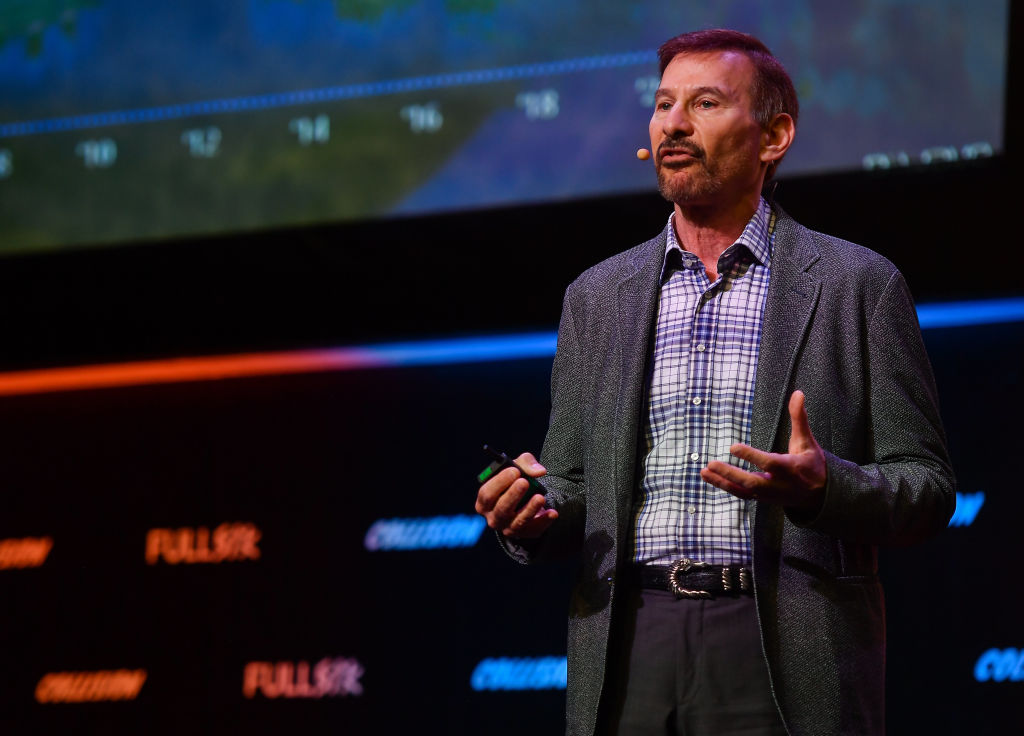
Collision 2019 - Day One

D-Wave Quantum CEO on what’s next after the most eventful month in the company’s history

“If 2025 was the international year of quantum, 2026 is the international year of D-Wave Quantum,” said CEO Dr. Alan Baratz.

Luke Kawa1/30/26

Latest Stories

Sherwood Media, LLC produces fresh and unique perspectives on topical financial news and is a fully owned subsidiary of Robinhood Markets, Inc., and any views expressed here do not necessarily reflect the views of any other Robinhood affiliate, including Robinhood Markets, Inc., Robinhood Financial LLC, Robinhood Securities, LLC, Robinhood Crypto, LLC, or Robinhood Money, LLC.