

What Wall Street’s looking for from Nvidia’s Q1 results
Further upside to its $1 trillion revenue guidance, more customer success, and shareholder returns.
Editor’s note: A version of this post appeared in the May 20 edition of EntryPoint, a markets newsletter from Sherwood featuring data on how Robinhood traders are navigating the daily twists and turns and the key trends that define the price action. Sign up here.
The only thing that can steal the spotlight from 30-year Treasury yields hitting a 19-year high is the world’s most valuable company releasing quarterly results.
Here are the numbers Wall Street is keying in on when Nvidia reports its Q1 figures after the close on Wednesday, as well as expectations for Q2 guidance:
And here’s how the options market is positioned ahead of the mAIn event:
It’s not a pure read on sentiment or even intent, but there’s certainly a lot of wood to chop overhead, with elevated open interest at every round number between here and $250. For what it’s worth, open interest in calls at $240 and $250 was flying higher last Thursday, when Nvidia booked a fresh all-time high, which probably points to bullish outright (or at the very least) spread positions being established ahead of earnings.
Beyond the numbers, here’s what analysts will want to hear more on from the chip designer:
$1 trillion… and counting?
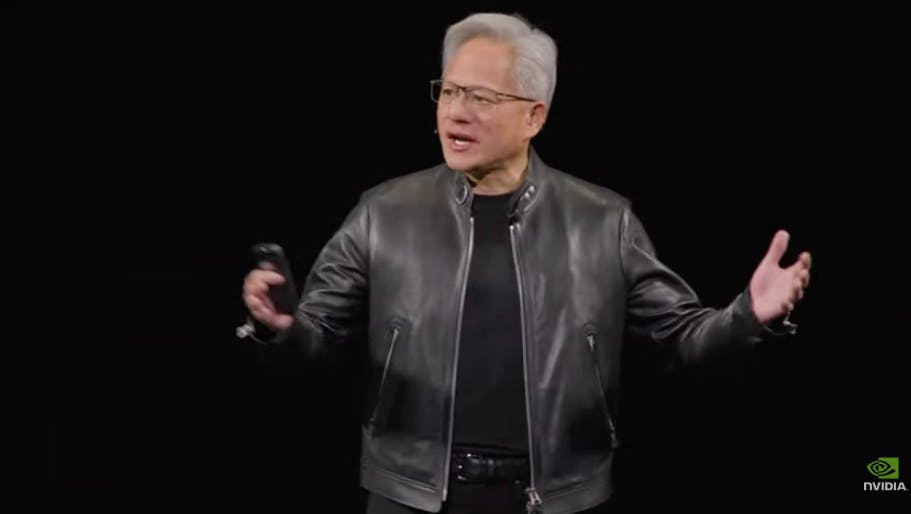
The revenue target that CEO Jensen Huang unveiled in March for Blackwell and Rubin chips as well as networking equipment through 2027 seemed massive at the time.
But more than two months later, Morgan Stanley analyst Joseph Moore thinks his peers still haven’t adequately updated their forecasts to account for these potential sales — and that there’s more where that came from.
His math suggests that this $1 trillion target would be hit via $845 billion of data center sales during this calendar year and the next.
“Despite that [target] consensus estimates for total datacenter revenue over that period is just $785 billion,” Moore wrote, arguing that there’s upside to those numbers from Groq, stand-alone CPUs, and Inference Context Memory Storage.
“Given how recently Nvidia has launched Groq and standalone CPUs this is an area where we may hear more about the potential revenue contribution in the near-term and how Nvidia sees their solutions for competing offerings,” he added.
CPUs in particular will be in focus thanks to the computing demands of AI agents, which have seemingly tilted the ratio of CPUs to GPUs needed to run models substantially toward the former.
How are its customers doing?
A company’s fate is inextricably tied to its customers.
“We believe the stock’s multiple can re-rate if we see evidence of: (1) improving profitability metrics at hyperscalers that supports sustained spending growth; (2) proliferation of agentic AI signaling broader enterprise adoption; (3) more visibility into deployments at non-traditional customers,” Goldman Sachs analyst James Schneider wrote.
Henry Ford famously wanted his employees to be able to afford the cars they made. Similarly, the longevity of the AI boom depends on cloud providers and more downstream end users receiving a solid ROI from this spending, rather than returns being concentrated in chip and AI infrastructure companies.
“We believe the Street is underestimating the cloud growth/AI deal flow conversion for Microsoft/Azure and Amazon/AWS over the next year... and the software layer with recent positive data points from Palantir, Datadog, and Innodata is now showing the tidal wave of use case driven demand is on the horizon,” Wedbush Securities analyst Dan Ives wrote.
Getting an OK from boomers
Investors have put a lot of money into Nvidia; Bank of America’s Vivek Arya reckons they’d shell out even more if the chip designer returned the favor.
We’ve discussed how Nvidia may have become “too big to excite” as it’s matured. Well, attracting more love from the boomer cohort — since the desire for income-generating investments generally increases with age — might be one way to remedy this enthusiasm gap.
“The historical pivot towards free cash flow returns at Apple and Microsoft is well known,” Arya wrote. “While it certainly was not the only reason for their enhanced P/E multiples, it likely created a class of sticky shareholders, including possible attraction of dividend growth and income growth funds.”
Nvidia plans on dividends and buybacks running at about 50% of its free cash flow. In mid-March, CFO Colette Kress told investors to “stay tuned” for announcements on enhanced shareholder returns. But, she added, those would probably have to wait until the second half of ’26, as management was focusing on its investments in the first half.
There’s always the possibility of being positively surprised, but it’s now May, and Nvidia has splashed a ton of dough on financial investments rather than capex. Just in 2026, the company has reached agreements with CoreWeave, Lumentum, Coherent, Nebius, Marvell Technology, Corning, and IREN as Nvidia flexes its financial might to support the AI ecosystem and, in most cases, secure future supply for what management expects will be a long-lived series of data center build-outs.




