

Markets
markets
Hyunsoo Rim

Michael Burry launches paywalled Substack after de-registering his hedge fund

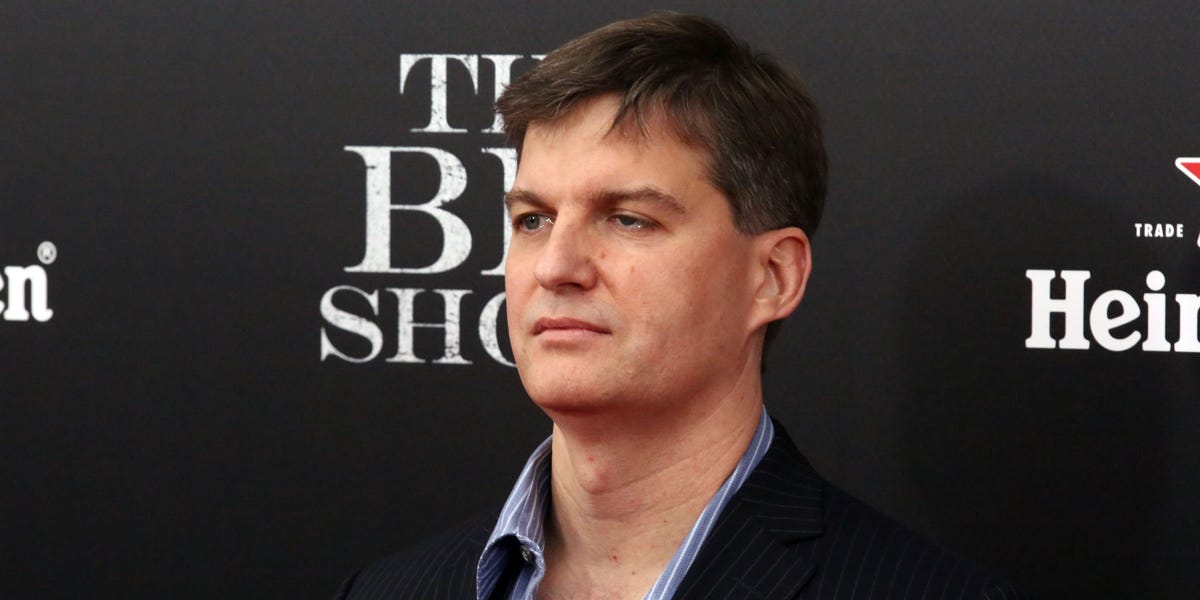
“The Big Short” investor Michael Burry just launched a new Substack called Cassandra Unchained, after recently de-registering Scion Asset Management from the SEC. One of his first posts takes aim at Nvidia and the topic of the wider AI “bubble.”

Earlier this month, Burry teased on X that he’d be “on to much better things” on November 25. Exactly where his Substack — which he unveiled last night with letters recalling his past warnings, from shorting Amazon in 2000 to Greenspan brushing off a housing bubble in 2005 — fits into that remains to be seen.

The post getting the most attention so far lays out why he sees the AI boom as a bubble rooted in “supply-side gluttony,” Business Insider reports. Burry argues that today’s AI cycle mirrors the dot-com period, when markets were also led by highly profitable giants — the so-called “Four Horsemen” (Microsoft, Intel, Dell, Cisco). The problem back then, according to Burry, was “catastrophically overbuilt supply and nowhere near enough demand,” a dynamic that’s “just not so different this time,” with Microsoft, Google, Meta, Amazon, and Oracle, plus startups like OpenAI, driving massive build-outs that may outstrip real demand.

Burry singles out Nvidia as the modern Cisco, the company at the center of the 2000 dot-com bubble that eventually plunged 78% in the crash. In a recent X post, he also separately accused major tech firms of understating depreciation on their computing hardware, saying it “artificially boosts earnings.”
Earlier this month, Burry teased on X that he’d be “on to much better things” on November 25. Exactly where his Substack — which he unveiled last night with letters recalling his past warnings, from shorting Amazon in 2000 to Greenspan brushing off a housing bubble in 2005 — fits into that remains to be seen.

The post getting the most attention so far lays out why he sees the AI boom as a bubble rooted in “supply-side gluttony,” Business Insider reports. Burry argues that today’s AI cycle mirrors the dot-com period, when markets were also led by highly profitable giants — the so-called “Four Horsemen” (Microsoft, Intel, Dell, Cisco). The problem back then, according to Burry, was “catastrophically overbuilt supply and nowhere near enough demand,” a dynamic that’s “just not so different this time,” with Microsoft, Google, Meta, Amazon, and Oracle, plus startups like OpenAI, driving massive build-outs that may outstrip real demand.

Burry singles out Nvidia as the modern Cisco, the company at the center of the 2000 dot-com bubble that eventually plunged 78% in the crash. In a recent X post, he also separately accused major tech firms of understating depreciation on their computing hardware, saying it “artificially boosts earnings.”

More Markets

See all Markets
Netflix's Upfront 2025

Netflix sinks on lower-than-expected earnings forecast

Netflix’s report dropped on the same day it officially went all-cash in its bid for Warner Bros. Discovery.

markets

United Airlines rallies after Q4 earnings and Q1 profit guidance top estimates

Shares of United Airlines are rising after the bell on Tuesday, following the release of the carrier’s fourth-quarter and full-year earnings report.

United posted adjusted earnings per share of $3.10 in Q4, above the $2.92 per share expected by Wall Street analysts polled by Bloomberg. Sales of $15.4 billion were roughly in line with the consensus estimate.

The airline also:

  • Forecast full-year earnings per share between $12 and $14, bracketing Wall Street’s call for $13.04. For Q1, management sees EPS between $1.00 and $1.50, the midpoint of which is above the $1.16 expected by Wall Street.

  • Booked $13.93 billion in passenger revenue on the quarter, up nearly 5% year over year.

“Strong revenue momentum has continued into 2026,” according the company’s press release. “The week ending January 4th was the highest flown revenue week in United history, and the week ending January 11th was the highest ticketing week and the highest week for business sales in United history.”

UAL’s premium ticket revenue climbed 9% compared to a 7% increase in basic economy revenue. The “K-shaped economy” has become increasingly visible in travel trends at major US airlines. Last week, Delta’s revenue from first-class and business passengers eclipsed its main cabin revenue for the first time.

President Trump Delivers An Announcement From The Oval Office

Pharma largely unfazed as Greenland tariffs roil markets

Drugmakers, which have spent the past six months reaching tariff deals with Trump, seem to expect some immunity from a new batch of tariffs on European countries.

markets

POET Technologies nears multiyear high on strong call demand after flagship product wins award

POET Technologies is surging on heavy volumes and high call demand after announcing that it won a Product Innovation Award at China’s Infostone awards.

The honor went to the optical communications company’s flagship product, the Teralight, which uses light to move data between chips.

“Unveiled less than a year ago at the 2025 OFC Conference, POET Teralight has driven commercial interest in the Company because of its highly integrated design and complete optical system-on-chip architecture that simplifies module development,” per the press release.

This award may be the latest excuse to buy the stock, which is up over 40% year to date.

Call activity is elevated, with nearly 37,000 having changed hands as of 10:55 a.m. ET, well above the 20-day average of 28,030 for a full session. Shares are approaching their multi-year high of $9.41.

Latest Stories

Sherwood Media, LLC produces fresh and unique perspectives on topical financial news and is a fully owned subsidiary of Robinhood Markets, Inc., and any views expressed here do not necessarily reflect the views of any other Robinhood affiliate, including Robinhood Markets, Inc., Robinhood Financial LLC, Robinhood Securities, LLC, Robinhood Crypto, LLC, or Robinhood Money, LLC.