
Markets
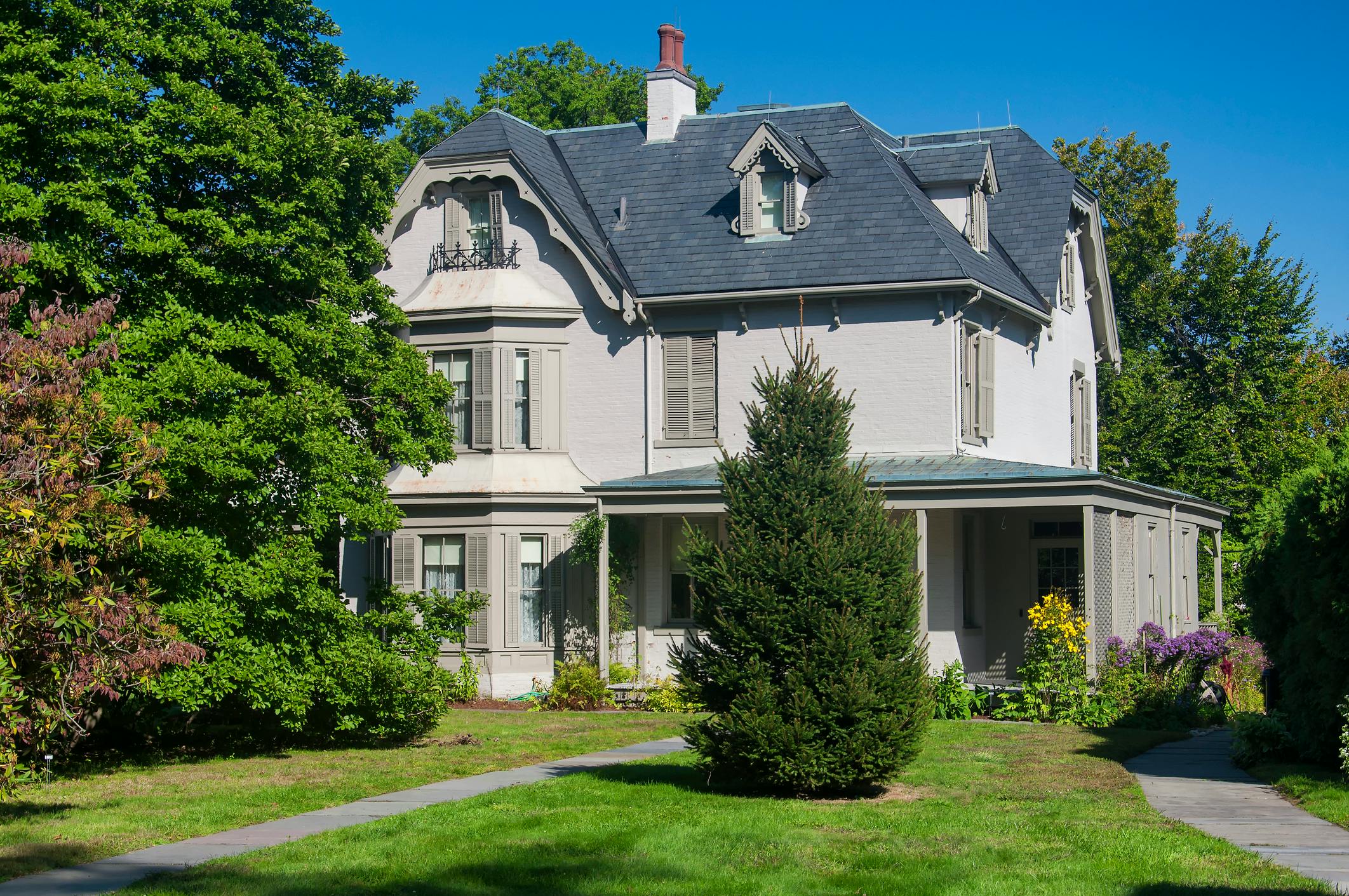
historic harriet beecher stowe birthplace
The historic landmark Harriet Beecher Stowe home in Hartford, Connecticut, where prices have risen sharply in the last year (Getty Images)

Home prices in more affordable cities are rising, while America’s most expensive metros dip

The market’s rebalancing, as sellers delist at a record pace.

America’s housing market is a tale of two types of city right now. In a reversal of longer trends, prices are rising in cheaper cities and dropping in America’s most expensive metros, per a new report from Realtor.com, as cost-conscious buyers look for bargains and disappointed sellers pull their listings.

Cruel summer... and winter?

Indeed, Realtor.com reported an “unusually high rate” of delistings in October, up 45.5% year to date — way above seasonal norms and affirming 2025 as the highest delisting year since the company started tracking the rates three years ago. Roughly 6% of all active listings have been taken off the market each month since June, forming a trend that’s “not typically seen outside of December or January,” when the market historically slows down the most.

With housing inventory still growing, demand still slow, millions of homeowners locked in to their mortgages, and houses staying longer on the market, the report sees delisting as a way for sellers to “reassert control” rather than cutting prices or letting their properties linger.

In such a high-rate, high-price environment, many buyers aren’t feeling much better. As a result, some are shifting into what Realtor.com calls the “refuge market.” That has been a boon for the market in traditionally affordable cities, with many seeing double-digit price-per-square foot growth since 2022. Some have seen even more, with Cleveland and Milwaukee notching growth of 20% and 21%, respectively.

At the top end of the spectrum, a little bit of air is finally coming out of the market. In America’s most expensive metro area tracked by Realtor.com, San Jose-Sunnyvale-Santa Clara, prices are down 4% year on year — but at $1.3 million, the typical property there still isn’t exactly cheap.


More Markets

See all Markets
markets

AI “bottleneck” stocks are the big winners halfway through a tumultuous week

Memory stocks and chip-machinery companies are bouncing Wednesday, following a strong Oracle earnings report that bolstered confidence in the durability of the AI datacenter build out.

In fact, Sandisk is the top performer of the S&P 500 so far this week, rising more than 21% from Friday’s close, as of shortly after 2 p.m. ET. Memory chip maker Micron is second in line, up more than 13% in weekly gains, and hard disk drive maker Western Digital is also getting a lift.

Other big winners so far this week are some of the so-called semicap shares — makers of the ultraprecise machines that turn silicon into actual semiconductors — with Lam Research and KLA Corp both racking up gains of about 10% on the week. Applied Materials is up about 8% this week.

Thematically speaking, both memory stocks like Sandisk and Micron, and semicap shares like KLA, have been part of the “buy-the-bottleneck” trade, in which investors buy companies they believe sit at key pinch points in the AI supply chain and therefore have pretty tremendous pricing power. Through that lens, the stocks’ bounce might reflect some additional excitement about the durability of the data center boom after Oracle’s results, which included a larger-than-expected capex number as well as sales guidances that was higher than Wall Street was forecasting.

But the bounce also may be the less-interesting market phenomenon of mean reversion rearing its head, as these stocks were also some of the most beaten down in the S&P 500 last week, when Sandisk lost 17% and Lam lost about 15%, for example. So, some snapback may merely be a market reflex.

Other big winners so far this week are some of the so-called semicap shares — makers of the ultraprecise machines that turn silicon into actual semiconductors — with Lam Research and KLA Corp both racking up gains of about 10% on the week. Applied Materials is up about 8% this week.

Thematically speaking, both memory stocks like Sandisk and Micron, and semicap shares like KLA, have been part of the “buy-the-bottleneck” trade, in which investors buy companies they believe sit at key pinch points in the AI supply chain and therefore have pretty tremendous pricing power. Through that lens, the stocks’ bounce might reflect some additional excitement about the durability of the data center boom after Oracle’s results, which included a larger-than-expected capex number as well as sales guidances that was higher than Wall Street was forecasting.

But the bounce also may be the less-interesting market phenomenon of mean reversion rearing its head, as these stocks were also some of the most beaten down in the S&P 500 last week, when Sandisk lost 17% and Lam lost about 15%, for example. So, some snapback may merely be a market reflex.

markets

Papa John’s spikes following report of a $47-per-share take-private offer from Qatari investment fund Irth Capital

A few weeks after announcing it would close 300 stores by the end of next year, Papa John’s is drawing fresh take-private interest from Irth Capital, an investment fund backed by a member of the Qatari royal family.

Papa John’s shares were up 19% on Wednesday afternoon, on pace for their best day since February 2025.

According to the Wall Street Journal, Irth is offering $47 per share for PZZA, valuing the company at about $1.5 billion. The fund currently holds a roughly 10% stake in Papa John’s, according to the report.

Irth has tried to take Papa John’s private before, offering $60 per share in a joint bid with Apollo Global in June last year. In October, Apollo Global again offered to take the company private at $64 per share. That offer was later withdrawn.

Broadly, the pizza category is being increasingly dominated by Domino’s, which opened 700 stores globally last year and has a market cap nine times greater than Irth’s latest reported offer for Papa John’s.

According to the Wall Street Journal, Irth is offering $47 per share for PZZA, valuing the company at about $1.5 billion. The fund currently holds a roughly 10% stake in Papa John’s, according to the report.

Irth has tried to take Papa John’s private before, offering $60 per share in a joint bid with Apollo Global in June last year. In October, Apollo Global again offered to take the company private at $64 per share. That offer was later withdrawn.

Broadly, the pizza category is being increasingly dominated by Domino’s, which opened 700 stores globally last year and has a market cap nine times greater than Irth’s latest reported offer for Papa John’s.

Latest Stories

Sherwood Media, LLC produces fresh and unique perspectives on topical financial news and is a fully owned subsidiary of Robinhood Markets, Inc., and any views expressed here do not necessarily reflect the views of any other Robinhood affiliate, including Robinhood Markets, Inc., Robinhood Financial LLC, Robinhood Securities, LLC, Robinhood Crypto, LLC, or Robinhood Money, LLC.