

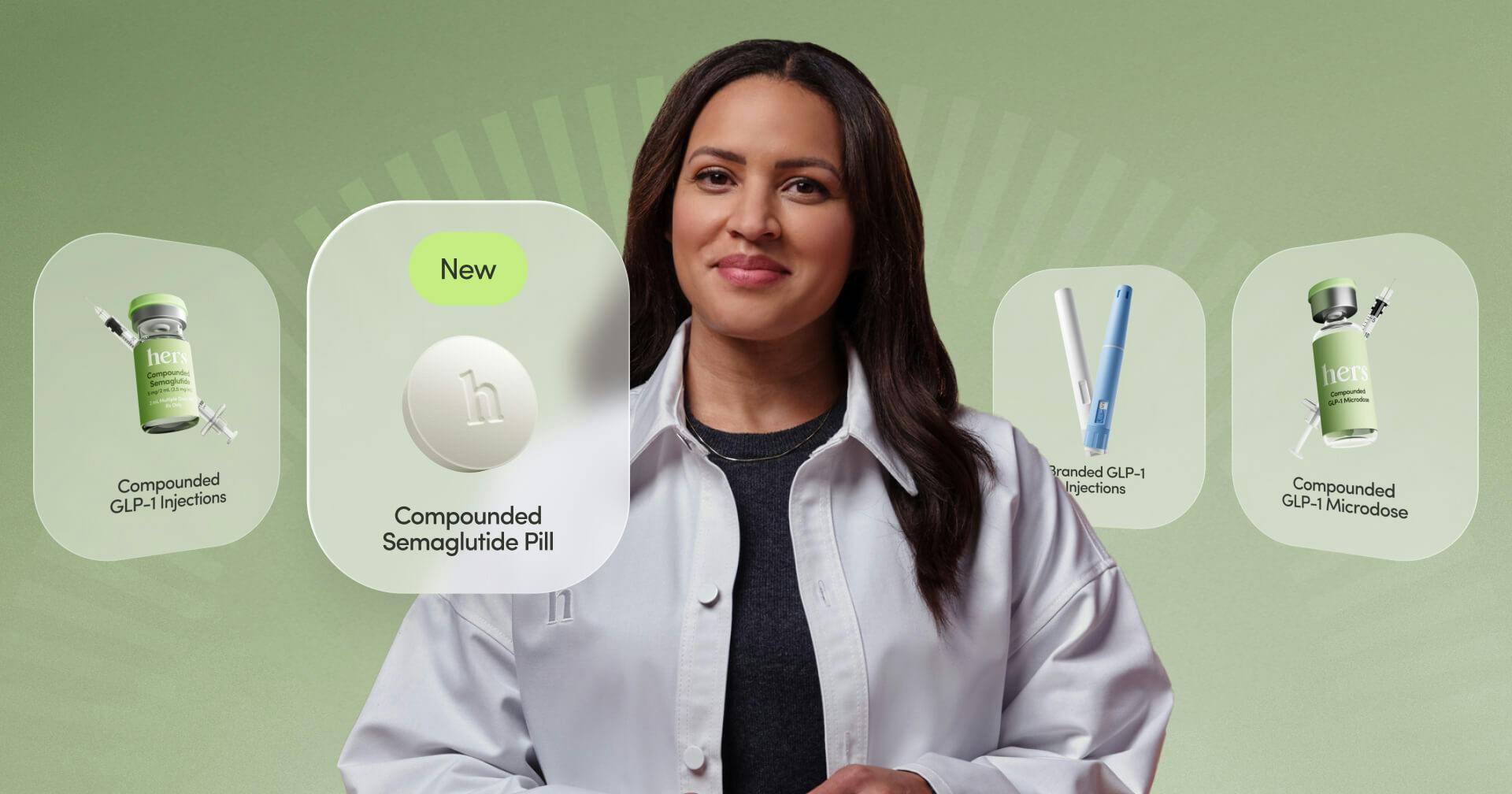
Hims to offer copies of Wegovy pill at $49 a month for starting dose, Novo threatens legal action
Novo said in a statement that it “will take legal and regulatory action to protect patients, our intellectual property and the integrity of the US gold-standard drug approval framework.”
Hims & Hers will offer copies of Novo Nordisk’s Wegovy pill at $49 for a starting dose, the company announced Thursday, a sign that the telehealth giant is doubling down on copycat versions of blockbuster weight-loss drugs over forging partnerships with Big Pharma like its peers.
Hims’ product is $100 less than the initial price consumers would pay if buying directly from Novo. For a five-month subscription, patients pay $49 for the first month’s starting dose, then $99 per month, versus the $199 Novo charges. The drugmaker said it “will take legal and regulatory action.”
The news was first reported by Reuters. Hims rose more than 10% in early trading after falling for several days in a row, but gave back those gains and then some by midday. Novo, which has already fallen about 20% since giving a gloomy sales guidance on Tuesday, fell further.
Eli Lilly, Novo’s top competitor, which said yesterday that it expects sales to boom in 2026, also fell in Thursday trading, a sign investors are concerned about Hims’ new offering gaining market share at Lilly’s expense, or that Lilly itself might not be immune to copycat versions of its drugs.
“Billion-dollar question”
Hims’ announcement came right before Novo was scheduled to have a call with analysts. “You’re wasting $49, in my opinion,” Novo CEO Mike Doustdar said in that call.
Novo has a patent on its delivery method for its Wegovy pill, which protects the active ingredient in the pill during digestion. A Hims spokesperson told Sherwood News that its pill uses “liposomal technology that is intended to support absorption.”
The Wegovy pill has has to be taken on an empty stomach followed by a 30-minute fast for it to be absorbed. It is unclear if this is also the case for the version Hims is selling. Hims’ pharmacy partner, Strive, did not immediately respond to a request for comment. Unlike branded medications, compounded products don’t undergo clinical trials and are not evaluated for safety and efficacy by the FDA.
In a statement, Novo accused Hims of “illegal mass compounding that poses a significant risk to patient safety” and said it “will take legal and regulatory action to protect patients, our intellectual property and the integrity of the US gold-standard drug approval framework.”
“This is another example of Hims & Hers’ historic behaviour of duping the American public with knock-off GLP-1 products, and the FDA has previously warned them about their deceptive advertising of GLP-1 knock-offs,” a spokesperson said.
Hims characterized Novo’s response as another attempt to demonize more affordable options. “This narrative is as predictable as it is outdated and false,” the company wrote in a post on X.
Michael Botta, president and cofounder of Sesame, a telehealth platform that partners with Novo, noted it’s much harder to personalize pills — which are pressed in large batches — than injectables, which can be taken in various doses from the same vials. He also said it’s “hard to imagine how this can be anywhere near as effective with the tolerability of Wegovy pill.”
“On the delivery method — that’s the billion-dollar question,” Botta said, referring to how the active ingredient is protected during the digestive process. “Novo has spent billions on getting it right, and it’s not easy.”
Novo and Hims have sparred before
The announcement comes after the two companies had an epic falling-out last year.
Hims and other telehealth companies began selling copies of Novo’s injectable weight-loss drug in 2024 while it was in a shortage. Even after the shortage ended, Hims continued to sell copies it says are “personalized” for patients. Novo has expressed frustration that regulators have not cracked down on this legal loophole, and it has sued smaller players doing this, though not Hims.
In June, Novo abruptly ended its short-lived deal to offer its weight-loss shot on Hims and accused the company of “illegal mass compounding and deceptive marketing.” The drugmaker reportedly expected Hims to stop selling copycat versions if it were to carry the FDA-approved, brand-name product.
“We’ve seen this cycle play out repeatedly: branded manufacturers raise concerns, regulators move slowly, and compounders move quickly to meet demand in the gray areas of the market,” said Michael Schnell, consumer health expert at West Monroe. “Until there is clearer enforcement or new rules, that dynamic is unlikely to change.”
Hims CEO Andrew Dudum told analysts on its most recent earnings call in November that it was again in talks with Novo to potentially reforge a deal. That looks increasingly unlikely after today’s announcement.
Novo’s Wegovy pill is the first oral GLP-1 for weight loss to come to market. The drugmaker has been pushing its Wegovy pill through Hims’ competitors, and early signs show uptake is strong and predominantly coming from people who have never taken a GLP-1 before versus those switching from injections.
Despite this, the company said on Tuesday that it expects sales to take a hit from growing competition from other drugmakers. Its top rival, Eli Lilly, is expected to release its own GLP-1 pill in April.




