Markets
US-AVIATION-BOEING
(Jenniger Buchanan/Getty Images)

Boeing turns cash flow positive for the first time since its door plug blowout

But its loss widened due to a steep charge related to a 777X certification delay.

Boeing’s uneven recovery from a dismal 2024 continues, with the plane maker reporting third-quarter earnings results on Wednesday morning.

Shares whipsawed in premarket trading.

The company posted an adjusted loss of $7.47 per share, significantly deeper than Wall Street estimates of a loss of $4.44 per share. According to Boeing, the loss primarily reflects a steep charge from the certification delay of the frequently delayed 777X, which is already six years behind its original timeline. A pretax earnings charge of $4.9 billion on the program deepened this quarter’s loss by $6.45 per share, Boeing said.

The company also:

  • Booked $23.3 billion in revenue, up 30% from the same period last year and above expectations of $22.3 billion.

  • Generated $238 million in free cash flow, beating the $884 million loss expected by analysts polled by Bloomberg. Last year, Boeing burned through $14.3 billion in cash. This is Boeing’s first positive free cash flow since Q4 2023.

  • Reported a growing backlog, up 20% from the end of last year to $636 billion. According to Jefferies, about 28% of the backlog is earmarked for Asia.

The commercial airplanes unit posted $11.1 billion in revenue, up 49% from the same quarter last year.

Boeing’s deliveries have improved this year, boosting Wall Street optimism after the FAA lifted the cap on 737 Max production from 38 to 42 aircraft per month. Earlier this month, Boeing said it had delivered 440 commercial planes through September. That’s more than 2024’s full-year total of 348 planes, but less than the 568 planes Boeing delivered through September in 2018 before deadly 737 Max crashes rocked the company. Rival Airbus said it’s delivered 507 jets through September this year.

Adding some wind beneath Boeing’s wings this year are several multibillion-dollar orders from foreign countries, announced as part of President Trump’s trade deals. The company is said to be in talks to sell up to 500 planes to China — a deal that the US Ambassador to China has said is “very important to the president.”

Boeing shares have climbed about 26% year to date as of Tuesday’s close, outpacing the S&P 500.

More Markets

See all Markets
markets

Oil-sensitive stocks and companies relying on middle-class spending are getting crushed

Sometimes there’s a singular story driving the markets. With US benchmark crude oil prices topping $100 a barrel, Monday is one of those days.

Oil-sensitive stocks are getting clobbered, with airlines foremost among them. JetBlue, United Airlines, and Alaska Air are all tumbling.

But the pain is more widespread than that, with industries where oil prices are a major input, such as chemical manufacturers (Eastman Chemical), industrial machinery makers (Illinois Tool Works), and building products (Owens-Corning), also getting shellacked.

More ominous — economically speaking — is the performance of companies catering to America’s middle class, including Macy’s, Kohl’s, Best Buy, and Texas Roadhouse. The drop suggests that investors and traders expect the rising cost of fuel to eat away at disposable income, potentially setting the stage for an economic slowdown.

Some of the worst off on Monday are companies that are both fuel-sensitive and heavily reliant on middle-class consumers — a double whammy.

Cases in point: Carnival is getting creamed, and Clorox, a company that depends on slightly better-off Americans shelling out for its brand-name products, is also getting pummeled.

But the pain is more widespread than that, with industries where oil prices are a major input, such as chemical manufacturers (Eastman Chemical), industrial machinery makers (Illinois Tool Works), and building products (Owens-Corning), also getting shellacked.

More ominous — economically speaking — is the performance of companies catering to America’s middle class, including Macy’s, Kohl’s, Best Buy, and Texas Roadhouse. The drop suggests that investors and traders expect the rising cost of fuel to eat away at disposable income, potentially setting the stage for an economic slowdown.

Some of the worst off on Monday are companies that are both fuel-sensitive and heavily reliant on middle-class consumers — a double whammy.

Cases in point: Carnival is getting creamed, and Clorox, a company that depends on slightly better-off Americans shelling out for its brand-name products, is also getting pummeled.

Retro outdoor sign to save money on gas, Save $ on fuel

Where in the US have gas prices jumped the most since the US attack on Iran?

Drivers in some states are seeing pump prices rise much faster than others.

markets

Live Nation reportedly reaches settlement with DOJ over Ticketmaster

Live Nation is jumping in premarket trading on Monday after reports that it has reached a settlement with the Department of Justice over an antitrust lawsuit that could have forced the company to sell Ticketmaster.

After Bloomberg reported that the company was close to a settlement, The Wall Street Journal early on Monday reported that a deal had indeed been reached with an agreement that crucially spares the entertainment giant from breaking up with Ticketmaster, in return for making it easier for other promoters to compete in Live Nation venues.

The prompt agreement, with negotiations presumably intensifying since the trial kicked off on March 2, is expected to get relief to consumers faster than Live Nation going through a trial, per a Justice Department official cited by the WSJ.

Separately, Politico reported that the settlement would include $200 million in damages to participating states — a tiny fraction of Live Nation’s more than $36 billion market cap. Politico also expects Live Nation to divest more than 10 amphitheaters and cap Ticketmaster’s service fees at its amphitheaters under the agreement.

The settlement, which still requires approval from a judge, is set to be made public on Monday, and has seen about 10 states agreeing to the new framework, according to people familiar with the matter. Other state attorneys general may continue to separately litigate.

After Bloomberg reported that the company was close to a settlement, The Wall Street Journal early on Monday reported that a deal had indeed been reached with an agreement that crucially spares the entertainment giant from breaking up with Ticketmaster, in return for making it easier for other promoters to compete in Live Nation venues.

The prompt agreement, with negotiations presumably intensifying since the trial kicked off on March 2, is expected to get relief to consumers faster than Live Nation going through a trial, per a Justice Department official cited by the WSJ.

Separately, Politico reported that the settlement would include $200 million in damages to participating states — a tiny fraction of Live Nation’s more than $36 billion market cap. Politico also expects Live Nation to divest more than 10 amphitheaters and cap Ticketmaster’s service fees at its amphitheaters under the agreement.

The settlement, which still requires approval from a judge, is set to be made public on Monday, and has seen about 10 states agreeing to the new framework, according to people familiar with the matter. Other state attorneys general may continue to separately litigate.

markets

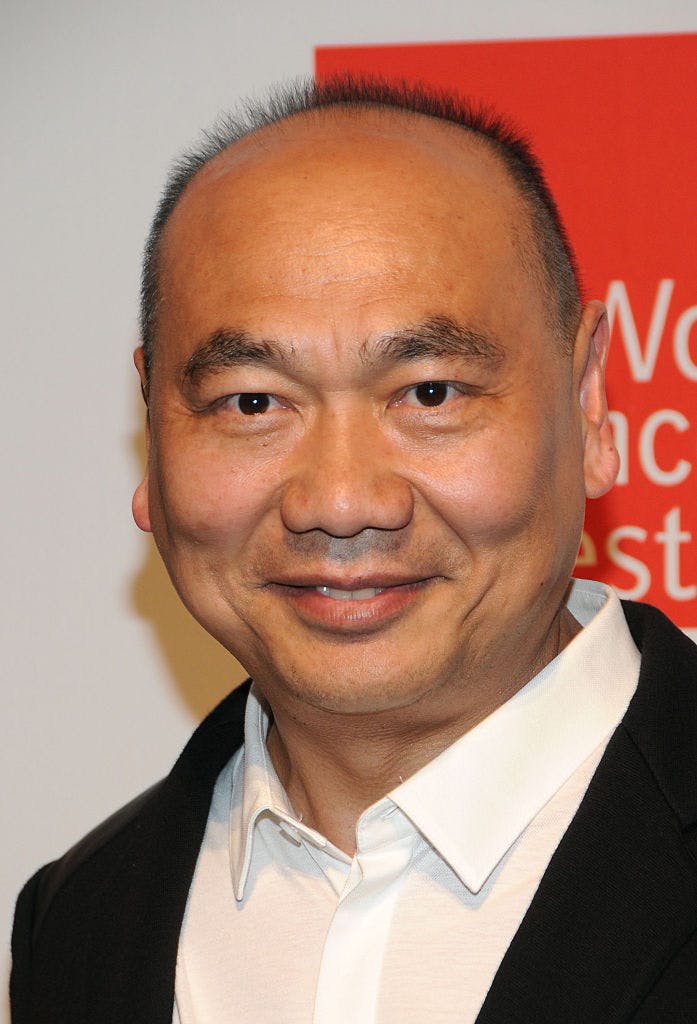
Leo KoGuan, billionaire Tesla bull, tweets that he purchased another 1 million shares of Nvidia

Billionaire software entrepreneur, philosopher, and now major Tesla and Nvidia bull Leo KoGuan tweeted that he bought another 1 million shares of the chip designer.

“Hopefully, I can contribute a little to calm the nervous market. Good luck all,” he wrote in his message.

Unless KoGuan can work some magic in global oil markets or conflict resolution in the Middle East, however, “a little” may be all he’s able to contribute in favor of market tranquility.

Stocks, including Nvidia, are modestly positive this morning despite the spike in oil prices weighing on major indexes.

Unless KoGuan can work some magic in global oil markets or conflict resolution in the Middle East, however, “a little” may be all he’s able to contribute in favor of market tranquility.

Stocks, including Nvidia, are modestly positive this morning despite the spike in oil prices weighing on major indexes.

Latest Stories

Sherwood Media, LLC produces fresh and unique perspectives on topical financial news and is a fully owned subsidiary of Robinhood Markets, Inc., and any views expressed here do not necessarily reflect the views of any other Robinhood affiliate, including Robinhood Markets, Inc., Robinhood Financial LLC, Robinhood Securities, LLC, Robinhood Crypto, LLC, or Robinhood Money, LLC.