Markets
Bill Ackman
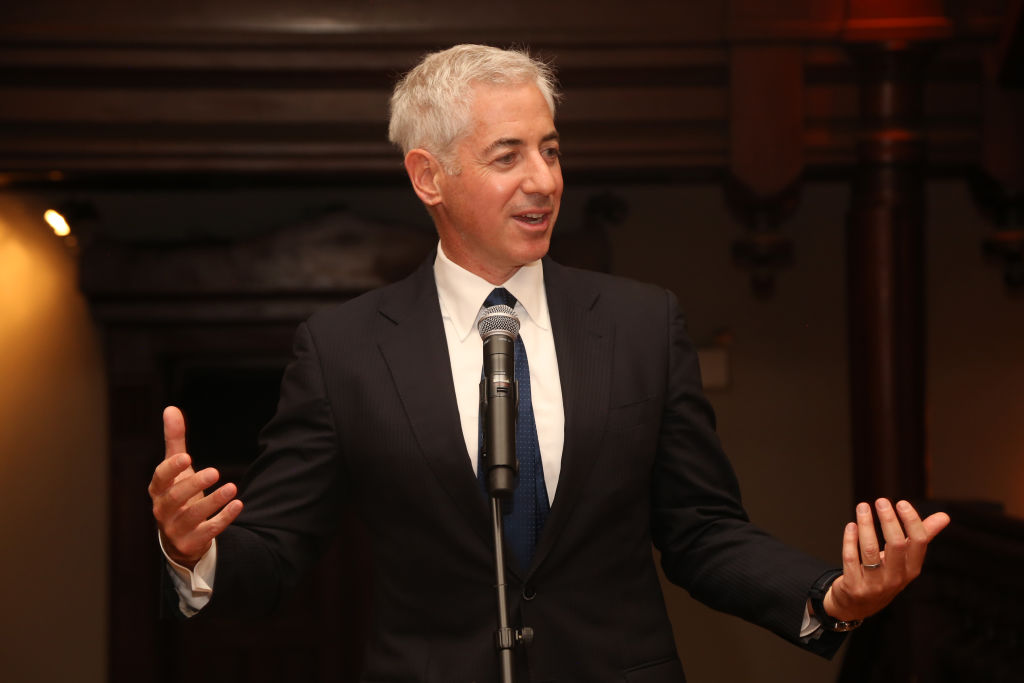
Bill Ackman (Sylvain Gaboury, Patrick McMullan/Getty Images)

Bill Ackman’s pricey IPO plan

Pershing Square’s fundraising efforts need to bear fruit for this valuation to make sense

Jack Raines

Bill Ackman made headlines this morning after The Wall Street Journal reported that he is planning to take his investment fund, Pershing Square, public in late 2025 or early 2026. As a precursor to the planned IPO, Ackman is also selling a stake in the firm to investors in a funding round that will value Pershing Square at approximately $10.5B.

It’s rare for a hedge fund to IPO in the US because the US Investment Company Act of 1940 prevents investing groups from charging retail investors expensive performance fees, such as the “2 and 20” that is common for hedge funds. Hedge funds can, however, charge “qualified purchasers” (generally high-net worth clients or institutions) higher fees, which is why hedge funds are typically private.

However, Bill Ackman isn’t looking to take a “hedge fund” public. To quote the Journal piece (emphasis ours):

Pershing Square has told potential investors to compare it to asset managers like Brookfield Asset Management and Blue Owl Capital rather than hedge funds. Brookfield’s market value is about $15 billion; it has more than $925 billion in assets under management. Blue Owl’s market value is about $28 billion and it manages more than $174 billion.

Basically, Ackman isn’t looking to take a specific investment vehicle public. He wants to IPO the holding company that happens to own several investment vehicles, which… kind of makes sense?

As of their February 2024 annual report, Pershing Square had $18.2B in assets under management (AUM), consisting of the following:

  • $14.6B in a closed-end Europe fund (PSH), which is listed on the Amsterdam and London exchanges

  • $1.6B in an investment vehicle that it used to purchase a stake of United Music Group

  • $2B in traditional hedge funds

Pershing listed its largest fund in the European markets in 2014 to skirt US regulations regarding fees: while they couldn’t charge high performance fees on a publicly traded US-listed fund, they can (and do) charge a 1.5% management fee and a 16% performance fee on their European fund.

The planned IPO would sell stakes in the parent entity controlling the funds, which wouldn’t charge high management fees, rather than a specific investment vehicle. While The Wall Street Journal reported that the $10.5B valuation looks high, (for context, Blue Owl Capital is worth $28B with $174B in AUM), the firm justified its valuation by explaining that it will soon manage much more money. From the Journal piece:

The firm justified its rich valuation to investors by explaining that it expects to manage considerably more money, and eventually earn more in fees, after Pershing Square U.S.A. and other funds launch, people familiar with the matter said.

In February, Ackman announced plans to launch a $10 billion US-based closed-end fund which, importantly, would not charge a performance fee, and just a flat 2% management fee, keeping it within US regulations. 

Additionally, Pershing also received SEC approval to raise a multi-billion dollar “special-purpose acquisition rights company,” or SPARC, to take a private company public, which would further increase its AUM.

Why is Ackman now prioritizing the American market after a decade with most of his firm’s capital in Europe? One reason is that Pershing’s Europe-listed fund is trading at a ~27% discount to its net asset value (NAV), meaning that the price per share of its fund is worth 27% less than the value of its underlying assets. If Pershing’s European fund traded at a premium to its NAV, Pershing could issue new shares and raise money until the price per share matched the underlying assets. With its share price at a discount, however, any capital raise in Europe would be below the fund’s intrinsic value.

While Pershing’s $10 billion valuation feels high for the firm right now, that number could look more reasonable in the future depending on the company’s ability to raise funds for its new US closed-end fund, its SPARC, and any other ventures that Ackman may have up his sleeve.

More Markets

See all Markets
markets

DraftKings drops after issuing downbeat 2026 sales, profit forecasts

DraftKings plunged after the sports betting company gave downbeat guidance for the current year.

Shares were down 15% in recent after-hours trading.

It forecast: 

  • Revenue between $6.5 billion and $6.9 billion, compared with analysts’ estimates of $7.29 billion, according to FactSet. 

  • Adjusted EBITDA of $700 million to $900 million, compared with estimates of $981 million.

For the fourth quarter, DraftKings posted: 

  • Revenue of $1.99 billion, in line with Wall Street’s $1.99 billion expectation 

  • Earnings per share of $0.25, compared with a consensus estimate of $0.09. 

It forecast: 

  • Revenue between $6.5 billion and $6.9 billion, compared with analysts’ estimates of $7.29 billion, according to FactSet. 

  • Adjusted EBITDA of $700 million to $900 million, compared with estimates of $981 million.

For the fourth quarter, DraftKings posted: 

  • Revenue of $1.99 billion, in line with Wall Street’s $1.99 billion expectation 

  • Earnings per share of $0.25, compared with a consensus estimate of $0.09. 

markets

Rivian climbs after posting better-than-expected Q4 results; sees R2 SUV hitting the market in Q2

EV maker Rivian reported its fourth-quarter and full-year earnings results after markets closed on Thursday. Its shares climbed 13% in after-hours trading.

In the fourth quarter, which coincided with the end of federal EV tax credits in the US, Rivian booked $1.29 billion in revenue, down 26% year over year but above analysts’ expectations of $1.26 billion. The company posted an adjusted loss of $0.54 per share in Q4, compared to the expected loss of $0.68 per share.

Rivian forecast full-year adjusted losses in the range of $1.8 billion to $2.1 billion, compared to the $1.75 billion loss expected by Wall Street.

2026 is set to be a big year for the company, with its upcoming $45,000 R2 SUV planned to begin deliveries in the second quarter. Rivian issued full-year delivery guidance of between 62,000 and 67,000 vehicles, compared to Wall Street’s expectations of 65,700. Analysts polled by FactSet expect 14,700 of those 2026 deliveries to be R2s. Last year, Rivian delivered 42,247 vehicles.

“It’s incredibly exciting to see the early strong reviews of the R2 pre-production builds, and we can’t wait to get them to our customers next quarter,” CEO RJ Scaringe said.

markets

Arista Networks soars as it beats on Q4 EPS and revenue, gives upbeat sales guidance

Arista Networks, which sells equipment and software used to run and monitor data center networks, reported better-than-expected fourth-quarter earnings and sales after the close of trading on Thursday.

Arista shares were up about 9% in the after-hours session.

Here’s what the switch and router maker reported:

  • Adjusted earnings per share of $0.82 vs. Wall Street expectations for $0.76, according to FactSet.

  • Sales of $2.49 billion vs. an expected $2.38 billion, per FactSet data.

  • A non-GAAP Q4 gross margin, a measure of how profitable a company’s core products are to produce, of 63.4% vs. previous guidance of 62% to 63%.

  • Guidance for Q1 sales of approximately $2.6 billion vs. the $2.46 billion expected on Wall Street.

  • Guidance for a Q1 non-GAAP gross margin of between 62% and 63% vs. the 63% FactSet forecast.

markets

Coinbase posts record stablecoin revenue but falls short of expectations for Q4 sales

Shares of cryptocurrency exchange Coinbase jumped after-hours on Thursday after the company reported record stablecoin revenue, despite Q4 revenue numbers that missed Wall Street expectations. 

The stock was up 3.1% in recent trading.

  • Revenue came in at $1.78 billion vs. the $1.81 billion consensus analyst expectation, per FactSet.

  • Transaction revenue was $982.7 million vs. a $998 million forecast.

  • The company reported adjusted earnings per share of $0.66, compared with $3.37 a year earlier.

  • Stablecoin revenue hit a record $364.1 million, up 61% from the same quarter the previous year.

Earlier Thursday, Coinbase seemingly suffered an outage, saying it was “aware that customers may be unable to buy, sell, transfer on Coinbase.com at this time,” but noting that “your funds are safe.” The company said the issue was resolved just over an hour later.

Coinbase shares — which were added to the S&P 500 last May — have been crushed by the downturn in crypto this year. Through Wednesday’s close, the stock was down by more than 30% in 2026. And that was before the stock caught a double downgrade on Thursday before the report.

Latest Stories

Sherwood Media, LLC produces fresh and unique perspectives on topical financial news and is a fully owned subsidiary of Robinhood Markets, Inc., and any views expressed here do not necessarily reflect the views of any other Robinhood affiliate, including Robinhood Markets, Inc., Robinhood Financial LLC, Robinhood Securities, LLC, Robinhood Crypto, LLC, or Robinhood Money, LLC.