Markets
Oracle Wall Street Revisions
(CSA Archive/Getty Images)

Analysts revise up anything and everything they thought about Oracle

After the company’s bombshell earnings this week, Wall Street thinks Oracle’s trajectory has changed.

As the week’s trading comes to a close, Oracle’s earnings bombshell continues to be digested by Wall Street, with analysts writing up a range of estimates for the company over the coming years.

Over the last day alone, JPMorgan equity analysts upped their price target for the stock, lifting it to $270 from a relatively low $210. (That’s still a pretty big undershoot of the current consensus of nearly $330, which implies a nearly 13% gain for the stock over the next 12 to 18 months.)

Analysts at Bernstein Research, on the other hand, lifted their price target on the stock to $363 from $308, citing an “exceptional growth trajectory” for the company’s cloud business. And Barclays analysts upgraded their target to $347 from $281.

“We still sense that many investors are not fully aligned with the notion that Oracle will be a main AI beneficiary and hence, expect ongoing upside momentum for the name,” Barclays analysts wrote.

But from the looks of rising estimates across a number of metrics, Oracle has made considerable progress this week in changing its image among the investing public from an incredibly profitable — but dull as dishwater — cloud computing and business software behemoth to a major player in the AI revolution.

Following on the massive build in the company’s key RPO metric — essentially booked orders that haven’t yet turned into actual sales dollars — disclosed during the company’s results, analysts have ratcheted up their estimates of sales growth over the coming years.

They now see annual sales returning to the remarkable level of more than 40% by fiscal 2028. (It has been almost 30 years since Oracle sales growth cracked 40%, which it did in fiscal 1996.)

Earnings per share are also expected to notch records over the next three fiscal years as well, with year-over-year growth climbing to 13%, 18%, and 36% by fiscal 2028.

To be sure, it should be stressed that these are, after all, estimates — statistical expressions of the conventional wisdom on Wall Street.

That conventional wisdom could be on the money. Or untidy elements of reality could intervene and make this story a lot messier.

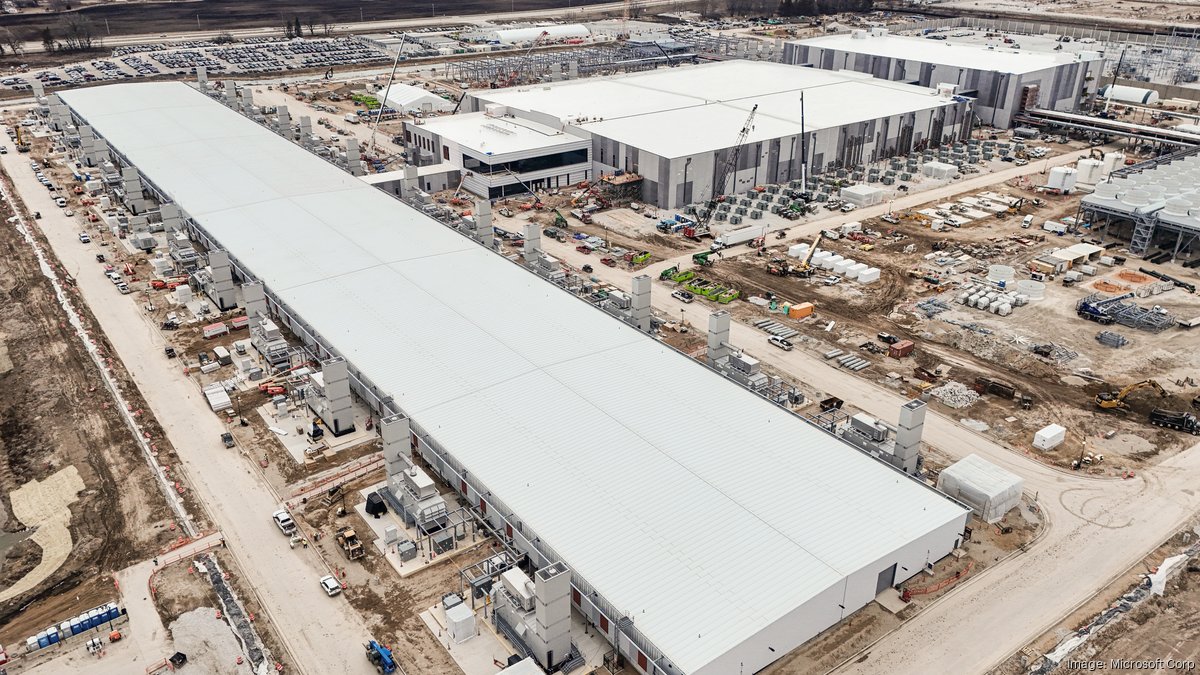
For instance, in order to collect its many billions in backlogged RPO sales the company announced this week, Oracle will have to invest billions and billions of dollars to build out the data infrastructure it needs to provide services to customers like OpenAI.

And in the near term, that’s going to eat up a flood of sales dollars coming through the door, something that Wall Street estimates also captured this week.

In Oracle’s post-earnings conference call with analysts, company CEO Safra Catz explained elegantly how interrelated the company’s capital expenditure plans are with its RPO order backlog:

“Given our RPO growth, I now expect fiscal year 2026 CapEx will be around $35 billion. As a reminder, the vast majority of our CapEx investments are for revenue-generating equipment that is going into the data centers and not from land or buildings. As we bring more capacity online, we will convert the large RPO backlog into accelerating revenue and profit growth.”

Sounds like a good plan. And judging by the share price move this week and the follow-on upgrades to Wall Street price targets and earnings and sales estimates, people think it’s likely to work.

But the history of massive investment booms — from the emergence of railroads, to Japanese real estate, to the dot-com boom and the US housing bust — suggests there is plenty of scope for these things not to go exactly as everybody expects. But for now, the party continues.


More Markets

See all Markets
markets
Luke Kawa

Microsoft is in talks to shift its custom chip business to Broadcom from Marvell, The Information reports

The Information’s profile of custom chip specialist Broadcom includes this tidbit:

“And now Microsoft is also in talks to design future chips with Broadcom, which would involve Microsoft switching its business from Marvell, another maker of custom chips, according to one person involved in the discussions.”

Shares of Marvell Technology briefly dipped into the red after this report hit the wires, but then pared that drop to trade modestly higher. The company codesigns the Maia line of ASICs for Microsoft that are custom-built for Azure. Microsoft is its second-biggest hyperscaler client, behind Amazon.

Marvell tumbled on a ho-hum earnings report earlier this week before going on to surge after CEO Matt Murphy offered a $10 billion revenue target for its upcoming fiscal year, which was above analysts’ expectations.

Perhaps this is a bit of Information fatigue, given how Microsoft was quick to deny a report from the outlet earlier this week about how the tech giant lowered its sales targets for AI products.

markets
Luke Kawa

Memory stocks soar as AI supporting cast repairs damage from steep November declines

There’s not much rhyme or reason to it, but memory stocks are ending the week with a stellar showing.

Shares of high-bandwidth memory specialist Micron, hard disk drive sellers Seagate Technology Holdings and Western Digital, and flash memory company Sandisk are all rising today.

Three of these stocks dropped about 20% in November as credit risk seeping into AI and a downturn in speculative momentum stocks weighed on the theme, with Sandisk faring the worst.

Micron, Western Digital, and Seagate have all since rebounded strongly and are about 5% or less from reclaiming all-time highs, while Sandisk has made up the least ground.

While GPUs (and, more recently, TPUs) get most of the headlines, data centers also need a boatload of memory chips that store information and feed it to those processors.

markets

Ulta soars as Q3 beat sparks flood of price target hikes

Ulta’s latest makeover is happening on Wall Street. Shares leapt Friday morning as analysts hiked their price targets after the beauty retailer topped Q3 estimates and raised its full-year outlook after the bell Thursday.

Earnings came in at $5.14 per share, handily beating analyst expectations of $4.64. Revenue also topped estimates at $2.86 billion, compared with the $2.72 billion expected. Ulta has benefited from resilient beauty spending, even as consumers pull back elsewhere and hunt more aggressively for discounts.

Ulta now expects full-year net sales of about $12.3 billion, up from a prior forecast of $12.0 billion to $12.1 billion. The retailer also lifted its earnings outlook to $25.20 to $25.50 per share, up from $23.85 to $24.30 previously. This marks Ulta’s second straight quarter of hiking its sales and profit forecast. Analysts are taking note:

  • Goldman Sachs maintained its “buy” rating and raised its price target to $642 from $584.

  • DA Davidson maintained its “buy” rating and raised its price target to $650 from $625.

  • JPMorgan maintained its “outperform” rating and raised its price target to $647 from $606.

  • Baird maintained its “outperform” rating and hiked its price target to $670 from $600.

  • Telsey Advisory maintained its “outperform” rating and raised its price target to $640 from $610.

  • Piper Sandler maintained its “outperform” rating and raised its price target to $615 from $590.

  • Canaccord Genuity maintained its “neutral” rating and raised its price target to $674 from $654.

markets

Southwest cuts its earnings outlook on lost revenue due to government shutdown

Another big four airline has put a price tag on the 43-day government shutdown.

Southwest Airlines on Friday said lower revenue due to a temporary decline in demand during the shutdown, together with higher fuel costs, will ding its annual earnings before interest and taxes by between $100 million and $300 million. The carrier lowered its full-year EBIT outlook to $500 million, down from a prior range of $600 million to $800 million.

According to Southwest’s filing, bookings have returned to previous expectations following the end of the shutdown. Its shares dipped down about 1% in premarket trading.

The carrier joins Delta Air Lines in assigning a cost to the government closure. Earlier this week, Delta said the shutdown would cost it $200 million in the fourth quarter.

Latest Stories

Sherwood Media, LLC produces fresh and unique perspectives on topical financial news and is a fully owned subsidiary of Robinhood Markets, Inc., and any views expressed here do not necessarily reflect the views of any other Robinhood affiliate, including Robinhood Markets, Inc., Robinhood Financial LLC, Robinhood Securities, LLC, Robinhood Crypto, LLC, or Robinhood Money, LLC.