

Markets
markets

Alaska Air lowers its Q1 profit forecast due to surging fuel costs

Alaska Air ticked down in premarket trading on Monday, following the carrier’s announcement that it has lowered its first-quarter profit guidance.

The airline now expects an adjusted loss per share of between $1.50 and $2 in Q1, deeper than its prior guidance range of a $0.50 to $1.50 loss per share.

Fueling the update is, what else, fuel costs. Alaska Air says that the refining margins for its cheapest jet fuel — sourced from Singapore and representing about 20% of overall supply — have spiked 400% since February, from an average of $0.45 per gallon to about $2.25 per gallon. Jet fuel refining margins have surged industrywide to 20-year highs amid the war in Iran, which in turn is sending fares higher.

Alaska said it’s seeing “encouraging revenue trends” heading into the peak summer travel season, despite severe flooding in Hawaii and reduced demand to Puerto Vallarta due to increased cartel violence.

More Markets

See all Markets
$4

US average gas prices hit $4.018 a gallon on Tuesday, crossing the $4 threshold for the first time since August 2022, according to the American Automobile Association. That’s roughly a 35% jump, or $1.04 more per gallon, since the Iran war began in late February. Diesel has surged even more sharply, rising about 45% to $5.45, raising concerns about higher shipping, grocery, and consumer goods prices.

With the Strait of Hormuz — through which roughly a fifth of global oil supply previously flowed — effectively closed, crude prices are up more than 50% since the war began, feeding quickly into pump prices across the US.

Still, regional differences remain, with drivers in California now facing nearly $5.90 a gallon for regular gasoline, followed by Hawaii ($5.50) and Washington ($5.30), while those in Oklahoma, Iowa, and Kansas pay under $3.30 a gallon.

Prices could even approach $5 nationwide if the strait remains blocked, Patrick De Haan, head of petroleum analysis at GasBuddy, told CNBC.

markets

Memory, optical, and AI-construction stocks dive as embattled SaaS stocks rebound

Memory stocks sank on Monday, continuing a sell-off that began last week with new details about a potentially more memory-efficient AI algorithm from Google Research.

Western Digital, Micron, Seagate Technology Holdings, and retail favorite Sandisk all tumbled.

Industry publication Wccftech flagged that some memory chip prices have seen a “significant drop” recently across multiple US retailers.

A new, upbeat initiation for Seagate by JPMorgan analysts — they rated it “overweight,” basically a buy, on “opportunity for significant upside” — couldn’t help Seagate shake off the slump in the broader data center trade.

Optical stocks — recent high-flyers — also got slammed, taking down Applied Optoelectronics, Corning, Lumentum, Coherent, and Ciena Corp. . The group may also under particular pressure in light of reports that Samsung is entering the silicon photonics market.

AI construction trades like Emcor, Vertiv Holdings, and Sterling Infrastructure also sank.

Meanwhile, traders seemed to be scurrying back to securely profitable software-as-a-service (SaaS) and cybersecurity stocks as a place to wait out the market mayhem.

ServiceNow, Zscaler, CrowdStrike, Salesforce, and Atlassian were all solidly in the green in midday training.

markets

Meta rallies after being named a “top pick” by Morgan Stanley

Meta is off to a strong start to the week after being named a new “top pick” of Morgan Stanley’s internet analysts.

Their case: the social media giant is cheap and commands an ever-increasing amount of eyeballs, which it’ll leverage to make money from its massive AI capex through nascent opportunities like agentic shopping and assistants.

“META sentiment has troughed due to GenAI ROIC and long-term positioning fears, and more recently macro ad market and regulatory question marks,” wrote analyst Brian Nowak. “In all, META now trades at ~15X our ’27 $36 EPS, 1 standard deviation below the long-term average, which creates a strong buying opportunity, in our view.”

Reported job cuts would also be “a bullish development” that boosts earnings, he added.

Even so, Nowak trimmed his price target on the stock to $775 from $825, which still represents upside of about 50%.

The hyperscalers have come under persistent pressure as investors remain reticent to bet that this capex binge will have a happy ending. Per The New York Times, Meta recently delayed the launch of its new model because of performance issues.

(That being said, the company’s latest earnings report did show that its ability to use AI tools to grow its top line remains impressive, even if its models aren’t best in class.)

markets

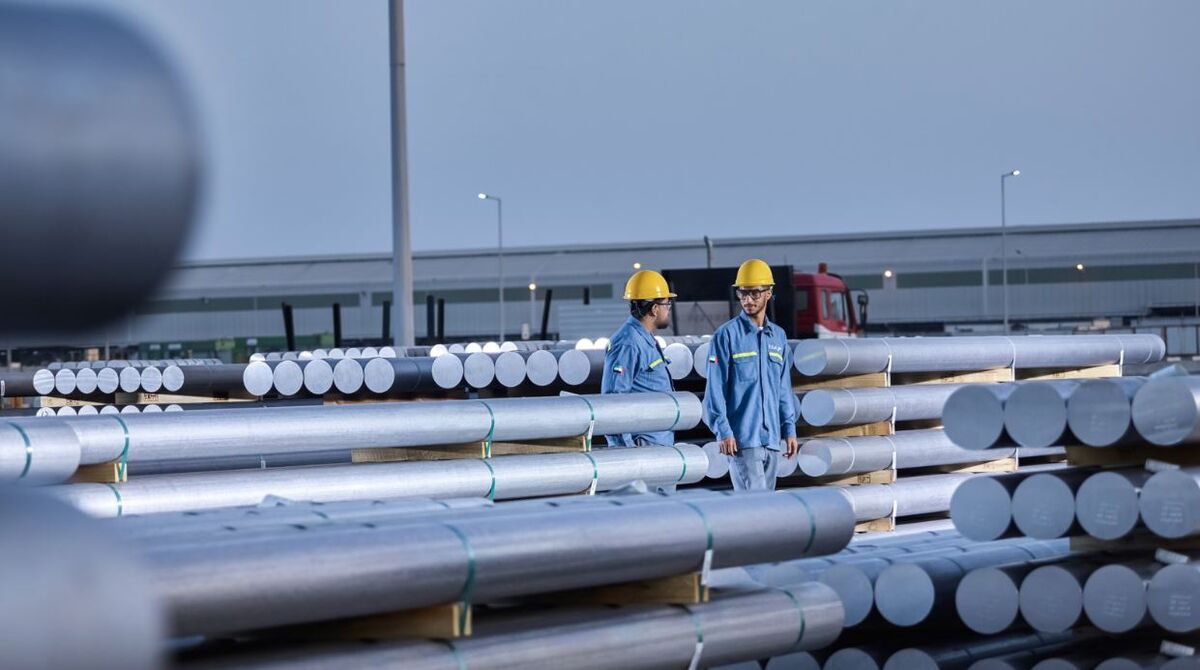
American aluminum stocks rip following strikes against Gulf’s giant smelters

Aluminum stocks soared Monday after Iran attacked major smelting operations in the Gulf region over the weekend.

Alcoa and Century Aluminum both surged Monday, after strikes Saturday hit aluminum plants in Bahrain and the United Arab Emirates. New York aluminum futures were up about 4% shortly after 11 a.m. ET.

Bloomberg reports that the Gulf is the source of roughly 9% of the world’s aluminum supply, which was already imperiled by the closure of the Strait of Hormuz.

Iran’s Revolutionary Guard Corps said the combined drone and missile attacks on the plants were justified by the aluminum producers’ links to the US military and aerospace industries in the region.

Producing aluminum is highly energy-intensive, and the Gulf has emerged as a center of the industry in recent years due to its energy assets. Emirates Global Aluminum, for example, is one of the world’s largest producers of the lightweight metal.

The attacks on the plants only add to the upward pressure on prices, as it can take months to restart closed smelters.

Bloomberg reports that the Gulf is the source of roughly 9% of the world’s aluminum supply, which was already imperiled by the closure of the Strait of Hormuz.

Iran’s Revolutionary Guard Corps said the combined drone and missile attacks on the plants were justified by the aluminum producers’ links to the US military and aerospace industries in the region.

Producing aluminum is highly energy-intensive, and the Gulf has emerged as a center of the industry in recent years due to its energy assets. Emirates Global Aluminum, for example, is one of the world’s largest producers of the lightweight metal.

The attacks on the plants only add to the upward pressure on prices, as it can take months to restart closed smelters.

Latest Stories

Sherwood Media, LLC produces fresh and unique perspectives on topical financial news and is a fully owned subsidiary of Robinhood Markets, Inc., and any views expressed here do not necessarily reflect the views of any other Robinhood affiliate, including Robinhood Markets, Inc., Robinhood Financial LLC, Robinhood Securities, LLC, Robinhood Crypto, LLC, Robinhood Derivatives, LLC, or Robinhood Money, LLC. Futures and event contracts are offered through Robinhood Derivatives, LLC.