
Culture
Blue Ozempic pens with yellow measuring tape on pink background.
Ozempic pens with yellow measuring tape (Getty Images)
THE GLUTIDE HAS TURNED

The US obesity rate keeps declining, but diabetes cases have hit a new high

New findings from a long-running Gallup study also showed a rapid increase in the number of Americans using GLP-1s.

Millie Giles

Weight-loss drugs like Ozempic have long had a significant impact on pharma companies’ financials. Now, we’re starting to see GLP-1s affecting America’s health statistics in real time.

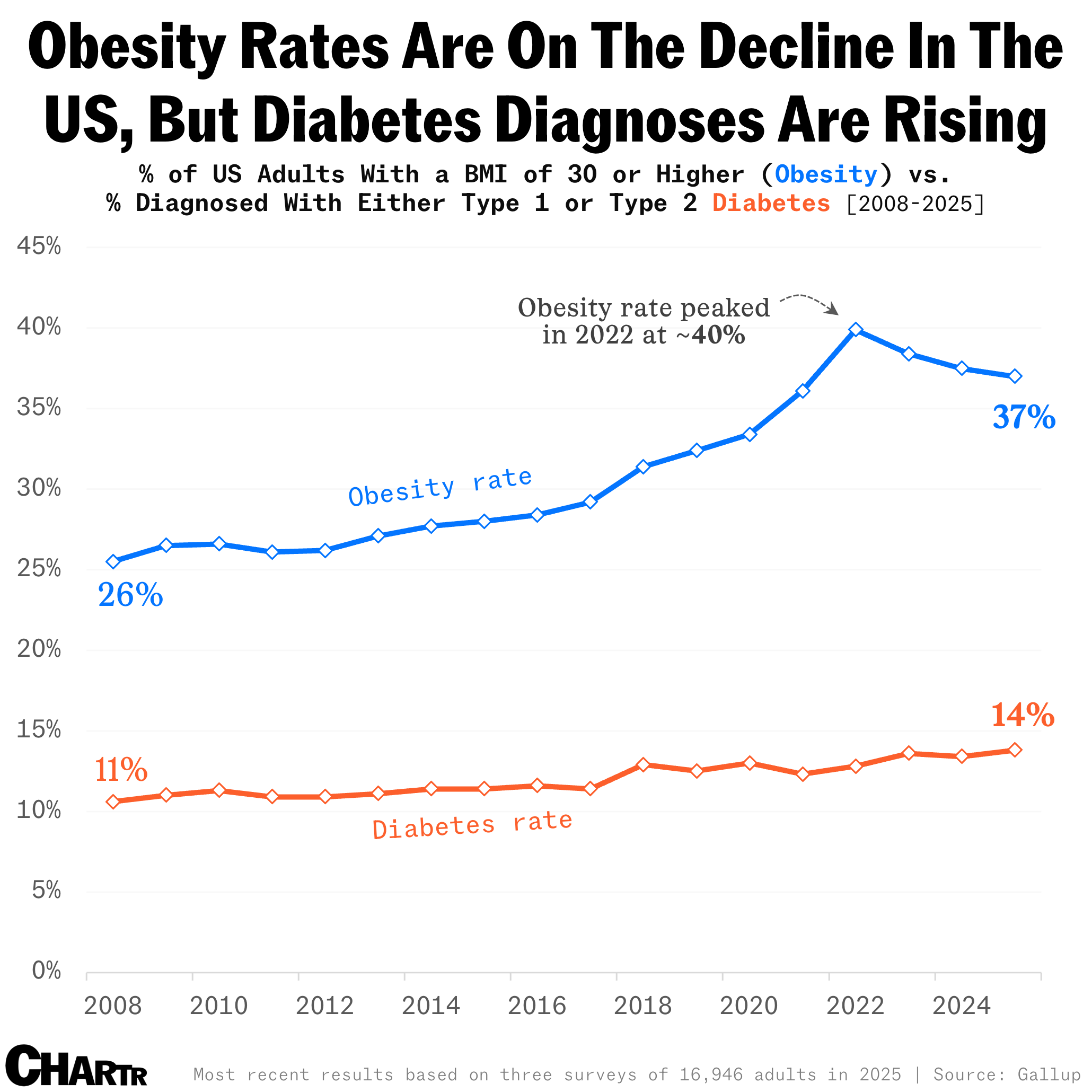
On Tuesday, Gallup published updated 2025 figures for obesity and diabetes rates, as part of its ongoing National Health and Well-Being Index. According to the study, the obesity rate among US adults has fallen to 37% in 2025 — down from the record high seen in 2022, when the share sat at 39.9%.

For context, this is the equivalent of there being approximately 7.6 million fewer obese adults (measured by the federal standard of having a BMI of 30 or higher) in America over the course of just three years.
Obesity rates Gallup
Sherwood News

This tracks with another finding: per Gallup, the share of US adults reporting using weight-loss injectable drugs, including semaglutide, has more than doubled to 12.4% since 2024. Underscoring the influence of these drugs, a higher proportion of women taking weight-loss injectables translated to the obesity rate for females falling faster than that seen for male counterparts.

Mixed signaling

However, the study also found that the rate of diabetes cases for both Type 1 and Type 2 diabetes hit an all-time high of 13.8% of US adults, up from the 11.4% recorded only a decade before.

Because obesity rates typically correspond with diabetes diagnoses, the discrepancy observed between these indicators could exemplify the shortfalls of GLP-1s. While weight-loss drugs have lowered BMI scores, they “should not be considered a cure-all for overall health,” as Gallup states. Still, despite the continued decline, America’s obesity levels remain among the most severe in the world.


More Culture

See all Culture
culture

OpenAI set to air a minute-long Super Bowl ad for a second consecutive year, per WSJ

OpenAI is expected to broadcast a lengthy commercial at Super Bowl LX, The Wall Street Journal reported Monday.

Having aired its first-ever paid ad at last year’s Big Game, the ChatGPT maker is set to take another 60-second ad slot during NBC’s broadcast on February 8, according to people familiar with the matter.

culture

Tamagotchis are making a comeback, 3 decades after first becoming a global toy craze

If you were a ’90s kid, you might remember the craze around little egg-shaped toys with an 8-bit digital screen, displaying an ambiguous pet-thing that demanded food and attention.

Now, on the brand’s 30th anniversary, the Tamagotchi the Japanese pocket-sized virtual pet that launched a thousand cute and needy tech companions, from Nintendogs to fluffy AI robots — is making a minor comeback.

Tamagotchi Google Search Trends
Sherwood News

Looking at Google Trends data, searches for “tamagotchi” spiked in December in the US, up around 80% from just six months prior, with the most search volume in almost two decades.

While the toys are popular Christmas gifts, with interest volumes often seen ticking up in December each year, the sudden interest might also have something to do with the birthday celebrations that creator and manufacturer Bandai Namco are putting on, including a Tokyo exhibition that opened on Wednesday.

Game, set, hatch

More broadly, modern consumers appear to have a growing obsession with collectibles (see: Labubu mania), as well as a taste for nostalgia (see: the iPod revival, among many other trends).

But, having finally hit 100 million sales in September last year, the brand itself is probably just glad to exist, giving a whole new generation the chance to experience the profound grief of an unexpected Tamagotchi death.

Latest Stories

Sherwood Media, LLC produces fresh and unique perspectives on topical financial news and is a fully owned subsidiary of Robinhood Markets, Inc., and any views expressed here do not necessarily reflect the views of any other Robinhood affiliate, including Robinhood Markets, Inc., Robinhood Financial LLC, Robinhood Securities, LLC, Robinhood Crypto, LLC, or Robinhood Money, LLC.