
Culture
Anti-hero: Ticketmaster is in the spotlight, for all the wrong reasons

Anti-hero: Ticketmaster is in the spotlight, for all the wrong reasons

The swiftest inquisition

Taylor Swift fans were left frustrated this week when they were unable to purchase pre-sale tickets for Swift's first tour in 5 years. At the centre of the chaos is online booking platform Ticketmaster, which crashed following “unprecedented demand”. The company eventually cancelled the rest of the planned public ticket sale that was slated to start today.

Upset fans inundated Tennessee's attorney general with consumer protection complaints as calls for more serious scrutiny of Ticketmaster grow louder.

The anti-hero

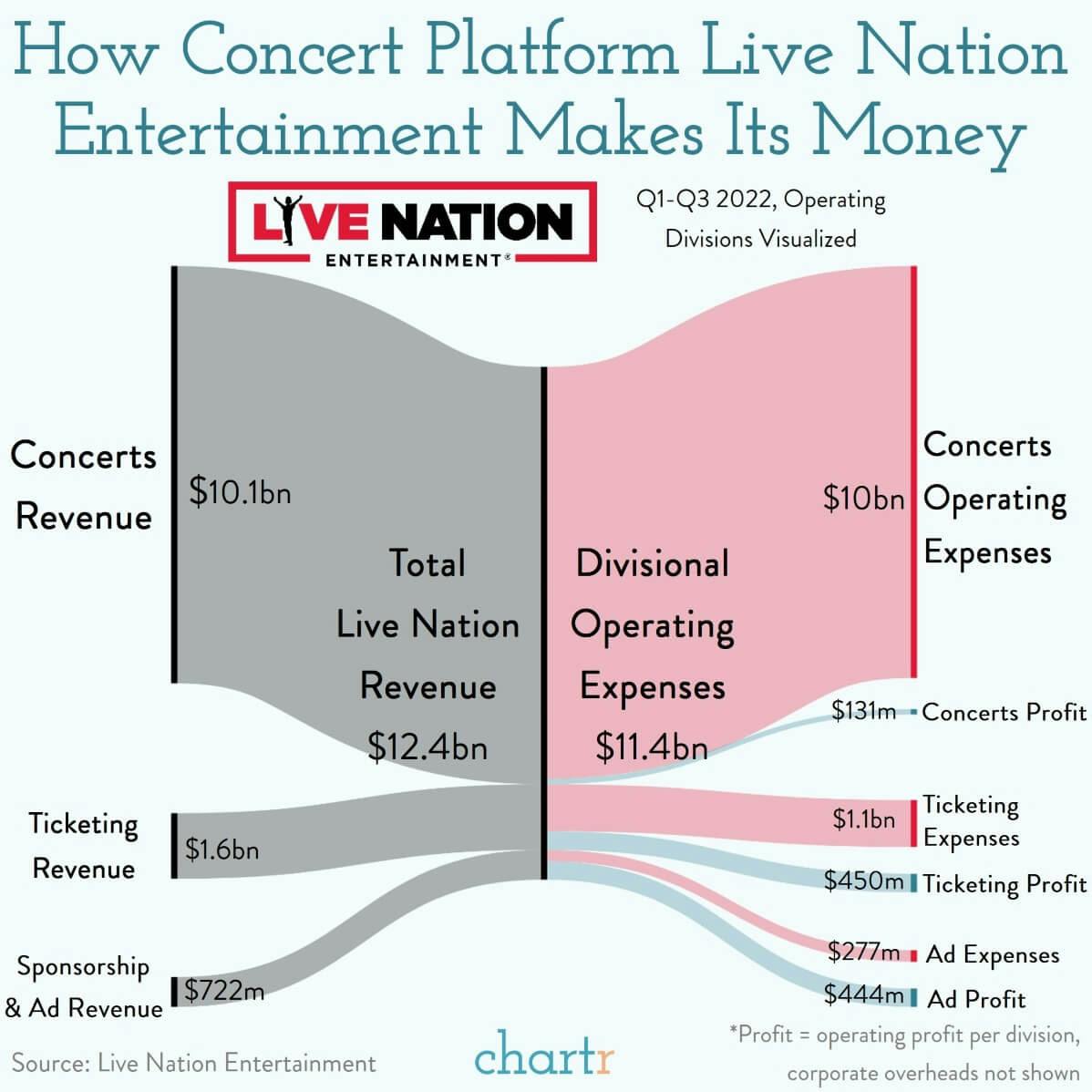
The crux of the complaint against the company has its origins in the 2010 merger between the world's largest ticket provider, Ticketmaster, and the world's largest concert promoter, Live Nation. This formed Live Nation Entertainment, which now has a near monopoly on live events with three distinct lines of business in concerts, ticketing, and sponsorship & ad revenue.

In terms of revenue, Live Nation remains the headline act, with concerts taking in $10.1bn, and ticketing only $1.6bn, in the first nine months of 2022. But running live events is a costly business and, after paying for the performer, the venue, agents, producers and everything else, margins in that business tend to be slim. The ticketing side, however, has much lower overhead costs — raking in an operating profit of some ~$450m so far this year, a margin north of 28%.

The Swift fiasco is now reigniting accusations that Live Nation Entertainment is too powerful, too profitable and is strangling competition in live entertainment. Senator Amy Klobuchar, who chairs the Senate Judiciary Subcommittee on Competition Policy, criticized the company for continuing to "abuse its market position".

More Culture

See all Culture
Family in front of TV

Hollywood may have its best year at the box office since 2019, but streaming audiences are still obsessed with old content

Viewers are opting for catalog content over new shows and movies across (pretty much) every major streamer.

Tom Jones6/29/26
culture
Tom Jones

The BBC has become the world’s top news website... by collapsing a little less than its competition

Press Gazette just published its annual look at the biggest news sites in the world across all languages; for the most part, it doesn’t make for particularly pretty reading.

The journalism industry publication’s latest update, which is based on estimates provided by Similarweb for May, found that 37 of the world’s 50 most visited news sites saw their reach shrink. Press Gazette highlighted that American outlets have been hit particularly hard by declining Google traffic compared to European counterparts, owing to the platform’s AI features rolling out earlier in the US.

Even the BBC, having climbed the rankings from last year to top the 2026 chart — reportedly in part thanks to Similarweb’s decision to combine the “.co.uk” and “.com” versions of the URL, given that the sites redirect to each other depending on the user’s location — showed a 1.9% decline from last year.

Latest Stories

Sherwood Media, LLC and Chartr Limited produce fresh and unique perspectives on topical financial news and are fully owned subsidiaries of Robinhood Markets, Inc., and any views expressed here do not necessarily reflect the views of any other Robinhood affiliate, including Robinhood Markets, Inc., Robinhood Financial LLC, Robinhood Securities, LLC, Robinhood Crypto, LLC, Robinhood Money, LLC, Robinhood U.K. Ltd, Robinhood Derivatives, LLC, Robinhood Gold, LLC, Robinhood Asset Management, LLC, Robinhood Credit, Inc., Robinhood Ventures DE, LLC and, where applicable, its managed investment vehicles.